
What a Trillion Shillings Cannot Buy, and Why Safaricom Is Chasing It Anyway
Behind the trillion-shilling headline lies a deeper shift in corporate thinking, one where technology, inclusion, and accountability converge to shape a new kind of African enterprise.

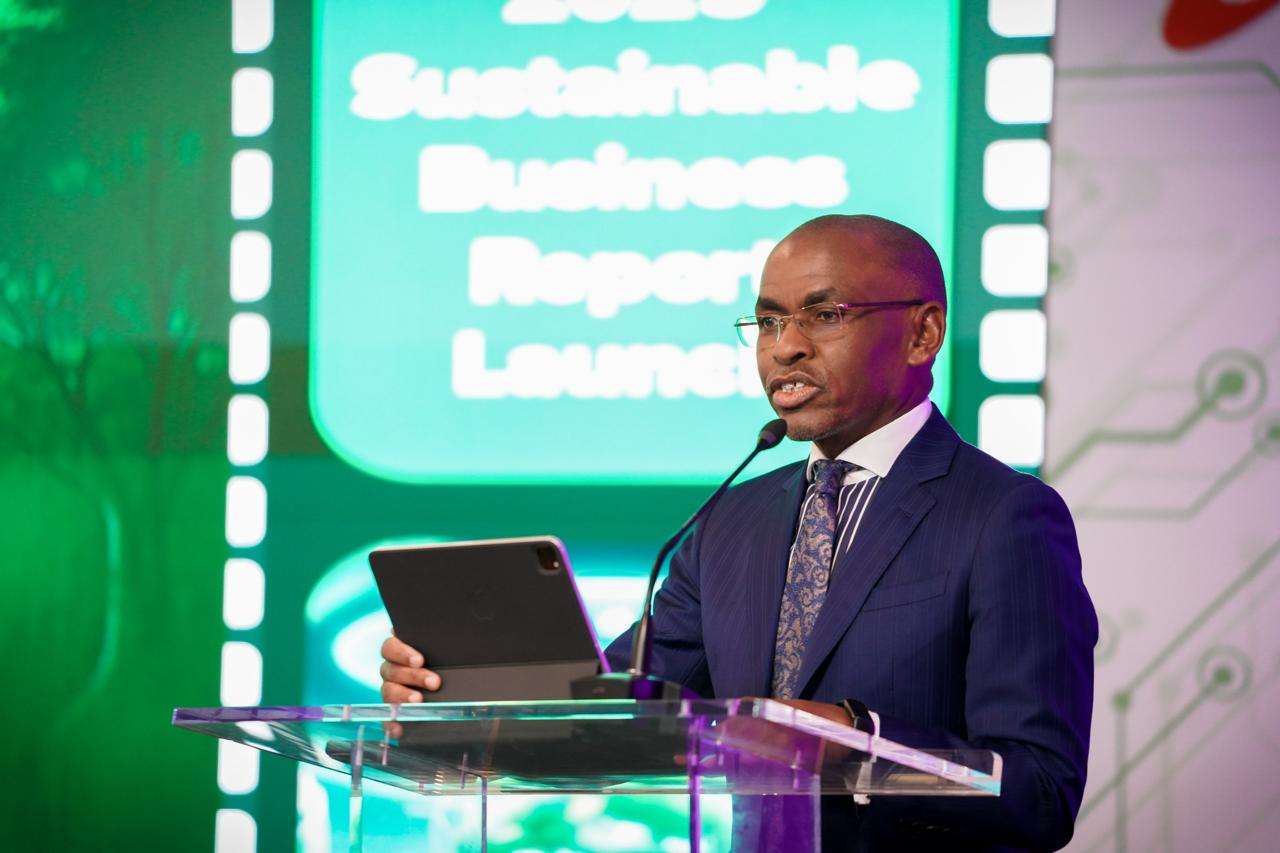
For years, Safaricom has been more than a telecommunications company. It has become a case study in how African businesses can create measurable social and environmental value while still thriving commercially. The release of its 14th Sustainable Business Report marks a turning point. The company’s “True Value” now stands at KSh 1.1 trillion, a figure that is sixteen times greater than its financial profit.

That figure is not just an accounting curiosity. It is a signal that the measure of success is shifting from short-term profit to long-term impact. Safaricom’s trillion shilling impact captures how technology, partnerships, and purpose can converge to shape a digital economy that includes rather than excludes.
Beyond profit: the True Value equation
True Value is a framework that accounts for the economic, social, and environmental effects of a company’s activities. It quantifies how business decisions ripple across communities and ecosystems. For Safaricom, that ripple has been wide. In the 2025 financial year, the company contributed KSh 809 billion to Kenya’s GDP through its operations, expanding access to financial tools, jobs, and digital infrastructure.
This impact was driven largely by M-PESA, still the country’s financial backbone, and by a growing ecosystem of agents, merchants, and innovators. The result is not just an economic footprint but a model of how technology-led businesses can integrate sustainability into daily operations.


As CEO Peter Ndegwa put it in the report, “Sustainability is not an obligation, it is a business imperative.” The company’s 25-year journey, he says, has always been anchored in purpose: connecting people to people, people to opportunity, and people to information.
Sustainability as strategy
The company’s 2025 report, titled Anchored on Purpose, Accelerating a Digital Future, outlines a sustainability approach that is both broad and pragmatic. More than 830,000 trees were planted across eight counties during the year, involving over 4,000 community members. The cumulative tally now stands at 2.3 million, nearly halfway to its 2030 target.
In waste management, Safaricom achieved a 99 percent recycling rate, collecting 190 tons of e-waste and 62 tons of plastic through its M-PESA Green Points initiative. The company also secured CDP A-list recognition for climate change performance and supplier engagement.
But the environmental story is only part of it. In a year of economic headwinds, Safaricom invested in inclusion. Smartphone ownership on its network climbed from 44 percent to 50 percent, largely through the “Lipa Mdogo Mdogo” financing plan that lowers barriers to digital access. Gender representation reached near parity, with women now making up 49 percent of staff and 45 percent of senior leadership.
It is not a token exercise. The company’s internal numbers suggest that inclusion is good economics: AI-driven personalization led to 15.2 percent growth in mobile data revenue and higher usage per customer.
Trust as infrasructure
Technology is only as strong as the trust it runs on. Safaricom’s 2025 achievements in governance may prove as significant as its environmental and social gains. The company earned ISO 27701 certification, the highest standard for privacy information management. It also recorded an 87 percent reduction in fraud cases, driven by machine-learning systems that identify fraudsters before they strike.
Even conservation found a digital ally. Through its anti-money-laundering algorithms, Safaricom detected illicit financial flows linked to poaching, leading to the identification of 14 suspects reported to authorities. These examples show how data systems can serve both commerce and conservation when designed with accountability in mind.
The trillion shilling question
A trillion shillings in social, economic, and environmental value is not an abstraction. It represents jobs supported, trees restored, classrooms connected, and farmers empowered through tools like Digifarm, which disbursed KSh 945 million in credit to 169,000 smallholders.
The broader implication is that Kenya’s corporate sector may be entering a new era. If companies begin to measure True Value alongside profit, they will need to rethink incentives, reporting, and the meaning of growth itself. That shift is not easy, but Safaricom’s report offers a working example of what it might look like in practice.
What stands out is not just the scale of the number but the discipline behind it. The report applies rigorous environmental, social, and governance (ESG) metrics, independently verified, and aligned with both the Global Reporting Initiative and IFRS disclosures. This adds a layer of credibility often missing from corporate sustainability narratives.
Looking ahead: from purpose to permanence
Safaricom’s ambition reaches beyond Kenya’s borders. Its Ethiopian subsidiary, still in early stages, extends this model to a new market. The goal remains clear: to become Africa’s leading purpose-led technology company by 2030, and a net zero emitter by 2050.
The trillion-shilling figure may fade from headlines, but the underlying philosophy will not. It challenges corporations to ask whether they are extractive or regenerative, and whether value can be created without leaving parts of society behind.
Kenya’s economic narrative has long celebrated innovation, from mobile money to agritech. Now, with Safaricom’s trillion shilling impact as a benchmark, the conversation turns toward the quality of that innovation — how it distributes benefits, protects the environment, and strengthens public trust.
The measure of success, it seems, is no longer what a company earns but what it enables others to achieve.
Go to TECHTRENDSKE.co.ke for more tech and business news from the African continent.
Mark your calendars! The GreenShift Sustainability Forum is back in Nairobi this November. Join innovators, policymakers & sustainability leaders for a breakfast forum as we explore sustainable solutions shaping the continent’s future. Limited slots – Register now – here. Email info@techtrendsmedia.co.ke for partnership requests.
Follow us on WhatsApp, Telegram, Twitter, and Facebook, or subscribe to our weekly newsletter to ensure you don’t miss out on any future updates. Send tips to editorial@techtrendsmedia.co.ke
TechTrends Media Podcasts

