
Why Spotify’s Future Strategy Goes Beyond Music Streaming — and Into Mood Management
What started as a fight for playlist dominance is evolving into something stranger: a system that doesn’t just react to your emotions, but learns to anticipate them.

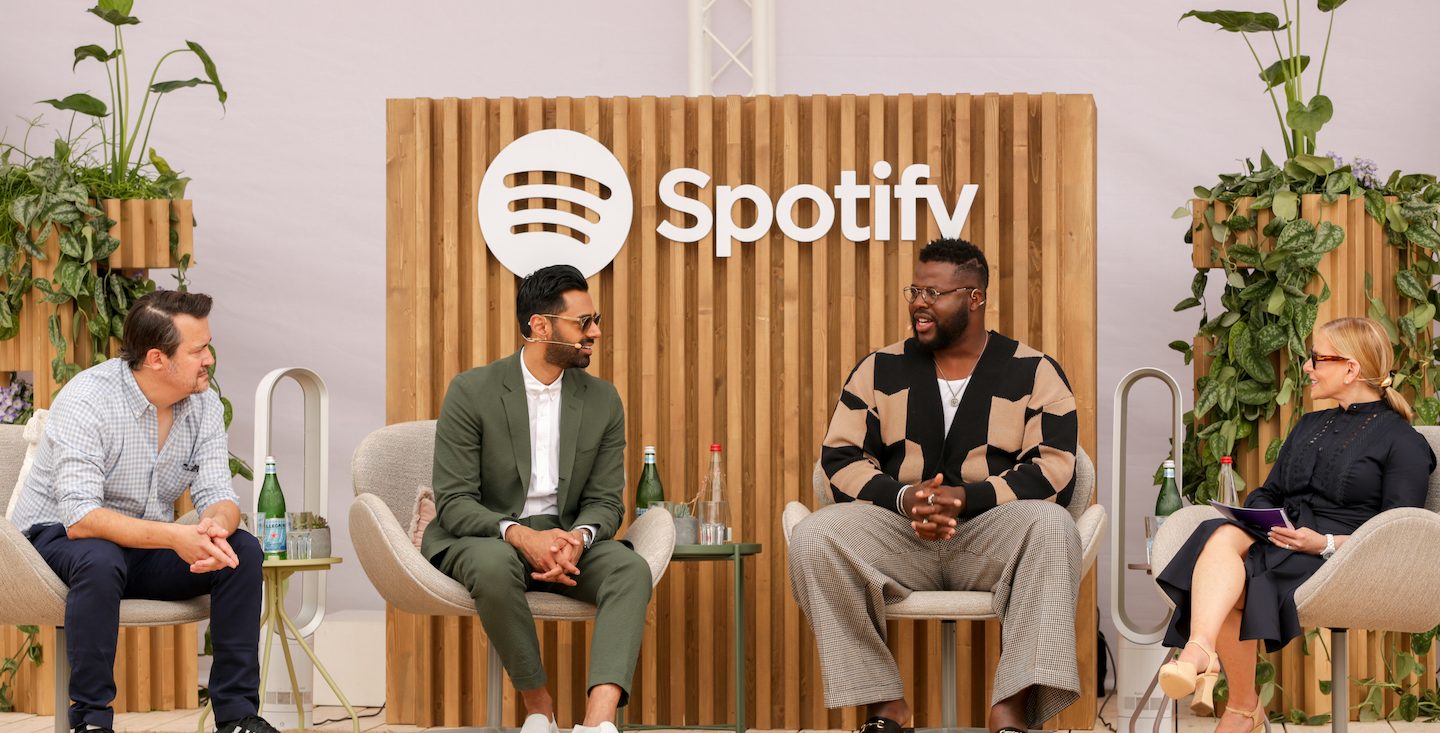
Spotify doesn’t need to beat Apple Music or YouTube anymore. It already has. The streaming wars are over, and Spotify quietly holds the high ground — not by offering the most features, but by establishing itself as the default layer between people and sound.

Which leads to a new tension inside the company’s trajectory — if you already control how people listen, what comes next?
Spotify’s answer is becoming increasingly clear: You stop being an app and start becoming infrastructure. It’s no longer building a product. It’s building a sensory scaffold for daily life. A system that predicts mood, anticipates context, and eventually dissolves into routine so efficiently that it’s no longer noticed — only missed in its absence.
The First Shift: From Streaming to Situation Management
Ask Spotify what it is and you’ll get the wrong answer. It’s not a music catalogue. It’s not even a recommendation engine. It’s a real-time behavioral interpreter.

Spotify knows when you’re moving, when you’re resting, when you’re spiraling, when you’re recovering. It recognizes seasonal nostalgia. It understands Monday dread. It watches focus oscillate.
What used to be genre browsing has evolved into mood steering, and that’s not accidental — it’s strategy. Where Apple Music still thinks in albums, Spotify thinks in situations. Every update nudges users toward not choosing and letting the system decide.

Speculation — Cautious Analyst Mode: If Spotify continues this path, choice itself becomes vestigial. Not removed by force, but slowly displaced by predictive convenience. At that point, is it still music discovery — or is it emotional autopilot?
Expansion by Absorption: Eating Every Audio Habit
Podcasts were never the end goal. Neither were audiobooks. Or soundscapes. Or guided meditation. These are not “product lines” — they are behavioral annexations.
Spotify’s strategy is not to compete category-by-category. It’s to flatten categories entirely. No more “music app,” “podcast app,” “wellness app.” Just sound.
TikTok owns discovery? Bring discovery mechanics into Spotify. Calm owns sleep? Sleep playlists will do. Audible owns narration? Bundle it. YouTube owns chaos? Inject video-enabled episodes.
Sharp Forecaster Mode: If Spotify finishes this absorption cycle, we stop thinking in content verticals entirely. Instead, audio becomes liquid — constantly reshaped to fill available psychic space.
Which raises the next question: Who controls the container?
The Economic Pivot: From Payouts to Platforms
For years, Spotify paid creators through a formula. Now it wants creators to build businesses on top of it.
- Merch inside artist profiles
- Tickets inside playlists
- Paid episodes for podcasters
- Tips and subscriptions quietly rolling out
Spotify is not becoming the employer of musicians. It’s becoming the tax system of audio commerce.
The Coming Invisibility: AI as Disappearance, Not Feature
Unlike Big Tech rivals, Spotify rarely markets AI as spectacle. It introduces it like seasoning — subtle, gradual, unnoticed until tasted.
AI DJ wasn’t a gimmick. It was a conditioning tool. Teaching users to stop touching buttons.
Voice navigation, dynamic queues, continuous reframing of suggestions — the goal isn’t automation. It’s assimilation. Spotify wants to anticipate before being instructed.
If AI progresses to full ambient responsiveness, Spotify becomes less like an app and more like nervous system middleware. Something between impulse and output.
Which leads to an uncomfortable possibility:
Spotify may end up knowing how you feel before you consciously do.
Helpful Companion or Emotional Gatekeeper?
There’s no version of Spotify’s future strategy that doesn’t raise ethical turbulence.
- Does emotional stabilization become dependency?
A perfectly predictive soundtrack may ease anxiety — but does it dull resilience?
- Do creators become liberated or domesticated?
Spotify’s tools promise empowerment, but what happens when visibility depends on compatibility with algorithmic cadence?
- Can Spotify claim neutrality while setting the rules of discovery?
If one platform routes cultural attention, does it become curator, ruler, or something in between?
Spotify’s Endgame: Infrastructure, Empire, or Emotional Operating System?
To understand where this is going, imagine three plausible outcomes — each entirely achievable depending on how listeners, regulators, and creators respond.
Spotify as Invisible Utility
Spotify cements itself as the audio equivalent of water or electricity. Ubiquitous. Regulated. Necessary. No one worships it — but no one can function without it. It becomes infrastructure, and its power is quiet, consistent, and largely unquestioned.
Spotify as Cultural Empire
Spotify succeeds in absorbing every audio ritual. It owns discovery, monetization, distribution, and emotional calibration. Playlists become policy. Algorithms become tastemakers. A generation of artists writes for it, not within it.
Spotify as Emotional Operating System
The interface dissolves. Spotify becomes anticipatory rather than reactive. You speak less. You click less. It routes your mornings, regulates your focus, rescues your nights. It doesn’t just soundtrack your life — it co-pilots your psychological weather.
At that point, Spotify is no longer a service.
It is a co-author of your inner state.
The Final Question: Will Listeners Notice the Shift — or Only Feel It?
Spotify’s future strategy is not loud. It isn’t declared in keynotes or plastered across billboards. It is unfolding beneath the surface — creeping from convenience to dependency with surprising grace.
The most likely outcome? Most people won’t consciously observe the transition. They won’t debate platform power or algorithmic sovereignty.
They’ll just realize — perhaps during a brief outage — that silence now feels strangely unstructured without it.
And by then, Spotify will no longer be an app in your pocket.
It will be an organ you forgot you installed.
Go to TECHTRENDSKE.co.ke for more tech and business news from the African continent.
Mark your calendars! The GreenShift Sustainability Forum is back in Nairobi this November. Join innovators, policymakers & sustainability leaders for a breakfast forum as we explore sustainable solutions shaping the continent’s future. Limited slots – Register now – here. Email info@techtrendsmedia.co.ke for partnership requests.
Follow us on WhatsApp, Telegram, Twitter, and Facebook, or subscribe to our weekly newsletter to ensure you don’t miss out on any future updates. Send tips to editorial@techtrendsmedia.co.ke
TechTrends Media Podcasts


