
How Kenya Is Using the EU’s €15 Million Africa Broadband Mapping Project to Transform Connectivity
Kenya embarks on an ambitious journey to connect schools, villages, and communities that have long been left offline

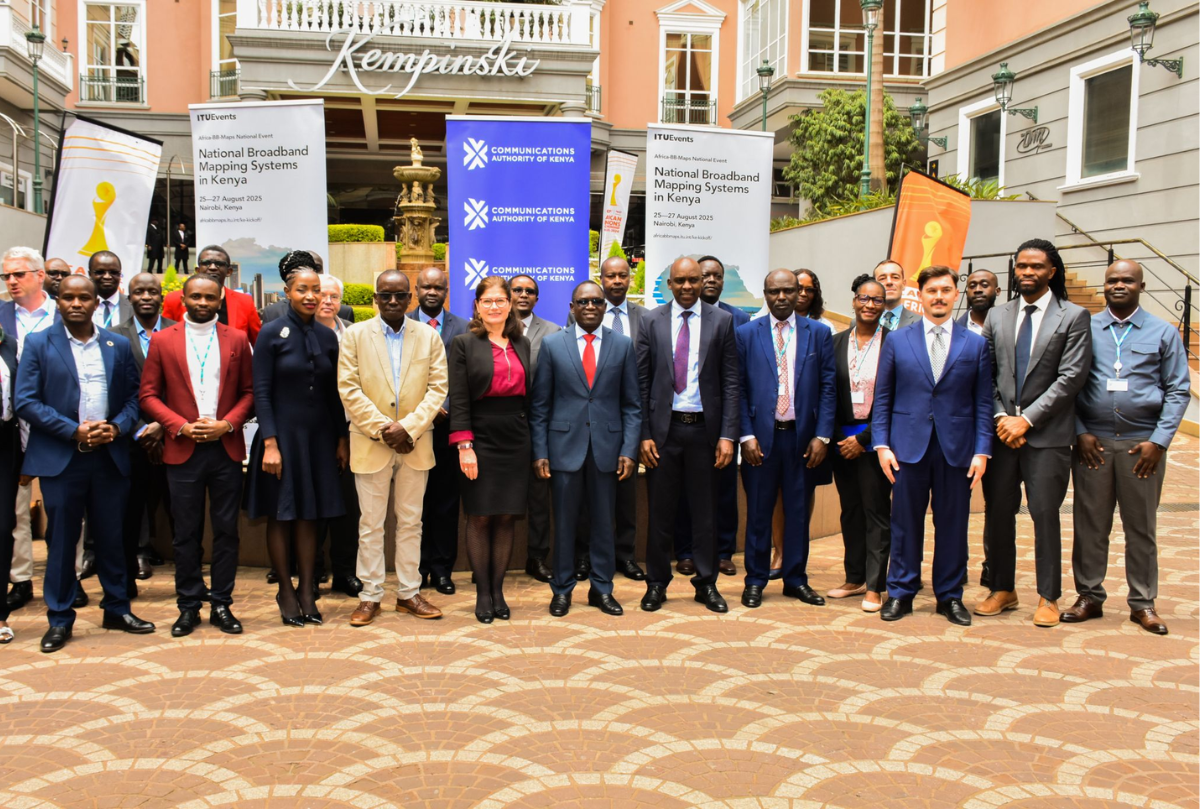
Kenya has secured a place in a new European Union-backed programme designed to plug Africa’s most persistent internet gaps. The country is one of 11 set to benefit from €15 million (Sh2.3 billion) committed to the Africa Broadband Mapping Systems (Africa-BB-Maps) project, which officially launched in Nairobi this week.
At its core, the project aims to build a single, reliable picture of who is connected, who isn’t, and where infrastructure is missing.
By developing harmonised broadband maps, policymakers and investors can see where coverage falls short and channel resources more effectively.
Europe’s digital investment in Kenya
EU Ambassador to Kenya, Henriette Geiger, said the bloc is investing far beyond mapping. A subsea blue cable system, stretching from Djibouti through Somalia and Kenya to Tanzania, is also in the works. In addition, the EU has committed to connect 1,000 Kenyan primary schools with broadband as part of a larger €300 million (Sh45.2 billion) digital package.

“This is about making sure no one is left behind in Africa’s digital future,” Geiger said.
The reality on the ground
Despite Kenya’s reputation as a regional tech hub, the statistics tell a more complicated story. Just under half of households have internet access, according to the Communications Authority (CA). In rural areas, the figure falls to one in four. More than 160 sublocations remain without 3G or 4G coverage altogether.

For CA Director General David Mugonyi, those gaps highlight why projects like Africa-BB-Maps are so critical. “Broadband is at the heart of economic growth. Without it, whole communities are excluded from education, healthcare, and opportunity,” he said.
Policy meets infrastructure
Kenya’s government has already tied broadband expansion to its National Digital Masterplan and the Bottom-Up Economic Transformation Agenda. Principal Secretary for Broadcasting and Telecommunications, Stephen Isaboke, described broadband not as a luxury but “a fundamental catalyst” for development.
He said the new data-driven maps will help the country move beyond guesswork. “By identifying where service is lacking, we can direct investment where it has the biggest impact. It’s a way to ensure underserved communities are no longer left out of the digital economy,” Isaboke said.
A wider African push
Alongside Kenya, the project will be rolled out in Angola, Benin, Botswana, Burundi, Côte d’Ivoire, Eswatini, Malawi, Nigeria, Uganda, and Zimbabwe. The International Telecommunication Union (ITU), with backing from the European Commission, is steering the effort.
Beyond connectivity, the initiative is expected to support skills training in geospatial data systems, ensuring local expertise can sustain and update the broadband maps over time.
Why it matters
For Kenya, the broadband mapping project is less about maps and more about momentum. Accurate, transparent data will make it easier for regulators to enforce standards, for civil society to monitor progress, and for investors to spot untapped markets.
If the initiative succeeds, it could mark a turning point for rural communities that have long lived offline. And for a country betting big on a digital economy by 2030, it offers a rare chance to turn ambition into access.
Go to TECHTRENDSKE.co.ke for more tech and business news from the African continent and the world.
Mark your calendars! The GreenShift Sustainability Forum is back in Nairobi this November. Join innovators, policymakers & sustainability leaders for a breakfast forum as we explore sustainable solutions shaping the continent’s future. Limited slots – Register now – here.
Follow us on WhatsApp, Telegram, Twitter, and Facebook, or subscribe to our weekly newsletter to ensure you don’t miss out on any future updates. Send tips to editorial@techtrendsmedia.co.ke
TechTrends Media Podcasts

