
Google Pixel 10 Series Explored: Magnetic Charging, Durable Foldables, and AI-Enhanced Photography
The story behind Google’s Pixel 10 series, where AI takes center stage without overshadowing the hardware

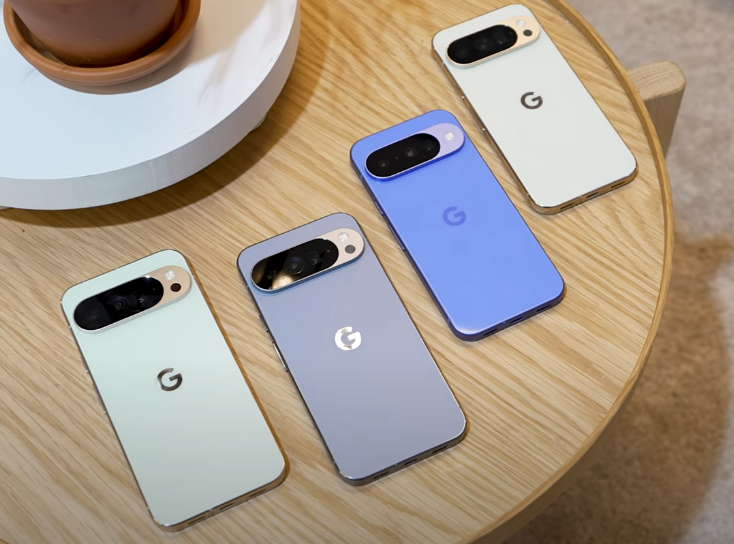
At first glance, the Google Pixel 10 series doesn’t scream reinvention. The design language remains anchored in Google’s recognizable camera bar and minimalist build. But the changes are more than cosmetic.

The new Pixel Snap accessories introduce a modular system that lets cases snap on with magnetic ease, hinting at a broader ecosystem play. Displays are brighter across the board, with improved HDR handling, making outdoor use far more comfortable.
Even the foldable gets meaningful polish. The Pixel 10 Pro Fold now carries an IP68 rating, a first for Google’s foldable line, alongside a sturdier hinge that reduces wobble and creasing.
Tensor G5 and the AI Core
The new Tensor G5 chip drives much of the narrative. It’s not chasing benchmark dominance; instead, it doubles down on what sets Pixels apart: AI-first performance.


Gemini integration runs deeper this year. From Magic Q, a conversational layer woven across the UI, to faster photo editing tools like Magic Eraser and Instant Retouch, the phone leans heavily into assistive intelligence. Translation features are faster and more natural, while voice typing now handles interruptions and context switches more smoothly.
The Camera Story: Steady, but Smarter
Hardware-wise, the cameras see incremental refinements. The Pixel 10 Pro XL carries the most advanced array, though the sensor sizes haven’t radically changed. Instead, Google is flexing computational muscle.

The standout is ProZoom, a new AI-assisted zoom pipeline that produces sharper detail at mid-range focal lengths without the washed-out textures that plagued earlier Pixels. Low-light performance remains a strength, with Night Sight faster and less noisy. Video stabilization has improved, though professionals may still find it a step behind iPhone and Galaxy flagships.
Hardware and Ecosystem
Google is threading its hardware ecosystem more tightly. The Pixel Watch 4 brings better battery endurance, while Pixel Buds now support adaptive audio that responds in real time to environmental noise. None of these products dominate their categories, but together they create a frictionless experience for Pixel phone owners.
Pricing and Positioning
The lineup starts with the Pixel 10 at $799, the Pixel 10 Pro at $999, the Pixel 10 Pro XL at $1,199, and the Pixel 10 Pro Fold at $1,799. Google isn’t undercutting rivals on price. Instead, it’s staking its ground as the AI phone brand, betting that convenience and intelligence will matter more to buyers than raw specs.
Verdict: Evolution, Not Revolution
The Pixel 10 series isn’t a radical departure. It’s a careful refinement of design, durability, and AI utility. If you expected a brand-new era for Pixel’s 10th birthday, you may feel underwhelmed. But if you look at the bigger picture — the tightening ecosystem, the polished hardware, and the deepening AI identity — this generation shows Google leaning into what makes a Pixel a Pixel.
Go to TECHTRENDSKE.co.ke for more tech and business news from the African continent.
Follow us on WhatsApp, Telegram, Twitter, and Facebook, or subscribe to our weekly newsletter to ensure you don’t miss out on any future updates. Send tips to editorial@techtrendsmedia.co.ke
TechTrends Media Podcasts


