Apple at a Crossroads: AI Growing Pains, Leadership Exodus, and the End of Predictable Innovation
As Apple’s old guard prepares to exit and its AI efforts falter, the company must choose between cautious continuity and bold reinvention.

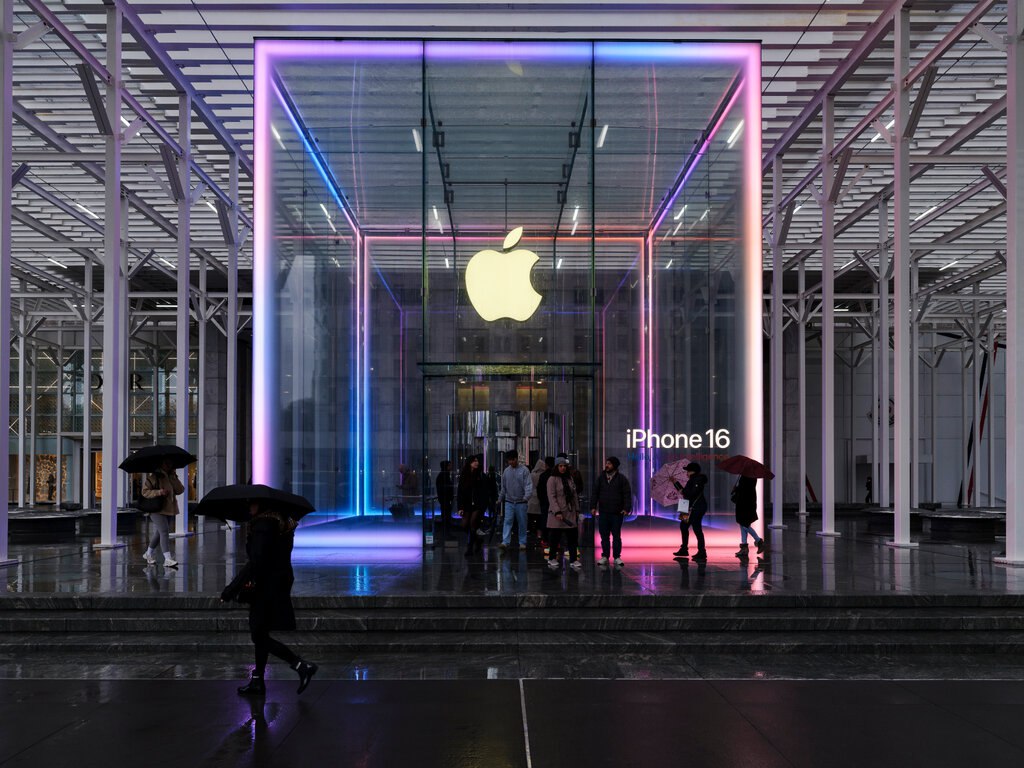
Apple is no stranger to transitions. But this time feels different. Behind the strong stock performance and polished product releases, the world’s most valuable tech company is quietly undergoing the most dramatic internal shake-up in over a decade—facing executive retirements, a muddled AI strategy, and growing pressure to prove it can still lead the industry into the next era.

Tim Cook Stays the Course—But for How Long?
Despite overseeing what some insiders have labeled Apple’s “AI debacle,” Tim Cook is staying put. Sources indicate the Apple board expects Cook to remain CEO through at least 2030, a move backed by loyalty and an eye-watering 1,500% stock rise since he took the helm in 2011.
But Cook’s long-term presence masks a deeper issue: an unprecedented leadership vacuum forming under him.
Longtime COO Jeff Williams—Cook’s closest lieutenant and once presumed successor—is stepping down this year. Former CFO Luca Maestri has already handed the reins to Kevan Parekh. Other top figures like App Store czar Phil Schiller, environmental chief Lisa Jackson, and chip head Johny Srouji are nearing retirement age.

For the first time in years, Apple has no clear next-in-line.
Succession Uncertainty: Who’s Next?
Sabih Khan, who will replace Williams as COO, is well-regarded but lacks the executive stature to be seen as Cook’s heir. In an emergency, Apple’s plan seems to be leadership by committee: Khan, Parekh, and retail chief Deirdre O’Brien. That’s not a comforting thought in a high-stakes industry where split-second decisions on AI and hardware investments shape entire futures.

Hardware engineering head John Ternus is now viewed as the most viable internal candidate. Young, product-focused, and closely involved with Apple’s next-gen devices, Ternus would represent a philosophical shift from Cook’s supply chain roots. But he’d need a powerhouse COO-CFO duo to navigate Apple’s massive scale.
Apple’s AI Problem: Too Private, Too Late?
While Apple touts its commitment to user privacy, that same principle has become a choke point for AI innovation. In a year where rivals like Google, Meta, and OpenAI are reshaping user expectations with generative AI features, Apple remains a step behind—limited by both its cautious culture and internal talent drain.
Perhaps nothing underscores this better than the departure of Ruoming Pang, Apple’s foundation model lead, who left for Meta in a deal reportedly worth over $200 million. His exit wasn’t just a blow to Apple’s AI team—it was a signal to the industry that Apple’s AI house isn’t in order.
Even Apple Services boss Eddy Cue has raised alarms internally, warning that Apple risks becoming “the next BlackBerry or Nokia” unless it makes a serious pivot. Gurman suggests Apple may have to break from tradition and acquire a large AI player like Mistral or Perplexity to stay relevant—an uncharacteristic move for a company known for small, strategic purchases.
Product Pipeline: Safe Iteration, Delayed Innovation
Apple has a full product slate scheduled through mid-2026, including:
- iPhone 17 and 17e, likely launching in early September.
- Updated M5 iPad Pros, MacBook Pros, and a new iPad Air line.
- A refreshed Vision Pro headset with an M4 chip.
- A long-overdue new Apple external monitor.
Yet most of these are incremental upgrades. Meanwhile, Apple’s smart home display, codenamed J490, has slipped by over a year. Its delay ties directly to setbacks in Siri’s evolution—particularly new features like App Intents and personal context awareness, originally pegged for iOS 18.4 but now pushed to 2026.
Liquid Glass UI: A Beta Backtrack
Even Apple’s design identity, long a bedrock of its brand, is showing signs of self-doubt. The Liquid Glass UI redesign, teased as the centerpiece of iOS 26 and macOS 26, has been significantly toned down in recent beta releases. According to Gurman, Apple scaled back the visuals after backlash from social media, especially X (formerly Twitter) and YouTube.
This marks a rare reversal. Apple has historically stood firm on visual overhauls, whether it was flattening iOS 7 or changing Safari in iOS 15. The new approach? More reactionary than revolutionary.
Vision Pro: A Niche That May Stay Niche
The Vision Pro headset remains a hard sell. Gurman notes that even with a spec bump, Apple’s $3,500 spatial computer is unlikely to gain meaningful traction. It sits in a market where Meta’s sub-$500 offerings still haven’t broken out—and it’s not clear that customers want mixed-reality headsets at all.
The long-term bet is that Vision Pro will pave the way for lighter, glasses-style AR gear. But until that happens, Apple may have an expensive R&D device that doesn’t move units.
The Bigger Picture: What Comes After Cook?
If Cook does eventually step aside—potentially shifting into a Chairman role—it’s unclear whether his successor will steer Apple toward bold reinvention or cautious refinement. The company’s current crossroads demands the former.
For Apple to maintain its relevance and cultural dominance, it must break from its pattern of safe iteration and lean into bold, decisive moves:
- Double down on AI talent with meaningful investment.
- Define a credible and clear leadership succession.
- Reimagine Siri and core software experiences from the ground up.
If not, Apple risks repeating the history of the companies it once eclipsed.
Mark your calendars! TechTrends Pulse lands in Nairobi this August! Join top tech leaders, innovators & AI experts for a half-day of keynotes, showcases & sharp insights on business transformation. RSVP now -limited slots available! Register here.
Follow us on WhatsApp, Telegram, Twitter, and Facebook, or subscribe to our weekly newsletter to ensure you don’t miss out on any future updates. Send tips to editorial@techtrendsmedia.co.ke

