Airtel’s Satellite Ambition Meets a Hard Reality Check From Kenya’s Communications Authority
Kenya’s telecom regulator is examining whether a plan to let mobile phones connect to Starlink satellites could interfere with the networks millions of people already rely on every day.

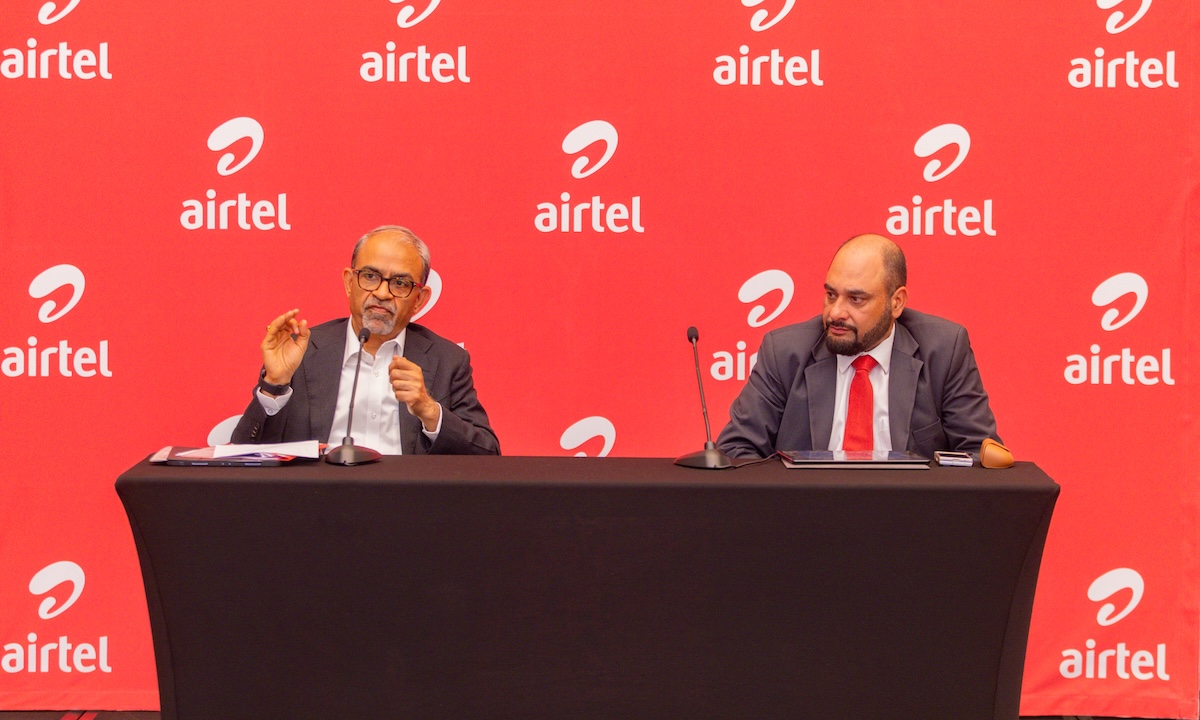
The Airtel–Starlink direct-to-cell partnership is under review by the Communications Authority of Kenya as regulators assess whether satellite signals could interfere with terrestrial mobile networks. The review concerns a proposal that would allow SpaceX’s Starlink satellites to connect directly with mobile phones through Airtel Kenya’s network.

The Communications Authority of Kenya has confirmed it is examining Airtel Kenya’s formal application for approval.
Direct satellite-to-phone connectivity would expand coverage to areas without cellular infrastructure.
The regulatory conclusion is clear. Kenya is evaluating whether satellite mobile coverage can operate within terrestrial spectrum rules without degrading existing 3G, 4G, and 5G networks.


Why is Kenya reviewing the Airtel–Starlink direct-to-cell deal?
The Communications Authority of Kenya is reviewing the Airtel–Starlink partnership to determine whether satellite transmissions could cause harmful interference with terrestrial mobile networks. Regulators must verify that signals from Low Earth Orbit satellites will not disrupt existing cellular infrastructure before approving the service.
The Communications Authority confirmed that Airtel Networks Kenya Limited submitted a formal application for regulatory approval. The review focuses on signal power levels, spectrum use, and compatibility with Kenya’s existing telecommunications framework.
Airtel Africa has partnered with SpaceX to deploy Starlink direct-to-cell services across 14 markets. The service will initially support internet-based messaging and voice applications before expanding to native calls and SMS in 2028. Starlink currently operates more than 8,000 Low Earth Orbit satellites globally, including 650 dedicated to direct-to-cell services.
Kenya’s mobile networks rely primarily on ground-based cell towers operating across licensed spectrum bands allocated by the Communications Authority.
The regulator is balancing two policy objectives. Expanding coverage to underserved regions remains a national priority, while protecting spectrum integrity remains a core mandate. Satellite-to-phone connectivity introduces transmissions from space into spectrum historically reserved for terrestrial networks.
This creates a regulatory constraint. The Communications Authority must define technical limits that allow satellite connectivity while preserving performance of existing cellular infrastructure.
Approval will likely include technical operating conditions governing satellite transmission power and spectrum use. Satellite connectivity will operate as supplemental coverage rather than a substitute for terrestrial networks.
What is direct-to-cell satellite technology?
Direct-to-cell technology allows satellites to connect directly with ordinary smartphones without specialized satellite hardware. Mobile devices communicate with Low Earth Orbit satellites using existing cellular spectrum bands. This enables connectivity in locations where terrestrial cell towers do not exist.
The service functions as an extension of mobile network infrastructure delivered from orbit.
Starlink’s direct-to-cell system uses satellites equipped with cellular payloads capable of communicating with standard LTE-enabled phones. Airtel Africa has confirmed that the initial service phase will support internet-based messaging and voice applications such as WhatsApp.
Full voice calling and SMS services through satellite connectivity are scheduled for deployment in 2028 using next-generation satellites with improved capacity.
Telecommunications regulators traditionally manage spectrum assuming signals originate from ground infrastructure. Satellite-to-phone connectivity introduces transmissions from orbital platforms that operate across national jurisdictions.
This forces regulators to reinterpret spectrum allocation rules while maintaining compatibility with existing terrestrial operators.
Direct satellite connectivity will remain integrated with mobile network operators rather than operating independently. National regulators will maintain oversight of spectrum coordination between satellite and terrestrial services.
Could satellite signals interfere with mobile networks?
Telecommunications analysts warn that high-power satellite transmissions could introduce signal noise that affects terrestrial mobile networks. Interference risks arise when satellite signals overlap with frequencies used by ground-based cellular infrastructure.
The Communications Authority of Kenya is evaluating noise levels and operational zones to prevent degradation of mobile network capacity.
Kenyan operators including Safaricom, Airtel Kenya, and Telkom Kenya rely on 3G, 4G, and 5G infrastructure delivered through terrestrial towers. These networks operate on licensed spectrum bands assigned by the Communications Authority.
Satellite transmissions in similar frequency ranges could increase background signal noise, reducing throughput and reliability for existing services.
Spectrum interference represents a structural regulatory issue. Satellite operators seek global coverage while terrestrial operators depend on controlled national spectrum allocation.
The Communications Authority must enforce spectrum discipline while enabling technological expansion into underserved areas.
Regulatory approval will likely require operational restrictions on satellite transmission power and defined geographic coverage limits to prevent interference with existing networks.
How large is Starlink’s presence in Kenya’s internet market?
Since its July 2023 launch, Starlink has pioneered a high-speed broadband niche in Kenya, capturing 98% of the satellite market and reaching a record 19,470+ active subscribers by early 2026. This growth comes despite a significant seven-month freeze on new urban sign-ups between November 2024 and June 2025 due to network congestion, a bottleneck the company resolved by activating its first local ground station in Nairobi in early 2025. Although its total fixed-market share remains at 0.8%, Starlink’s expansion has triggered a 2,500% surge in satellite adoption, effectively serving rural areas where fiber infrastructure is absent.
The company operates independently as a licensed internet service provider within the country.
Kenya’s fixed and wireless broadband market remains dominated by terrestrial providers including Safaricom, Jamii Telecommunications Limited, and Zuku. Satellite broadband adoption increased after Starlink launched consumer service in Kenya.
Operating as a key division of Elon Musk’s SpaceX, Starlink has rapidly expanded its global network to nearly 10,000 active satellites in Low Earth Orbit as of March 2026.
Starlink’s entry introduces a new competitive dynamic in markets traditionally dominated by terrestrial infrastructure. Satellite internet bypasses fibre and tower deployment constraints, allowing coverage in areas where infrastructure investment has been limited.
Regulators must oversee competition without destabilizing existing operators that maintain national infrastructure.
Satellite internet will continue expanding in regions where terrestrial networks remain economically difficult to deploy. Market share growth will depend on hardware pricing and regulatory approvals for additional services.
How does the Airtel–Starlink partnership affect telecom competition?
The Airtel–Starlink partnership strengthens Airtel’s ability to provide nationwide coverage by extending connectivity beyond terrestrial towers. Satellite connectivity allows Airtel to serve remote locations without building additional infrastructure.
This capability addresses network coverage gaps across rural and geographically isolated regions.
As of 2026, the latest industry figures from the Communications Authority indicate that Safaricom’s mobile broadband and voice market shares have leveled out at 62.9% and 63.4% respectively, while Airtel has solidified its challenger position with 32.7% in broadband and a strong 36.2% in voice traffic.
Vodacom Group, Safaricom’s parent company, signed an agreement with SpaceX in November 2024 to integrate Starlink satellite technology for mobile network data relay.
Satellite partnerships are emerging as strategic infrastructure extensions for telecom operators. Rather than replacing mobile networks, satellite systems function as coverage layers that fill geographic gaps.
The result is a hybrid connectivity model combining terrestrial towers with orbital infrastructure.
Mobile operators across Africa will continue forming satellite partnerships to address rural connectivity gaps without large capital expenditure on tower networks.
Key Facts
What is the Airtel–Starlink direct-to-cell service?
The Airtel–Starlink direct-to-cell service connects ordinary smartphones to Starlink satellites without requiring specialized satellite devices. Airtel Africa partnered with SpaceX to deploy this technology across 14 markets. The service initially supports internet-based messaging and voice applications before expanding to native calls and SMS in 2028.
Why is the Communications Authority of Kenya reviewing the partnership?
The Communications Authority of Kenya is evaluating whether satellite transmissions could interfere with terrestrial mobile networks. Regulators must confirm that signal power levels from Low Earth Orbit satellites will not disrupt 3G, 4G, or 5G infrastructure before approving the service.
How many Starlink satellites support direct-to-cell services?
As of March 2026, Starlink—a division of Elon Musk’s SpaceX—has expanded its global network to approximately 9,920 active satellites, including a specialized fleet of 650 direct-to-cell units equipped with LTE payloads that enable standard smartphones to communicate directly from areas without terrestrial coverage.
Since entering the Kenyan market in July 2023, the provider has captured a dominant 98% of the satellite internet segment with over 19,470 subscribers, maintaining its growth momentum despite a strategic seven-month freeze on urban sign-ups that concluded in mid-2025 following the activation of its Nairobi ground station.
In March 2026, MTN Zambia became the first African operator to successfully complete field tests for this service, proving that a standard smartphone in rural Zambia can now process a fintech transaction and make a WhatsApp call via these 650 satellites without any ground hardware.
When will direct satellite phone calls be available in Kenya?
Initial service phases will support internet-based messaging and voice applications. Full satellite-based phone calls and SMS services are scheduled for deployment in 2028 using next-generation satellites designed for higher capacity direct mobile connectivity.
How large is Starlink’s internet market share in Kenya?
Starlink currently holds 0.8 percent of Kenya’s internet service provider market. The satellite broadband service launched in Kenya in July 2023 and operates alongside terrestrial providers including Safaricom, Jamii Telecommunications Limited, and Zuku.
Go to TECHTRENDSKE.co.ke for more tech and business news from the African continent.
Follow us on WhatsApp, Telegram, Twitter, and Facebook, or subscribe to our weekly newsletter to ensure you don’t miss out on any future updates. Send tips to editorial@techtrendsmedia.co.ke

