

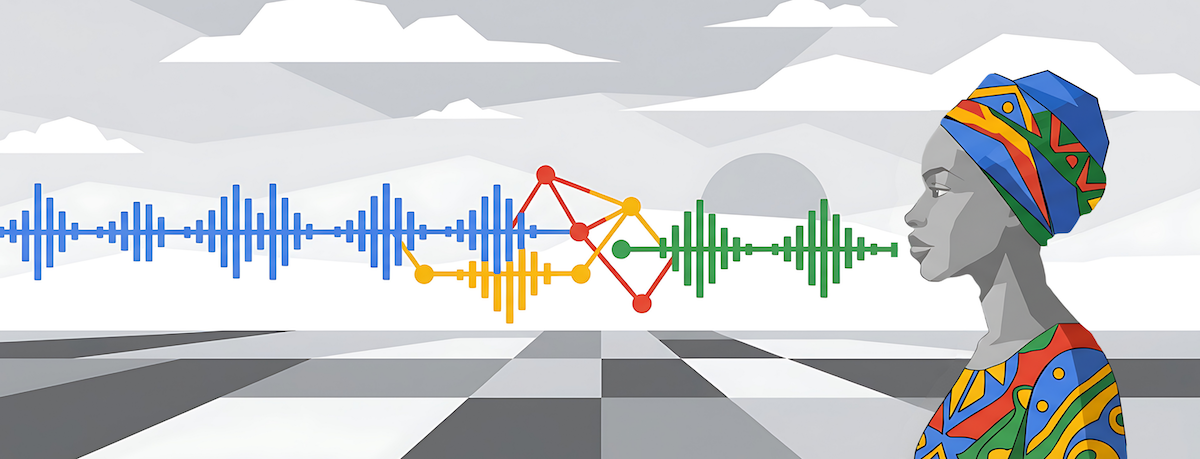
Google, in collaboration with a coalition of leading African research institutions, has announced the launch of WAXAL, a large-scale, openly accessible speech dataset aimed at addressing the persistent digital divide affecting African languages in artificial intelligence systems.

Since the rise of AI-powered technologies, many African languages have remained underrepresented, limiting access to voice-enabled tools for millions of people across the continent. The WAXAL initiative seeks to close this gap by providing foundational speech data for 21 Sub-Saharan African languages, with the potential to impact more than 100 million speakers.
Languages included in the dataset are Acholi, Akan, Dagaare, Dagbani, Dholuo, Ewe, Fante, Fulani (Fula), Hausa, Igbo, Ikposo (Kposo), Kikuyu, Lingala, Luganda, Malagasy, Masaaba, Nyankole, Rukiga, Shona, Soga (Lusoga), Swahili, and Yoruba.
Despite Africa being home to over 2,000 languages, the majority remain classified as “low-resource” by voice-enabled technologies. This lack of linguistic data has prevented hundreds of millions of people from interacting with digital tools in their native languages, reinforcing barriers to digital inclusion. WAXAL is positioned as a critical step toward reversing this trend and enabling broader participation in the digital economy.

The three-year initiative, backed by Google, delivers more than 1,250 hours of transcribed natural-language speech data, alongside over 20 hours of high-quality studio recordings designed for building high-fidelity synthetic voices. The dataset was specifically curated to address what researchers describe as a widespread “data desert” for African languages.
“The ultimate impact of WAXAL is the empowerment of people in Africa,” said Aisha Walcott-Bryant, Head of Google Research Africa. “This dataset provides the critical foundation for students, researchers, and entrepreneurs to build technology on their own terms, in their own languages, finally reaching over 100 million people. We look forward to seeing African innovators use this data to create everything from new educational tools to voice-enabled services that create tangible economic opportunities across the continent.”
A distinguishing feature of the WAXAL project is its emphasis on digital agency, shifting the paradigm from building technology for Africa to building it with Africa. African universities and community organizations played a central role in data collection, with technical guidance provided by Google researchers.
“For AI to have a real impact in Africa, it must speak our languages and understand our contexts,” said Joyce Nakatumba-Nabende, Senior Lecturer at Makerere University’s School of Computing and Information Technology. “The WAXAL dataset gives our researchers the high-quality data they need to build speech technologies that reflect our unique communities. In Uganda, it has already strengthened our local research capacity and supported new student- and faculty-led projects.”
Institutions involved in the project include Makerere University in Uganda, the University of Ghana, and Digital Umuganda in Rwanda. Beyond data collection, the initiative mandates that data ownership remains with local institutions, establishing a standardized framework for equitable AI research and balanced resource sharing.
“For us at the University of Ghana, WAXAL’s impact goes beyond the data itself,” said Prof. Isaac Wiafe, Associate Professor at the University of Ghana. “It has empowered us to build our own language resources and train a new generation of AI researchers. Over 7,000 volunteers joined us because they wanted their voices and languages to belong in the digital future. Today, that collective effort has sparked an ecosystem of innovation in areas such as health, education, and agriculture.”
With WAXAL now publicly available, researchers and developers across Africa are expected to leverage the dataset to build more inclusive voice technologies, helping ensure that African languages are not left behind as AI adoption accelerates globally.
[Secure Your Seat at Africa Tech Summit Nairobi 2026 | February 11–12 here] Use code TTRENDS10 at checkout to save 10% on your pass and join the leaders building Africa’s $1 trillion cross-border payment future.
Go to TECHTRENDSKE.co.ke for more tech and business news from the African continent.
Follow us on WhatsApp, Telegram, Twitter, and Facebook, or subscribe to our weekly newsletter to ensure you don’t miss out on any future updates. Send tips to editorial@techtrendsmedia.co.ke


