

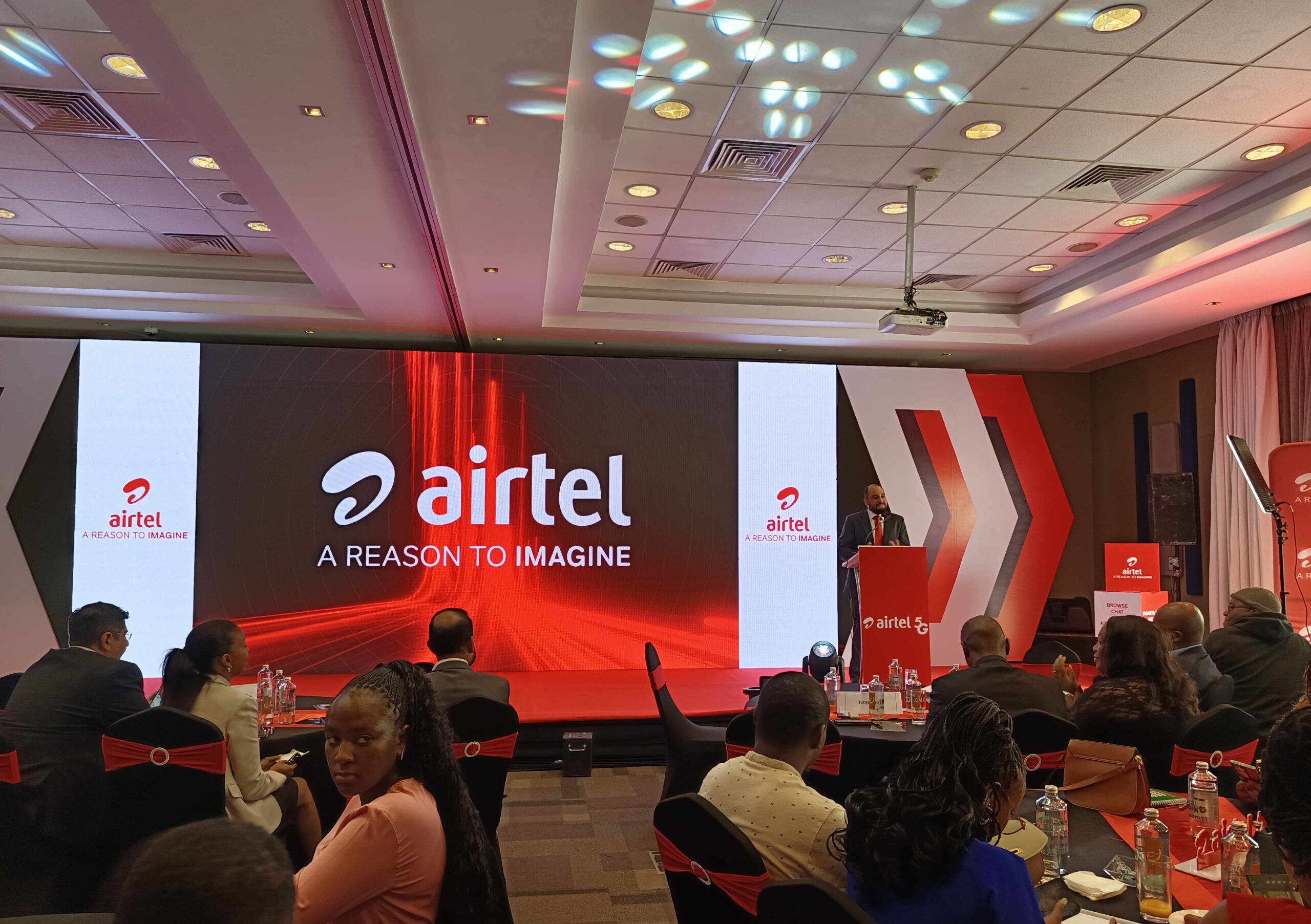
Airtel Africa has reported a significant surge in profitability for the period ended December 31, 2025, with profit after tax more than doubling to $586 million from $248 million in the prior period.

The robust performance was driven by strong operating momentum and favorable currency movements. Unlike previous periods hampered by foreign exchange losses, the group recorded derivative and foreign exchange gains of $99 million, a sharp turnaround from the $153 million loss posted a year earlier.
Group revenues climbed to $4.67 billion, marking a 24.6% increase in constant currency and a 28.3% rise in reported currency. The company attributed this growth to a customer-centric strategy that has seen its total customer base expand by 10% to reach 179.4 million.
A key highlight of the report is the continued explosive growth of the mobile money division. The segment saw revenues grow by 29.4% in constant currency, while the customer base surged past a major milestone, reaching 52 million users.


Sunil Tadar, Airtel Africa Group CEO, confirmed that the spin-off of this lucrative unit is proceeding as planned.
“Our push to enhance financial inclusion across the continent continues to gain momentum with our Mobile Money customer base expanding to 52 million, surpassing the 50 million milestone,” said Tadar. “We remain on track for the listing of Airtel Money in the first half of 2026.”

The mobile money ecosystem now processes an annualized transaction value of over $210 billion, underscoring its scale and integration into the daily economic lives of millions across the continent.
Data revenues emerged as the largest contributor to the group’s topline, growing by 36.5%. This was fueled by a 15.9% increase in data customers and a 48.1% jump in data usage. Smartphone penetration across the group has now reached 48.1%, with smartphone data usage averaging 9.4 GB per customer per month.
To support this demand, Airtel Africa has accelerated its infrastructure rollout, with over 2,000 sites now 5G-enabled across four key markets.
“Digitisation, technology innovation, and embedding AI in our processes will also optimise the customer experience,” Tadar noted. “Coupling this investment with innovative partnerships strengthens our customer proposition and positions us to capture the considerable growth opportunity across our markets.”
The East Africa region performed particularly well, delivering revenue of $1.62 billion, an 18.2% increase in reported currency. This boost was aided by the appreciation of the Zambian Kwacha, as well as the Ugandan and Tanzanian shillings.
The group’s disciplined approach to costs has resulted in a widening EBITDA margin of 49.6%.
“Disciplined execution on cost efficiency, alongside accelerating revenue growth, has enabled another sequential improvement in our quarterly EBITDA margin,” Tadar stated. “These results reinforce our confidence in the long-term potential of our markets and our ability to create value for all our stakeholders.”
[Secure Your Seat at Africa Tech Summit Nairobi 2026 | February 11–12 here] Use code TTRENDS10 at checkout to save 10% on your pass and join the leaders building Africa’s $1 trillion cross-border payment future.
Go to TECHTRENDSKE.co.ke for more tech and business news from the African continent.
Follow us on WhatsApp, Telegram, Twitter, and Facebook, or subscribe to our weekly newsletter to ensure you don’t miss out on any future updates. Send tips to editorial@techtrendsmedia.co.ke


