
Safaricom Wants You to Pay for Wi-Fi the Way You Pay for Airtime. That Changes the Deal
This model works best for people who already live with uncertainty, which is also where the risks pile up

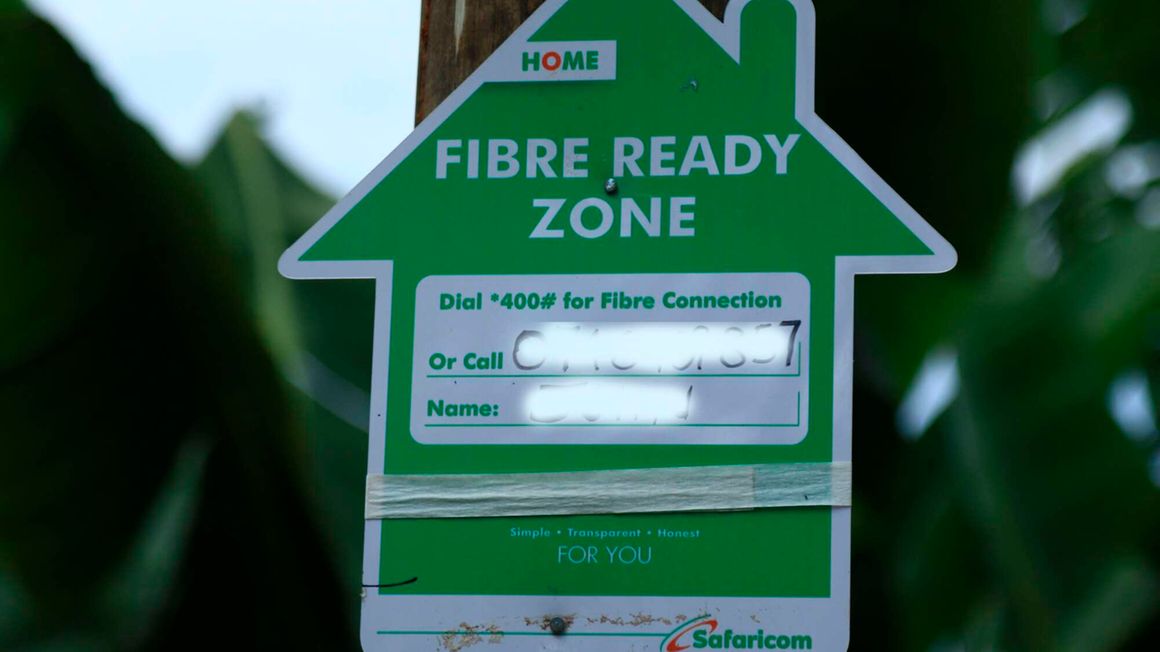
Safaricom plans to introduce tokenised Wi-Fi with hourly, daily, and weekly access. The move rests on a simple reading of how many households manage money. Monthly billing assumes regular income. A large share of the market does not operate on that rhythm.

Fixed broadband penetration reflects this mismatch. About 400,000 connections sit against a potential of roughly 4,000,000. The gap is not driven by lack of demand. It is shaped by timing. Internet access competes with rent, food, and transport, often on the same day.
Tokenised Wi-Fi lowers the entry point. Access is decided in the moment, not a month in advance.
Where flexibility turns into leverage
Short-duration access allows Safaricom to price internet around usage bursts rather than long-term averages. This captures demand that monthly plans leave exposed. Users who need high throughput for limited windows now pay closer to the value of that moment.


The accumulation effect matters. Hourly or daily purchases feel manageable. Over time, they can exceed the cost of a flat subscription without ever feeling like a single decision. The absence of published detail on speed tiers, contention, or data ceilings places most of that uncertainty on the customer.
With 35.6 percent of fixed data subscriptions and 62.7 percent of mobile broadband, Safaricom sets the reference price. Once users accept what an hour of Wi-Fi costs, alternatives are judged against it.

Broadband without permanence
Fixed internet has traditionally implied continuity. Tokenised access replaces that with episodic use. Performance is assessed session by session. Reliability becomes situational.
For some households, this aligns with reality. Internet use spikes around school deadlines, weekend entertainment, or short-term work. For others, it introduces a new ceiling. Connectivity becomes something to ration rather than rely on.
Over time, patterns harden. Areas with stable incomes default to monthly plans. Elsewhere, connectivity fragments into paid intervals. The distinction emerges through pricing, not policy, but it carries the same effect.
Safaricom has already indicated it intends to push broadband deeper into lower-income segments by changing how it prices and distributes access. Tokenisation is the mechanism.
Ethiopia as proof of intent
The inclusion of Ethiopia points to scale rather than experimentation. Safaricom entered the market in 2022, where Ethio Telecom retains control and fixed broadband remains limited. Household billing relationships are still forming.
Tokenised Wi-Fi bypasses that friction. It allows uptake without long-term commitment and without reconditioning how users pay for connectivity. Performance in Ethiopia will shape how aggressively the model is extended elsewhere.
This is part of a broader attempt to grow broadband in markets where voice no longer anchors revenue.
Growth without uniform experience
In the six months to September 2025, mobile data revenue overtook voice. During the same period, 5G subscriptions rose to 1.5 million, while 4G users approached 40 million. At the lower end, 3G declined sharply, and 2G persisted.
The upgrade path is uneven. Users move forward, but not together. Fixed wireless access using 5G sits between those worlds. Tokenised Wi-Fi offers a way in without requiring permanence.
Quality remains the pressure point. Without clear thresholds, tokenised access inherits the variability users already associate with mobile data. Adaptation follows. Confidence erodes quietly.
What the model produces over time
Safaricom has outlined ambitions to add roughly 3,000,000 broadband users and sustain growth of about 50 percent annually for several years. That trajectory assumes usage habits settle in predictable ways.
Tokenised Wi-Fi may expand participation. It may also entrench a class of users who never move beyond intermittent access, managing connectivity the way they manage airtime. That outcome supports revenue growth while redefining what broadband means for large parts of the market.
Safaricom tokenised Wi-Fi is a pricing architecture more than a product. It tests how little commitment internet access can require before it stops behaving like infrastructure and starts behaving like a utility you switch on only when necessary. The answer will emerge slowly, in consumption patterns and household trade-offs, long after the rollout headlines fade.
[Secure Your Seat at Africa Tech Summit Nairobi 2026 | February 11–12 here] Use code TTRENDS10 at checkout to save 10% on your pass and join the leaders building Africa’s $1 trillion cross-border payment future.
Go to TECHTRENDSKE.co.ke for more tech and business news from the African continent.
Follow us on WhatsApp, Telegram, Twitter, and Facebook, or subscribe to our weekly newsletter to ensure you don’t miss out on any future updates. Send tips to editorial@techtrendsmedia.co.ke


