Spotify Wrapped 2025 Meets Its New Competitors
A tightening contest over who owns the story of how people listened in 2025 as Spotify Wrapped 2025 forces rivals to rethink their yearly recaps



The calendar turns, and the annual music recap season arrives with its usual blend of theatre and self-study. What once lived as a novelty has become a competitive display of data, design, and platform identity. Every major streaming service wants to position its recap as the clearest portrait of how people spent their year with music. Some deliver early, some deliver late, and some now wrap the whole experience in AI chat prompts. Even so, Spotify Wrapped 2025 continues to hold the cultural spotlight. It sits at the centre of the conversation not because it launches first, but because it bundles listening history with a sense of play that others have struggled to match.

Apple, Amazon, and YouTube are no longer treating the end-of-year recap as an optional perk. Each platform is trying to mark out its own personality through data and presentation. The result is a crowded field in which everyone is chasing the same seasonal attention window. The texture of that competition reveals something about how music streaming is evolving: less passive, more personalised, and increasingly shaped by the social performance of taste. Wrapped helped set that tone, but this year the rivals come prepared.
Apple Leans Into Loyalty and Everyday Use
Apple Music Replay 2025 lands early again, and this time it sits natively inside the app instead of relying on a separate web portal. Apple has been narrowing the gap between daily listening features and year-end retrospectives. Having monthly summaries primed the user base to treat Replay as part of a continuous journey rather than a one-off reveal.
Replay highlights loyalty more overtly than its competitors. It pulls forward the artists users kept returning to, the tracks that resurfaced after long absences, and the genres that shaped day-to-day routines. There is a subtle bet here. Apple wants listeners to pay attention not just to what they played, but to the patterns that form over time. It’s an attempt to position Replay as a mirror of habit rather than a showcase of peak moments.
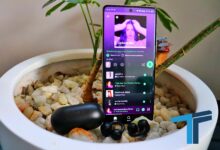
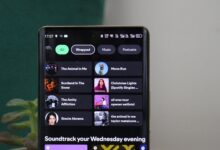
The shareable highlight reel reflects Apple’s design DNA: restrained visuals, short captions, and a familiar look that fits seamlessly onto Instagram and TikTok. Apple isn’t chasing spectacle. It is chasing retention. If listeners start to read Replay as part of their broader consumption record, Apple gains a narrative advantage that doesn’t depend on viral graphics.
Amazon Experiments With Mood and Identity
Amazon Music Delivered returns with a festival-poster format that leans into fandom instead of raw metrics. It transforms listening data into a mock lineup, with top artists occupying the roles of headliners. That approach gives users something that resembles a cultural artefact rather than a statistics sheet.
It’s an interesting interpretation of a recap because it hints at identity curation. The music you streamed becomes a lineup you might attend, a surface-level observation that still carries a sort of imaginative appeal. Amazon’s long-running pursuit of identity-based engagement shows up here. The platform doesn’t have Spotify’s social sway or Apple’s installed-base advantage, so it pushes creativity in the direction of self-presentation.
Delivered’s feature set remains broad enough to cover top tracks and genres, but the poster becomes the centrepiece. Whether that will pull more attention remains unclear. Amazon’s challenge is discoverability; even diehard music listeners occasionally forget that the service runs its own recap. A strong visual hook helps, but adoption depends on whether users remember to open the app in the first place.
YouTube Turns to AI for a New Layer of Interpretation
YouTube Music’s 2025 Recap arrives with a new twist: an AI chat interface that lets users interrogate their own listening patterns. Instead of only reading a curated narrative, listeners can ask direct questions. They can ask how their preferences evolved, whether their playlists leaned toward high energy or calm moods, or how their top artists’ presence varied throughout the year. The interface generates shareable graphics with each answer.
This approach feels like YouTube is trying to flatten the distance between listening and meaning. People often use YouTube for scattered consumption, dipping in and out of tracks, remixes, live sessions, covers, DJ sets, and audio that never fully migrates to other platforms. The AI feature tries to organise that chaos into a coherent story. It’s a practical experiment. When users push the chat beyond the standard prompts, they reveal what the platform still doesn’t surface effectively in its core product.
The feature also exposes how much YouTube is leaning on personal history as a competitive tool. Music discovery inside YouTube is vast and sprawling, which can feel overwhelming. A conversational interface that filters everything through a single question gives YouTube a new route to clarity. If that gains traction, it could reshape how listeners expect their data to work for them.
Spotify Still Owns the Stage, but Expectations Keep Rising
Wrapped maintains cultural momentum even as rivals roll out their recaps earlier each year. The theatrics help. Spotify leans into personality quizzes, group dynamics, and visual experiments that spread easily across social platforms. Wrapped is engineered for performance. It rewards both loyal users and casual participants, and it encourages listeners to compare results in a way that becomes a kind of seasonal ritual.
The 2025 edition extends that tradition through new social structures. Clubs anchor the experience around group identities, while leaderboards tilt the format toward friendly rivalry. Discovery modes fold back into the recap, so the year-end summary becomes a gateway into new music rather than a look backward alone. Some users will try to game the system; others will treat it as a diary; many will passively enjoy the reveal even if they don’t share anything.
What stands out is the ongoing tension between personalisation and performance. Wrapped was once a private summary that happened to trend online. Now it is an artefact people anticipate, curate, and sometimes even plan for throughout the year. That cultural centre of gravity keeps Spotify ahead even when its rivals launch first.
A Crowded Landscape and the Next Competitive Moves
The recap season has become an arms race driven by design, data, and user behaviour. Apple leans on habit, Amazon leans on visual identity, YouTube leans on conversational exploration, and Spotify leans on spectacle. Each service interprets listening history in its own way, and the variety reveals how fragmented modern music consumption has become.
The next phase likely stretches beyond year-end summaries. If YouTube’s conversational layer finds real traction, the other platforms will face pressure to deepen their own interpretive tools. If Apple continues blending Replay with everyday stats, users might come to expect recaps that track micro-patterns across shorter periods. Amazon may double down on formats that turn listening data into visually distinctive objects.
Spotify remains the point of comparison because it understands the cultural cadence of recaps better than its competitors. Yet staying ahead means expanding the idea of what a recap can be. The field is no longer defined by who launches first. It’s defined by who can turn data into something that feels personal, playful, or revealing without drifting into noise.
The coming years will turn these experiments into expectations. Listeners will not settle for a static summary. They will want context, narrative, and a sense that their choices carry weight inside a system built on near-infinite content. These services know that, and their end-of-year releases are no longer simple roundups. They are strategic displays of where each platform believes the future of music listening is going.
Go to TECHTRENDSKE.co.ke for more tech and business news from the African continent.
Follow us on WhatsApp, Telegram, Twitter, and Facebook, or subscribe to our weekly newsletter to ensure you don’t miss out on any future updates. Send tips to editorial@techtrendsmedia.co.ke

