
Microsoft Launches ‘Project Gecko’ in Kenya to Bridge Generative AI’s Global Divide

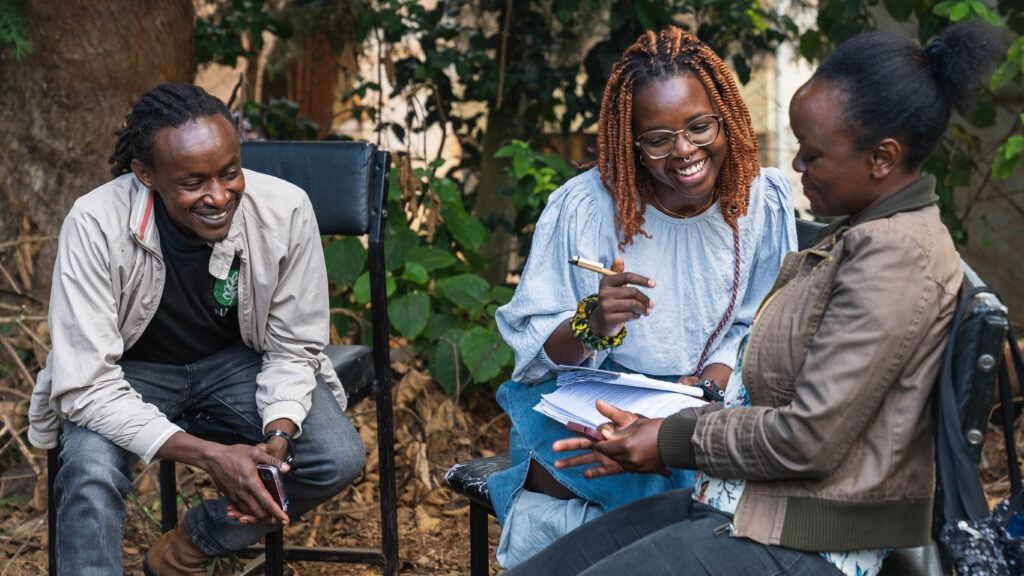
Microsoft has launched a new, ambitious research initiative called Project Gecko, choosing Kenya as the starting point for a global effort to build artificial intelligence systems that are truly inclusive of the world’s majority, particularly communities whose languages and cultural contexts are currently underrepresented in AI models.

The initiative, led by a collaborative team from Microsoft Research Africa (Nairobi), Microsoft Research India, and the Microsoft Research Accelerator in the U.S., aims to fundamentally redesign AI. Instead of adapting existing, English-centric large models, Project Gecko focuses on creating cost-effective, adaptable AI that leverages local languages, oral knowledge, and multimodal communication, such as speech and video.
The initial deployment centers on agriculture in Kenya, a critical economic sector where millions of smallholder farmers rely on hyperlocal, community-based knowledge. Project Gecko enhances tools like Digital Green’s FarmerChat, a speech-first assistant. With the new system, a farmer in Nyeri County, for example, can ask a complex question verbally in their native language, such as Kikuyu, and receive an actionable, context-rich response via text, audio, and a video clip that auto-jumps to the precise instruction.
Central to this innovation is the MultiModal Critical Thinking Agent (MMCTAgent), an AI system developed to analyze and reason across speech, images, and video to generate locally grounded answers. This model uses small language models (SLMs) to ensure it can run efficiently on the low-cost, low-bandwidth devices common in rural areas.

To overcome the deficit of training data for African languages, the Project Gecko team built new automatic speech recognition and text-to-speech tools from scratch. The initiative currently supports widely spoken Kenyan languages including Swahili, Kikuyu, Kalenjin, Dholuo, Maa, and Somali, drawing on a dataset of over 3,000 hours of crowd-sourced Kenyan speech.
Early field studies in Kenya and India have demonstrated significant improvements in response quality, usability, and user trust compared to generic, state-of-the-art AI systems. This success highlights a key finding: for the global majority, local relevance and cultural grounding are more powerful drivers of AI impact than sheer model size.
Looking ahead, Microsoft plans to expand Project Gecko’s application into other essential sectors like healthcare, education, and retail, underscoring a commitment to ensuring the next generation of AI is globally inclusive and shaped by the communities it aims to serve.
Go to TECHTRENDSKE.co.ke for more tech and business news from the African continent.
Follow us on WhatsApp, Telegram, Twitter, and Facebook, or subscribe to our weekly newsletter to ensure you don’t miss out on any future updates. Send tips to editorial@techtrendsmedia.co.ke

