As Kenya Moves to Unbundle M-Pesa, Vodacom Finds Itself Cornered by Its Own Creation
Regulators want to pry M-Pesa loose from Safaricom’s grip, but Vodacom is fighting to keep its hand on the tiller.


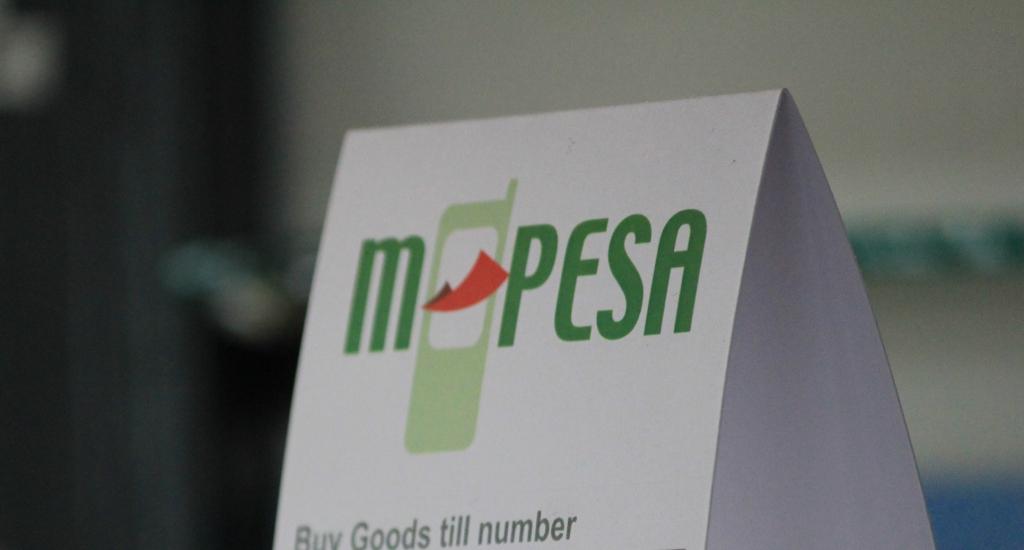
Vodacom Group has ruled out separating M-Pesa from Safaricom, defying pressure from Kenya’s central bank and a growing chorus of policymakers who want to see the telecom giant’s mobile money arm operate as an independent company.
The decision highlights an escalating tug-of-war between Nairobi’s regulators and the South African-owned parent firm over the future shape of one of Africa’s most profitable businesses.
Vodacom stands firm
Speaking to investors this week, Vodacom Group CEO Mohamed Joosub said the financial services division remains central to Safaricom’s identity and commercial strategy. He argued that M-Pesa’s deep integration with the company’s voice and data services creates value that cannot easily be replicated through a separate listing.
“We’re not looking to list the financial service businesses separately,” Joosub said. “We see it as intricately linked to our value proposition for customers.” He added that Vodacom intends to deepen its fintech offerings in Kenya, particularly in insurance, using experience from South Africa as a platform for regional expansion.

That clarity leaves little doubt: Vodacom sees M-Pesa as inseparable from Safaricom’s core, even as regulators intensify calls for structural reform.
A push from Nairobi
The Central Bank of Kenya (CBK) has long argued that M-Pesa’s scale requires tighter oversight. The platform handles most of the country’s mobile money transactions, processing billions daily through a network of agents that reaches nearly every household. CBK officials believe a standalone financial entity would allow for clearer supervision of transactions that increasingly resemble those of formal banks.
CBK Governor Kamau Thugge recently noted that one of the biggest hurdles in the separation process is tax liability. The bill, estimated at about Sh75 billion, would complicate any immediate split. Yet the central bank remains firm on its view that financial stability demands clearer separation between telecommunications and digital money operations.
Treasury officials have also entered the debate. Cabinet Secretary John Mbadi confirmed that the government is reviewing a proposal to divide Safaricom into three businesses: a telecom operator, a tower company, and M-Pesa as a regulated financial unit. He said early assessments show the state could gain “huge benefit” from such a restructuring, particularly if it coincides with a reduction of the government’s 35 percent stake.
The plan still requires Cabinet approval. For now, it remains an open political and regulatory question, one that pits the state’s fiscal interests against Vodacom’s strategic vision.
Safaricom’s position
Safaricom’s leadership has maintained that breaking up the company would erode synergies that underpin its profitability. M-Pesa is now the firm’s largest unit, accounting for 42 percent of total revenue. In the six months to September, Safaricom’s profit rose 52 percent to Sh42.7 billion, driven largely by double-digit growth in M-Pesa transactions.
CEO Peter Ndegwa has previously said a group structure, rather than a full separation, would deliver greater long-term value. That position mirrors Vodacom’s argument: that the interdependence of connectivity and finance defines Safaricom’s strength in the Kenyan market.
Vodacom owns 40 percent of Safaricom, while the Kenyan government holds 35 percent, and Vodafone retains a smaller share. For Vodacom, M-Pesa is not just an asset but a strategic differentiator — a service that binds customers more tightly to the network and broadens the company’s ecosystem across East Africa.
The regulatory logic
Regulators see things differently. The CBK believes the concentration of financial power in a telecom operator creates systemic risks. A split, they argue, would bring M-Pesa under financial regulations similar to those governing banks and fintechs. The Communication Authority would continue to oversee Safaricom’s telecom operations, separating the supervisory responsibilities that have become blurred as M-Pesa’s role in payments expanded.
Supporters of this approach point to Uganda, where MTN is carving out its fintech division as a distinct company. MTN Uganda plans to list the new entity on the local bourse within five years, aligning with the Bank of Uganda’s push for clearer oversight of digital finance. For Kenya, that model represents the kind of structural transparency the CBK wants to replicate.
Yet the challenge is practical as much as political. Any Safaricom-M-Pesa split would involve unwinding systems and shared resources built over nearly two decades. The tax exposure alone makes the exercise daunting. The CBK’s stance suggests a long, negotiated transition rather than a sudden restructuring.
Economic and political stakes
For the Treasury, the idea of breaking up Safaricom goes beyond supervision. It ties into the government’s fiscal ambitions. A separated M-Pesa could attract direct investors, potentially boosting state revenue if the government opts to sell part of its stake. That financial incentive adds weight to the debate, even as Safaricom continues to post record profits.
But the political calculus is delicate. Safaricom is not just another listed company; it is a pillar of Kenya’s capital markets and a proxy for the country’s digital economy. Any move that destabilizes it could unsettle investors and ripple across sectors that depend on its mobile payment ecosystem.
At the same time, Nairobi’s regulatory institutions want to reassert control over the digital finance landscape. Their concern lies in ensuring transparency, managing systemic risk, and protecting consumers in an economy increasingly built on mobile transactions. In that sense, the push to separate M-Pesa carries as much symbolism as it does financial intent — a demonstration of state oversight in a domain once left to corporate dominance.
Vodacom’s calculus
From Vodacom’s standpoint, integration remains its competitive advantage. The company’s financial services business across Africa generated Sh284 billion in annual revenue, with M-Pesa as the centerpiece. Splitting the platform, executives argue, would weaken its ability to scale products such as lending, savings, and insurance across multiple markets.
Joosub has framed M-Pesa as more than a payments system, a loyalty and customer engagement tool that links communication, commerce, and financial inclusion. That integration, he believes, gives Vodacom a structure “very different from a normal telco.” In his view, the company’s value lies in convergence, not separation.
Where the tension stands
The dispute has become a test of authority between corporate strategy and regulatory mandate. For regulators, the issue is structural integrity: financial services must operate under a clear legal regime. For Vodacom and Safaricom, it is about operational logic and customer experience.
Both positions hold merit. The CBK’s case is grounded in prudence, especially as M-Pesa’s transaction volumes approach those of formal banks. Vodacom’s argument rests on scale and synergy, the belief that integration has powered M-Pesa’s dominance and that separating it could undermine that success.
The road ahead
No final decision has been made, but the debate now defines Kenya’s telecom-fintech landscape. A future split would mark a historic realignment in one of Africa’s most lucrative digital ecosystems. Yet for now, Vodacom is holding its ground, confident that the integrated model remains its strongest hand.
Kenya’s regulators, however, appear determined to keep the issue alive. As M-Pesa grows larger and more systemically important, pressure will mount for a structure that satisfies both oversight and competition demands.
For the moment, the stalemate stands, a reflection of competing visions for Kenya’s digital economy and a reminder that the country’s most successful innovation has become a national institution too significant to leave unquestioned.
Go to TECHTRENDSKE.co.ke for more tech and business news from the African continent.
Follow us on WhatsApp, Telegram, Twitter, and Facebook, or subscribe to our weekly newsletter to ensure you don’t miss out on any future updates. Send tips to editorial@techtrendsmedia.co.ke

