Safaricom Cuts Customer Cyber Incidents by 90% Amidst 4.6B National Threat Alert
At its 2025 Cybersecurity Summit, the telco championed a "secure by design" and "zero-trust" approach as the new standard for business


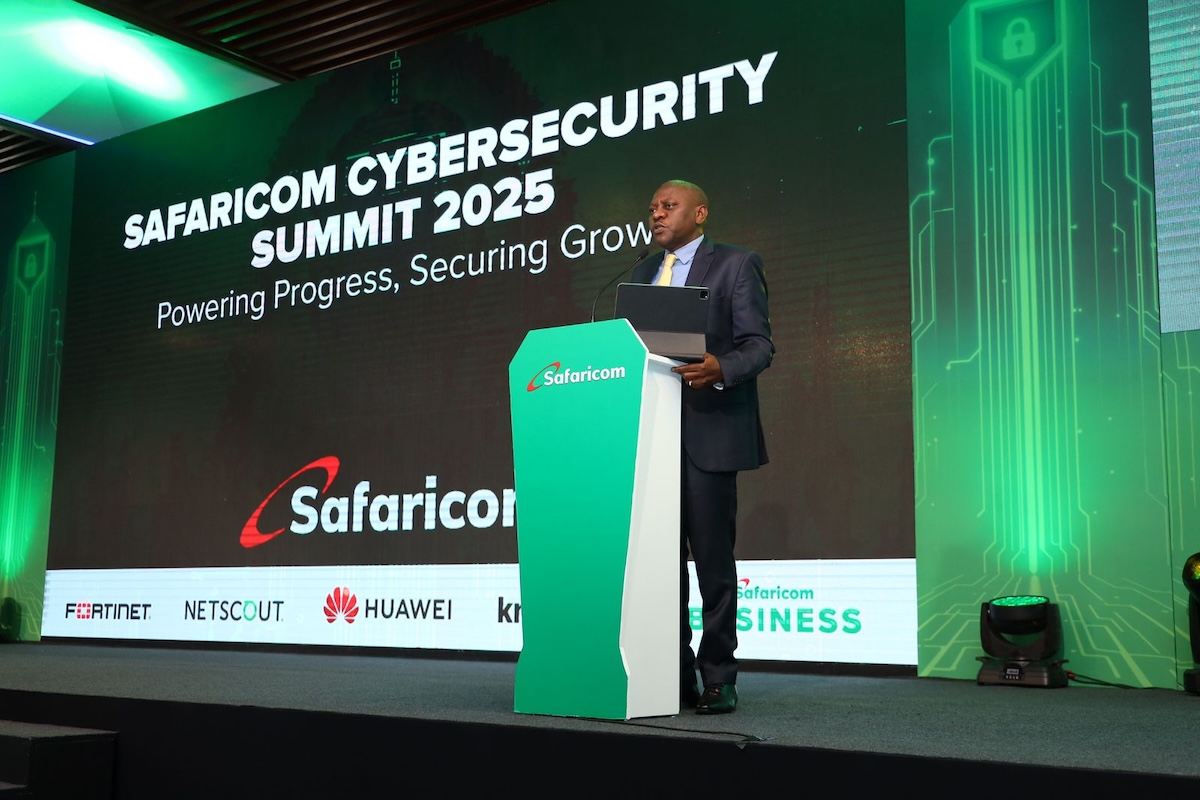
Safaricom today revealed that the deployment of its advanced security measures has reduced cybersecurity incidents among its business customers by nearly 90%.

The announcement was a key headline at the Safaricom Cybersecurity Summit 2025, an event themed “Powering Progress, Securing Growth,” which brought together industry leaders to address a rapidly escalating threat landscape.
The 90% reduction is largely attributed to the company’s Managed Security Operations Centre (MSOC), a 24/7 command centre that provides real-time threat detection and response for its enterprise clients.
This achievement stands in stark contrast to the national picture. Nicholas Mulila, Safaricom’s Chief Corporate Security Officer, highlighted staggering data from the Communications Authority (CA) showing that Kenya faced 4.6 billion cyber threats in the second quarter of 2025 alone.


“Cyber threats are rising, and the old reactive models are failing. Security must now be ‘secure by design,” Mulila told the summit. “We have moved past simple prevention. Today, cyber-resilience is greater than prevention, and a zero-trust architecture is the new baseline.”
Mulila warned that despite the growing sophistication of attacks, many breaches still stem from basic vulnerabilities like weak passwords, missing security patches, and poor collaboration within organisations.
Safaricom’s leadership, along with government partners, called for a fundamental shift in how businesses approach security, moving it from an IT department issue to a core boardroom responsibility.
“Cybersecurity is a shared responsibility,” Mulila emphasised, a sentiment echoed by the government.
Eng. John Tanui, CBS, Principal Secretary for the State Department for ICT and the Digital Economy, endorsed Safaricom’s proactive strategy. “Our national cybersecurity strategy has evolved from being reactive… to a proactive ‘security by design’ approach,” PS Tanui said. “This means integrating cybersecurity considerations into the initial development stages of every product, service, and policy.”
The Principal Secretary also stressed the critical role of new technologies in defense, stating, “It is critical to apply AI and Machine Learning to detect and tackle cyber threats.”
Go to TECHTRENDSKE.co.ke for more tech and business news from the African continent.
Follow us on WhatsApp, Telegram, Twitter, and Facebook, or subscribe to our weekly newsletter to ensure you don’t miss out on any future updates. Send tips to editorial@techtrendsmedia.co.ke

