Three Years After the Regulator’s Promise, Nigeria’s First Virtual Operator Steps Into a Market That Barely Budges
Nigeria’s telecom market has never liked letting newcomers in, and the first virtual operator arrives knowing exactly what it’s walking into


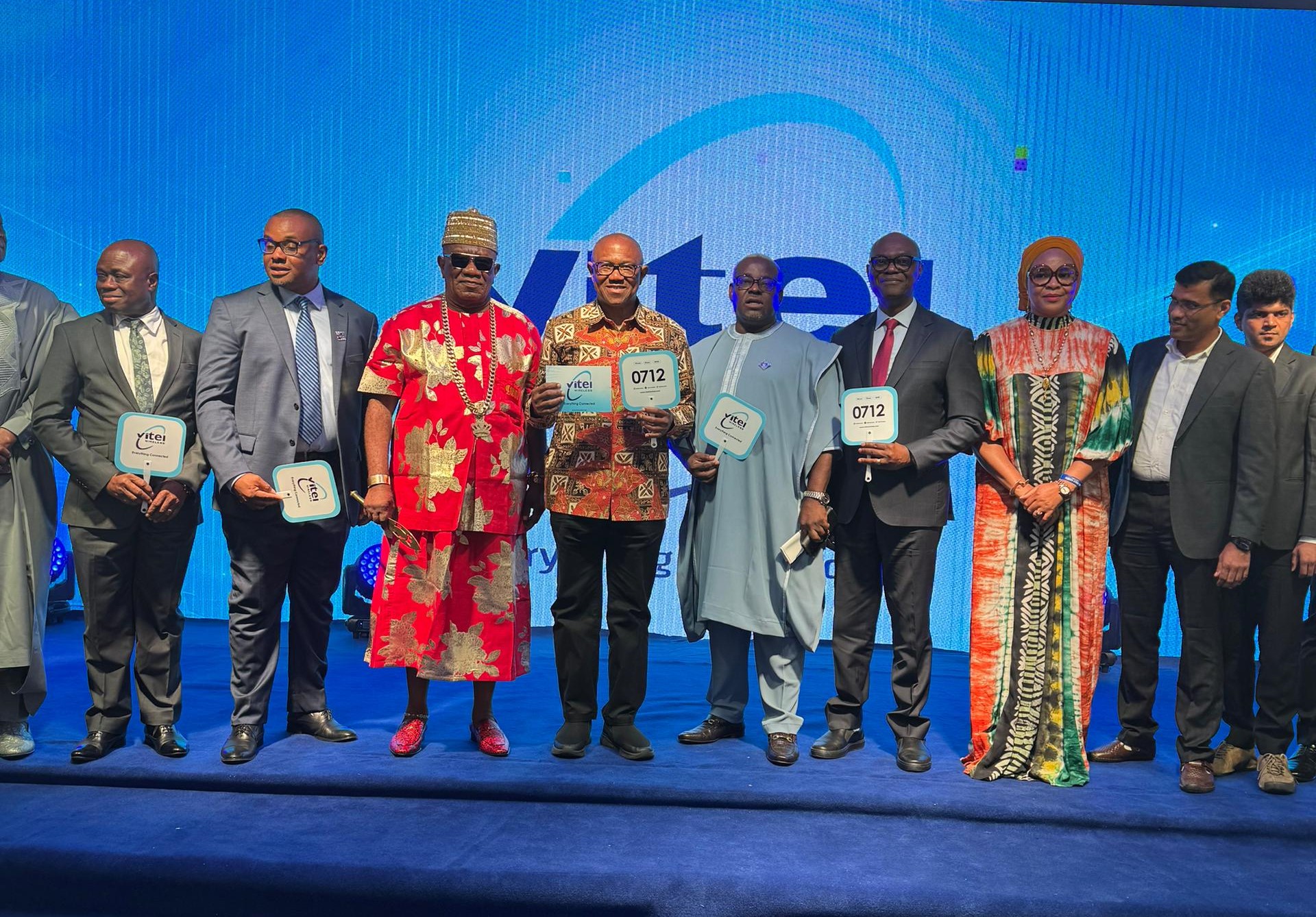
It took more than three years for Nigeria’s first MVNO to move from policy to reality. The regulator cleared the way in 2022, promising a new layer of competition in one of Africa’s largest telecom markets. Yet only now is that vision materializing. On 30 October, Vitel Wireless launched commercially, becoming the country’s fifth national operator.

The wait says as much about Nigeria’s telecom politics as it does about regulatory inertia. For years, the sector has been dominated by four established players—MTN, Airtel, Globacom, and 9mobile—each with entrenched networks, deep infrastructure, and millions of subscribers. Breaking into that hierarchy has never been easy, even for companies licensed to do so.
The Idea Behind the MVNO
Unlike a traditional operator, an MVNO doesn’t own the towers or the cables that carry its services. It buys capacity from an existing network—in this case, MTN—and resells it under its own name. It’s a model built on efficiency rather than infrastructure. The theory is that with lower operating costs, a virtual operator can focus on pricing, service, and customer relationships instead of network maintenance.
Vitel’s license from the Nigerian Communications Commission (NCC) confirms its formal standing as a Second Level operator. The company has secured the 0712 number series and says it has completed interconnection with all major networks, meaning subscribers can call or message users across the country without restriction. It trades under the consumer brand “Blue,” a name that so far carries little public recognition but could soon appear on prepaid SIMs and data bundles.
![[Namibia] Paratus and MTN sign country’s first roaming agreement](https://techtrendske.co.ke/wp-content/uploads/2021/11/Paratus-Namibia-220x150.jpeg)

The Weight of an Old Market
Nigeria’s mobile market is massive—over 220 million subscribers, roughly equivalent to the entire population. But saturation has brought stagnation. Growth now depends on getting people to switch networks or use multiple lines. That’s where the MVNO model could, at least in theory, offer an opening.
The established operators dominate with infrastructure, yet they’re often seen as slow-moving. Customer service remains patchy, tariffs can be unpredictable, and coverage quality varies from city to village. If a virtual operator can deliver even marginally better experience or innovative pricing, it might find an audience among younger, cost-sensitive users.
Still, MVNOs elsewhere have learned that it’s not an easy equation. The margins are thin. Wholesale prices depend on the goodwill of the host network, and marketing costs can drain resources quickly. Without scale, a virtual operator risks being treated more as a reseller than a rival.
The Regulatory Bet
The NCC’s MVNO framework was supposed to diversify competition and expand digital access. The regulator classified licenses into several tiers, ranging from basic resellers to operators that can eventually deploy limited infrastructure. Vitel’s “Second Level” license suggests moderate operational autonomy—it can offer core network functions but still depends on MTN’s towers.
The regulator’s patience is being tested. Since 2022, a handful of companies have been licensed, yet none reached launch until now. Bureaucratic hurdles, investment delays, and the sheer complexity of interconnection may explain the holdup. But the underlying story may be about risk appetite. The established operators have little incentive to nurture new entrants that could undercut them on price.
A Cautious Start
For now, Vitel appears pragmatic. Its early materials emphasize nationwide reach and partnership with MTN rather than confrontation. That’s a smart move for a debutant trying to establish credibility. Whether it can scale fast enough to stay solvent is the harder question.
One possible advantage lies in specialization. An MVNO can tailor services for niche markets—rural users, small businesses, or migrant workers—without the burden of national coverage. It can also experiment with flexible pricing, bundle content or fintech products, and use digital channels instead of physical shops. Those are modest advantages but potentially meaningful in a market where differentiation is scarce.
The Broader Implication
Vitel’s arrival tests not just the company’s resilience but the entire premise of Nigeria’s telecom liberalization. If the first MVNO succeeds, others may follow, introducing new models of partnership and retail competition. If it stalls, regulators may face criticism for pushing a framework that looked good on paper but failed in practice.
Elsewhere in Africa, MVNOs remain rare. South Africa and Kenya have seen only limited adoption, often constrained by the same structural barriers—high wholesale prices and protective incumbents. Nigeria could, in time, prove an exception. The country’s sheer scale gives it room for multiple business models to coexist, provided regulators enforce fair access and pricing.
What Comes Next
It’s too early to call Vitel a disruptor. The launch marks more of an experiment in regulatory follow-through than a revolution in service delivery. But it does open a new front in how Nigeria’s telecom landscape organizes itself.
If the model works, it could encourage a second wave of virtual entrants—leaner, digital-first operators competing on experience rather than coverage. If it doesn’t, the lesson may be that market liberalization alone isn’t enough.
Either way, after years of waiting, Nigeria’s first MVNO has finally arrived. And for once, the country’s telecom story isn’t about another infrastructure race—it’s about how to make the networks already built serve people differently.
Go to TECHTRENDSKE.co.ke for more tech and business news from the African continent.
Follow us on WhatsApp, Telegram, Twitter, and Facebook, or subscribe to our weekly newsletter to ensure you don’t miss out on any future updates. Send tips to editorial@techtrendsmedia.co.ke
xx

