As Africa Chases a $103 Billion AI Boom, Nvidia Places Its Bet on Cassava and the Infrastructure Race Beneath It
The Cassava deal folds Africa’s digital ambitions into a global AI contest that few on the continent are fully prepared to navigate


When Nvidia took a stake in Cassava Technologies this week, it wasn’t just another investment headline. It landed in a context already swelling with questions about who will build, own, and profit from Africa’s emerging generative AI economy.
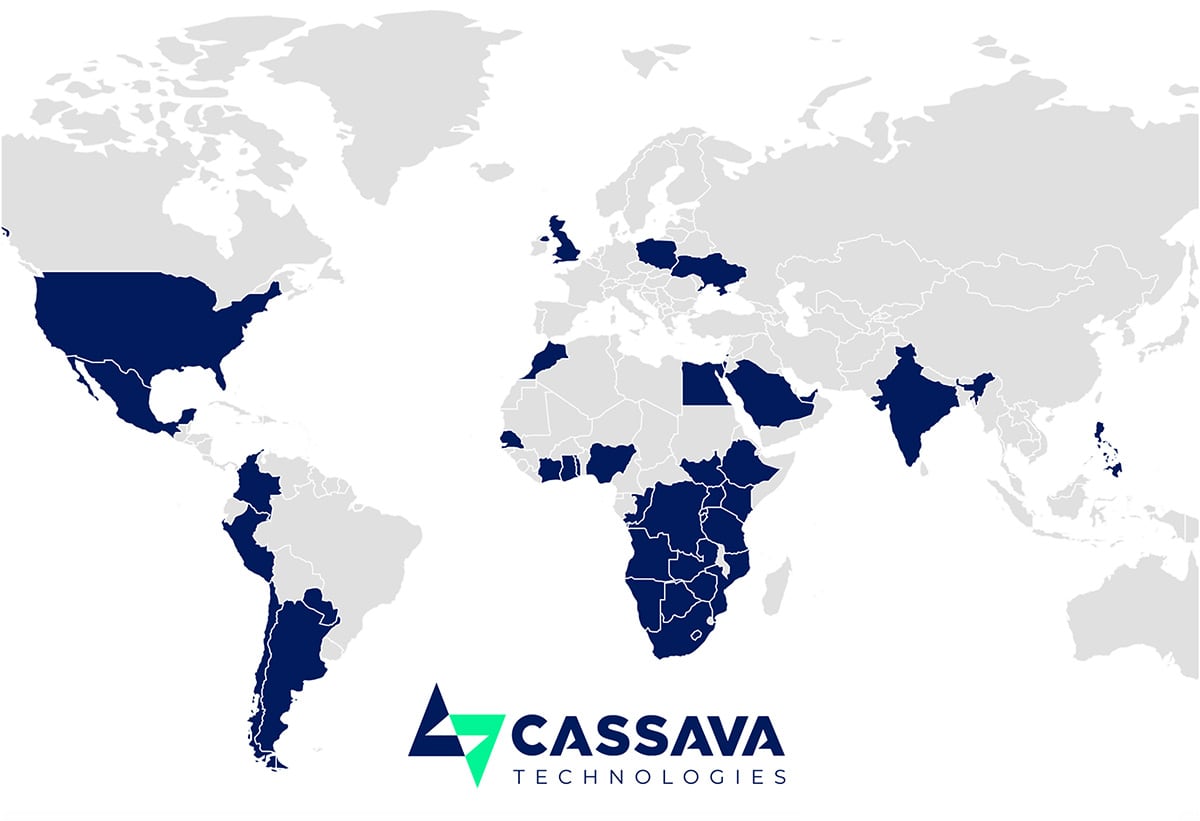
Cassava, a pan-African digital infrastructure firm founded by Zimbabwean billionaire Strive Masiyiwa, has long framed itself as a connective layer — linking fiber, cloud, and fintech across 30 countries. Now, with Nvidia’s backing, it steps into a more complicated role: helping to build Africa’s own computational backbone.
The investment figure wasn’t disclosed, but the timing feels deliberate. As Nvidia’s valuation flirts with $5 trillion and AI adoption accelerates globally, the company is extending its reach into markets that still account for barely one percent of global data center capacity. Africa’s shortage of compute power has become a strategic bottleneck, and that makes Cassava’s network and data centers an immediate bridge to something larger.
Generative AI’s untapped billions
According to McKinsey data, generative AI could unlock roughly $103 billion in productivity across African economies. Retail leads the pack with a projected $10.4 billion boost, followed closely by telecommunications and consumer goods. Banking, transport, and heavy industry follow close behind, while even education and the public sector — often late adopters of tech — are projected to see billions in new value.


It’s an ambitious number, but not an abstract one. Africa’s economies have always been unevenly digitized, with deep mobile penetration existing alongside low enterprise automation. The arrival of generative AI is not starting from zero; it’s entering systems already in motion.
Think of call centers that could automate language translation in real time, logistics firms that could forecast cross-border delays, or micro-retailers using AI tools to track demand in informal settlements. These aren’t futuristic ideas. They’re incremental advances with visible economic leverage.
A market running ahead of its infrastructure
Here lies the paradox. Africa’s digital economy is expanding faster than the infrastructure supporting it. A continent that produces some of the world’s youngest software developers still relies heavily on offshore cloud servers. That dependency raises costs and complicates data governance.
Cassava’s planned “AI factory,” which will deploy Nvidia’s software in data centers across Egypt, Kenya, Morocco, Nigeria, and South Africa, is one of several private efforts to change that balance. But it’s also a reminder that Africa’s AI story is being shaped largely by corporate alliances rather than public strategy. Governments are still working out how to regulate models, manage data privacy, or link AI policy to national development goals.
If private infrastructure leads the way, the risk is that generative AI becomes another imported service layer rather than an embedded capability. The productivity gains could still arrive — but who captures the profits would depend on where the data and compute sit.
Nvidia’s long play
For Nvidia, the Cassava deal is less about immediate profit and more about positioning. The company thrives on ecosystems, not single sales. Every regional partnership deepens its control over the AI hardware-software loop — the same loop that already defines AI development in the United States, Europe, and parts of Asia.
Africa’s potential lies in skipping the slow buildout phase that other regions endured. With AI models moving to the edge, and demand for regional compute rising, Nvidia’s role as both supplier and catalyst could solidify early. Cassava, meanwhile, gains credibility and access to the tools needed to run those models locally.
It’s a mutually reinforcing relationship, though not without tension. There’s always the question of how much local control remains when the most valuable layer — the hardware and the model training — stays external.
The next phase: where value actually forms
The biggest gains from generative AI in Africa won’t come from writing chatbots or digital assistants. They’ll come from integrating AI into unglamorous sectors that still run on paper or fragmented software. Mining logistics, regional banking operations, smallholder agriculture — all could become data-rich systems if compute becomes affordable and local.
And if those systems evolve in ways that reflect African contexts rather than imported templates, the productivity surge McKinsey mapped could multiply.
For now, Nvidia’s entry adds weight to the sense that Africa’s generative AI economy is no longer theoretical. The infrastructure race is underway, the data pipelines are expanding, and the players are positioning themselves. What remains to be seen is whether this expansion translates into durable local capability or simply another layer of digital dependency dressed in new language.
Go to TECHTRENDSKE.co.ke for more tech and business news from the African continent.
Mark your calendars! The GreenShift Sustainability Forum is back in Nairobi this November. Join innovators, policymakers & sustainability leaders for a breakfast forum as we explore sustainable solutions shaping the continent’s future. Limited slots – Register now – here. Email info@techtrendsmedia.co.ke for partnership requests.
Follow us on WhatsApp, Telegram, Twitter, and Facebook, or subscribe to our weekly newsletter to ensure you don’t miss out on any future updates. Send tips to editorial@techtrendsmedia.co.ke
TechTrends Media Podcasts

