
As Kenya’s Digital Overdraft Market Surges, Co-op Bank Bets on Kamilisha to Challenge Fuliza and Boostika
Kenya’s appetite for instant credit keeps growing, and now the country’s second-largest bank wants a bigger piece of it.

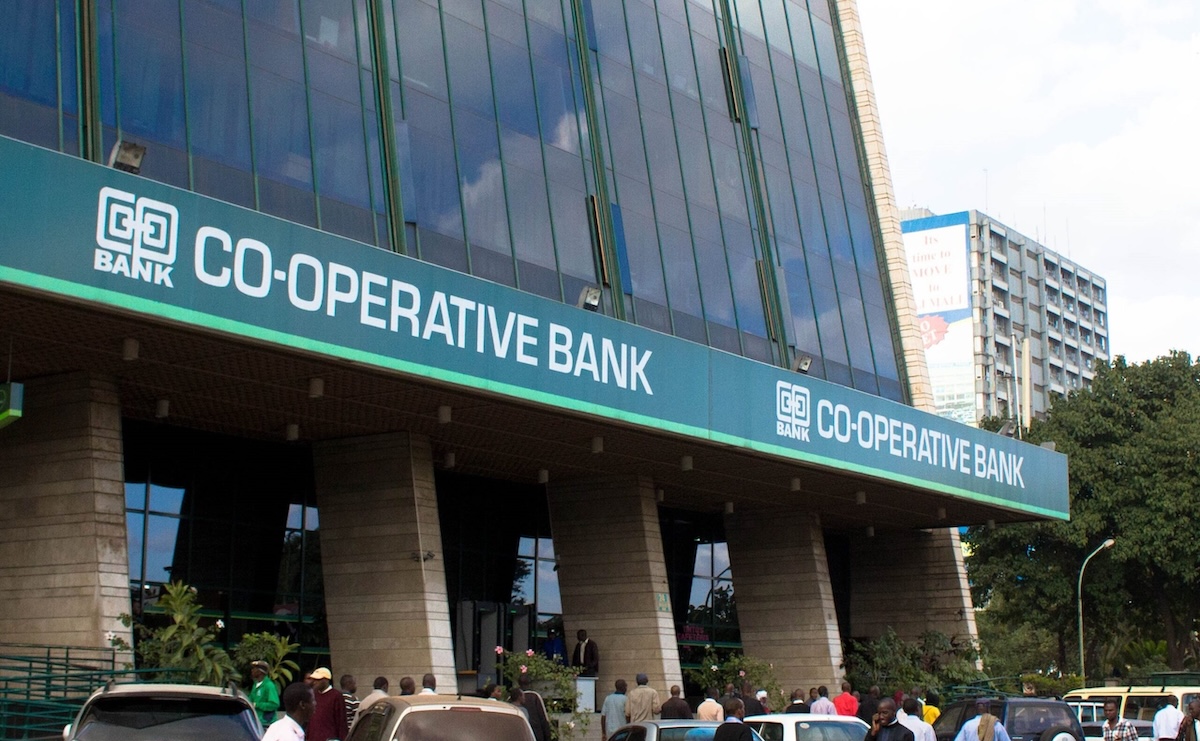
When the Co-operative Bank of Kenya rolled out its new overdraft product, Kamilisha, it wasn’t just launching another loan facility. It was stepping into a fast-expanding digital credit arena where banks and telcos compete for the same customer moment, the instant when liquidity runs thin.

Kamilisha allows users to overdraw up to Sh100,000 for everyday needs, such as rent, electricity, or business purchases. It’s unsecured, instant, and mobile-accessible. Yet behind its convenience lies a crowded market, rising regulation, and a deeper story about how short-term credit is reshaping Kenya’s financial habits.
A product designed for a market hooked on liquidity
Co-op Bank’s model is straightforward but layered. The overdraft carries a one-time access fee of 2 per cent, a daily charge of 0.2 per cent on the balance, and a credit life insurance fee of 0.034 per cent per month. Excise duty applies on the access fee.
A customer borrowing Sh1,000 and taking a full month to repay would pay roughly Sh84.34 — an effective cost of about 8.4 per cent per month. That puts Kamilisha slightly below Fuliza, which costs around Sh180 for the same amount and period, and close to Equity Bank’s Boostika, which averages Sh85 a month under a five per cent processing fee.


Comparative overview of Kenya’s main digital overdraft products
| Product | Provider | Maximum Limit | Fee Structure | Repayment Period | Details |
|---|---|---|---|---|---|
| Kamilisha | Co-operative Bank of Kenya | Up to Sh100,000 | 2% one-off access fee, 0.2% daily on balance, 0.034% monthly insurance, plus 20% excise duty on access fee | 30 days from first use | Fully bank-regulated overdraft linked to account history and transaction behaviour |
| Boostika | Equity Bank Kenya | Up to Sh100,000 | 5% processing fee, 1% insurance, plus 20% excise duty on processing fee | 30 days | Mobile-linked overdraft integrated within Equity’s mobile platform and app ecosystem |
| Fuliza | Safaricom, KCB Bank, and NCBA | Up to Sh70,000 | Sh6 daily on a Sh1,000 balance (scales by amount), no one-off access fee | Continuous; repayment on next M-Pesa inflow | Largest user base with over 8 million active users; jointly operated across telecom and banking infrastructure |
The market may appear saturated, but it remains hungry. Safaricom’s Fuliza, jointly operated with KCB and NCBA, has more than eight million active users and disbursed about Sh906 billion in 2024. Equity’s Boostika sits on a strong digital footing as well, while NCBA’s mobile lending partnerships, including M-Shwari and Fuliza, moved over a trillion shillings last year.
For Co-op Bank, Kamilisha extends its existing digital credit suite — which already includes Flexi Plus, salary advance, and Co-op-a-Maji — and positions it among the few banks able to offer an overdraft entirely within a regulated banking ecosystem.

Data paints a picture of both promise and peril
By mid-2025, licensed digital credit providers in Kenya had issued more than 5.5 million loans worth Sh76.8 billion. That was nearly triple the 2023 volume, according to Central Bank data. The number of licensed digital lenders has also jumped, crossing 150 firms by September 2025.
This growth, however, hides a worrying trend. Default rates among digital loans hover near 40 per cent, compared with about 16 per cent for traditional bank credit. In the microloan segment, where borrowers take less than Sh1,000, defaults reach as high as 80 per cent.
Such figures expose the fragile economics behind convenience lending. Many customers rely on short-term credit for recurrent expenses, a pattern that erodes repayment discipline and traps users in rolling debt.
For banks, the challenge lies in balancing inclusion with prudence. Unlike app-based digital lenders, banks are now under stricter scrutiny to disclose the total cost of credit, maintain ethical collection practices, and avoid exploitative pricing models.
A regulatory environment catching up
The Central Bank of Kenya’s 2022 framework for digital credit providers transformed what had been an unregulated frontier into a licensed market. By mid-2025, 153 digital lenders had received approval under the new rules, which require disclosure of fees, data protection compliance, and fair collection methods.
That oversight, combined with involvement by the Office of the Data Protection Commissioner and the Competition Authority, has reined in predatory lending and improved consumer awareness. Yet regulation alone cannot solve structural pressures — high borrowing costs, irregular income flows, and the cultural normalisation of overdraft use.
Co-op Bank’s Kamilisha operates squarely within this environment. As a regulated bank product, it benefits from stronger consumer protection and transparency standards than most fintech offerings. But it also faces policy risk if the CBK decides to impose rate caps or tighter disclosure rules in response to rising defaults.
The fine balance between access and risk
What makes Kamilisha notable is less the product itself and more what it represents: a pivot among mainstream banks toward granular, data-driven credit at scale. It uses account history and cash flow to set limits, offering a glimpse of how formal banking is learning from fintech models while maintaining compliance.
For customers, it offers breathing space in moments of strain — but at a cost that quickly compounds if left unpaid. For regulators, it highlights the need for guardrails that don’t stifle innovation. For Co-op Bank, it’s both an opportunity and a test: whether a bank can compete in the speed-focused, high-risk world that telcos once owned.
The outcome will depend not just on pricing, but on how Kenya manages the intersection of technology, regulation, and financial discipline.
Go to TECHTRENDSKE.co.ke for more tech and business news from the African continent.
Follow us on WhatsApp, Telegram, Twitter, and Facebook, or subscribe to our weekly newsletter to ensure you don’t miss out on any future updates. Send tips to editorial@techtrendsmedia.co.ke
TechTrends Media Podcasts


