

The High Court in Nairobi has temporarily halted the enforcement of contentious sections of the recently enacted Computer Misuse and Cybercrimes (Amendment) Act, 2025.

In a ruling delivered on Wednesday, Justice Lawrence Mugambi issued conservatory orders suspending the implementation of Section 27(1)(b), (c), and (2) of the amended law. The order follows a constitutional petition filed by Kenyan musician and activist Reuben Kigame, alongside the Kenya Human Rights Commission (KHRC).
The suspended provisions are part of a broader amendment that has sparked widespread condemnation from civil society, digital rights organisations, and human rights defenders. The controversy centres on the newly amended Section 27, which criminalises the publication of “false, misleading or fictitious data.” Petitioners argue this language is “unconstitutionally vague” and provides no clear, objective criteria, effectively creating a tool that could be weaponised to silence journalists, activists, and any citizen critical of the government.
Furthermore, the amended Act grants sweeping new powers to the National Computer and Cybercrimes Coordination Committee (NC4), allowing this state body to order the blocking or removal of websites and applications without judicial oversight. Rights groups have warned that this provision opens the door to arbitrary state censorship and abuse of power.


The legal challenge also highlights severe infringements on privacy. The petition argues that mandatory requirements for social media users to verify their accounts using their legal names constitute a “severe and unjustifiable infringement” on the constitutional right to privacy (Article 31) and the right to anonymous speech, which is protected under the freedom of expression (Article 33). The petitioners also contend that these new amendments create a “parallel and conflicting framework” that directly undermines Kenya’s existing Data Protection Act, 2019, leading to “legal chaos and uncertainty.”
The petitioners argue that the suspended provisions are unconstitutionally vague and pose a significant threat to freedom of expression, privacy, and access to information.
The conservatory orders issued by Kenyan judge Justice Mugambi will remain in effect pending the full hearing and determination of the case. This decision effectively bars the government from using the specified sections to investigate, arrest, or prosecute any individual.
The Computer Misuse and Cybercrimes (Amendment) Act, 2025, has faced sharp criticism from civil society and digital rights groups since its proposal. Despite the government’s position that the law is necessary to combat fraud, radicalization, and online exploitation, opponents have consistently warned that it grants excessive power to state agencies and risks rolling back democratic freedoms.
The case filed by Kigame and the KHRC will now proceed to a full hearing, where the court will determine the constitutional validity of the suspended clauses.
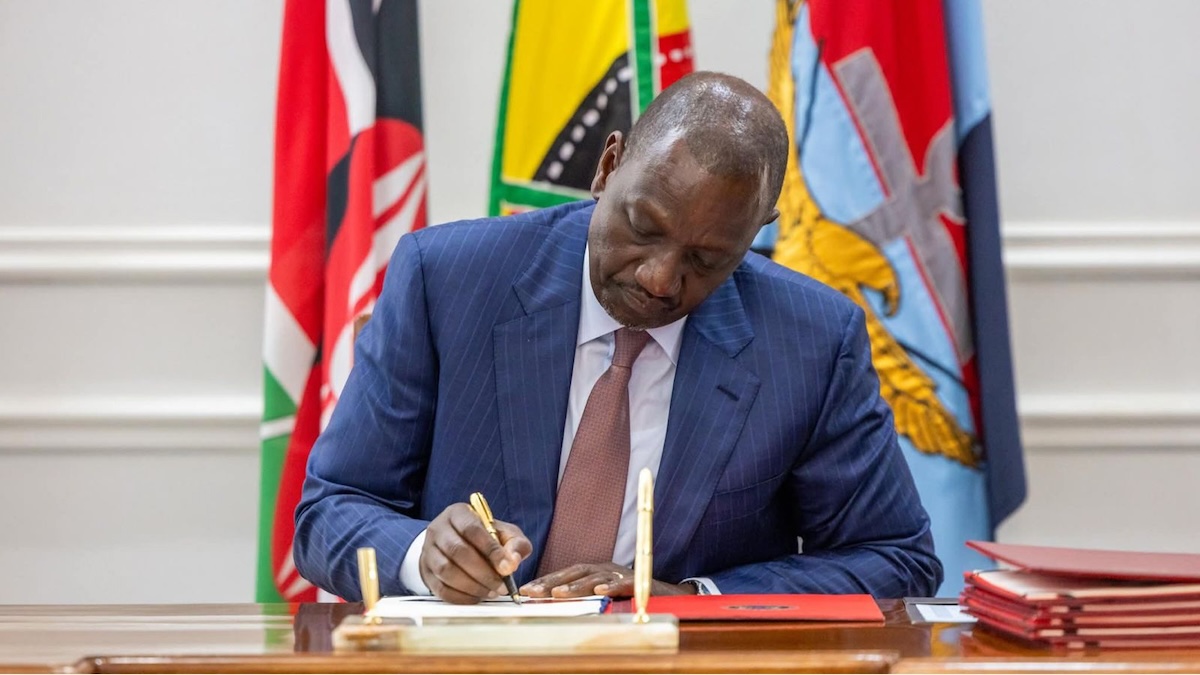
Kenya’s president, William Ruto, signed the bill into law last week on Wednesday.
Go to TECHTRENDSKE.co.ke for more tech and business news from the African continent.
Mark your calendars! The GreenShift Sustainability Forum is back in Nairobi this November. Join innovators, policymakers & sustainability leaders for a breakfast forum as we explore sustainable solutions shaping the continent’s future. Limited slots – Register now – here. Email info@techtrendsmedia.co.ke for partnership requests.
Follow us on WhatsApp, Telegram, Twitter, and Facebook, or subscribe to our weekly newsletter to ensure you don’t miss out on any future updates. Send tips to editorial@techtrendsmedia.co.ke

