The Vivo X300 Pro Steps Into a Fight With Apple and Xiaomi by Turning a Phone Into a Field Camera
You see the intent in the grip, the lens, the tuning and the gamble that someone still cares about reach and control


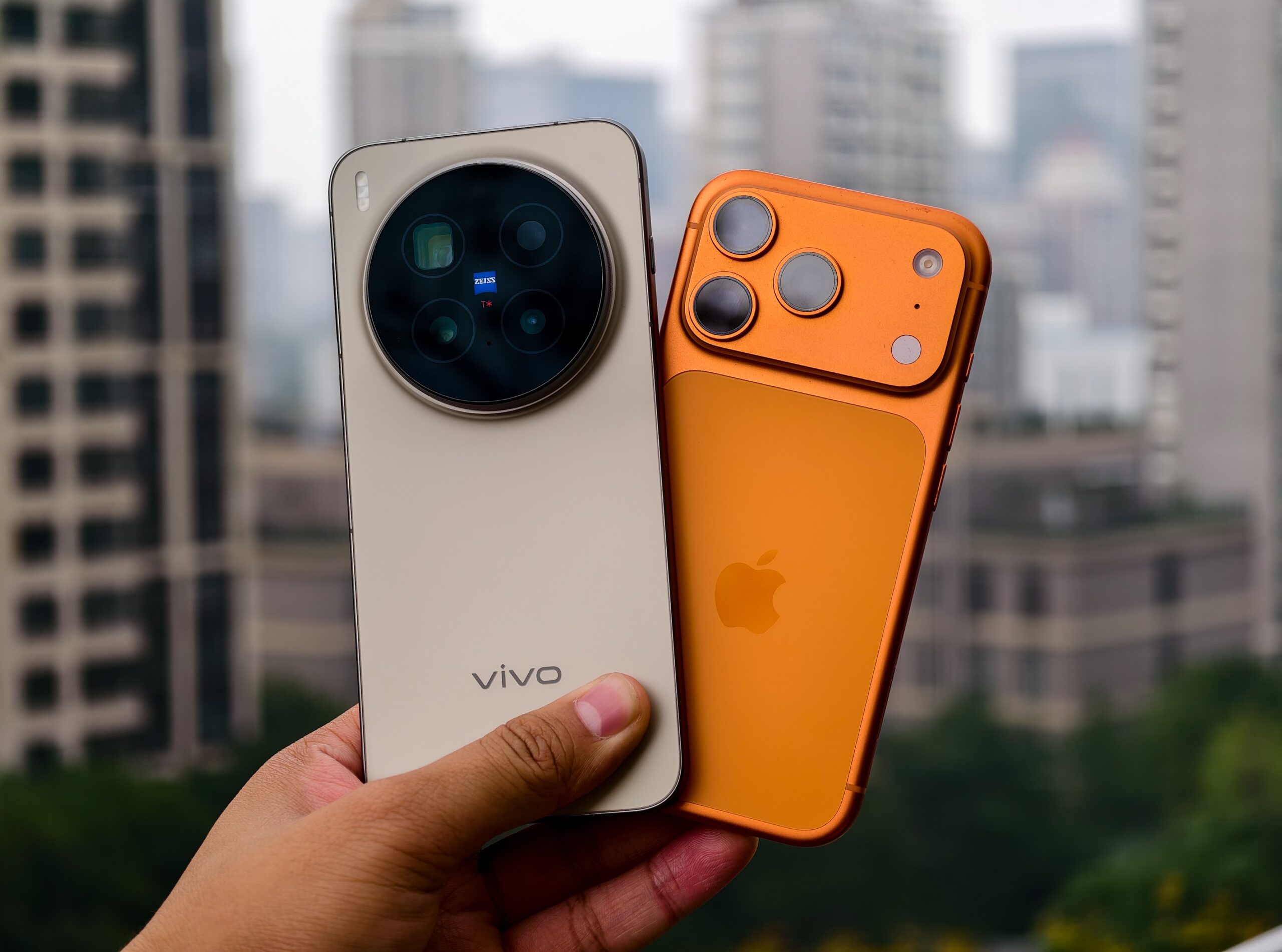
The Vivo X300 Pro arrives at a delicate moment for mobile photography. Apple’s iPhone 17 Pro Max is narrowing the gap on long-standing Android advantages. Xiaomi’s 15 Ultra and Oppo’s Find X8 Ultra are taking risks with sensors, zoom ranges, and battery heft. Vivo, meanwhile, has spent the past few years carving out a space for itself not by chasing the biggest numbers but by threading together hardware quirks and software instincts into a package aimed squarely at photographers.

The X300 Pro embodies that philosophy. It is not a complete break with the X200 Ultra, yet it signals a more deliberate global push. Where the Ultra line is China-focused and slightly experimental, the Pro line is Vivo’s export vehicle — slimmer, more polished, and tuned for broader markets.
The Photographer Kit: Turning a Phone into a Camera
For journalists and early testers in Shanghai, Vivo presented the X300 Pro inside a large box that felt more Leica than smartphone. The so-called Photographer Kit comes with a snap-on case, a detachable grip, and a Zeiss telephoto extender.
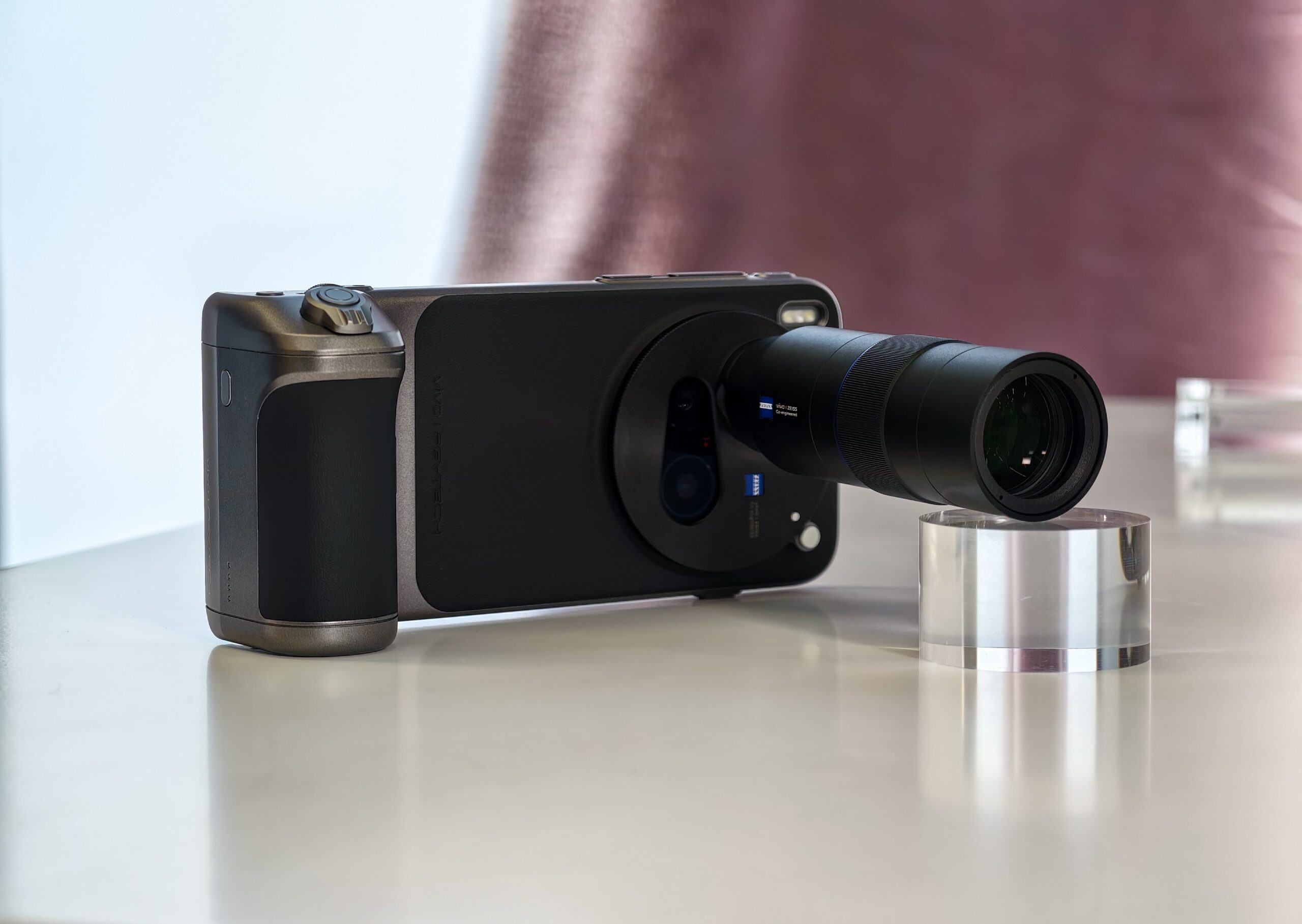


Vivo X300 Pro Photographers kitThe grip slots into the USB-C port with a reassuring click and adds physical shutter control, zoom toggles, and even a small auxiliary battery. The extender, when mounted, pushes the periscope zoom to a 200 mm optical equivalent — and further if you indulge digital stretch to 400 mm or beyond.
This approach is not new. The X200 Ultra shipped with a nearly identical Zeiss lens. But what matters here is that Vivo chose to bring the entire kit to the Pro line, rather than keeping it locked to the China-only Ultra. That decision speaks volumes about strategy: Vivo wants Western buyers, travel photographers, and even semi-pro shooters to consider this as more than just a phone.
Design That Walks Back the Curves
One visible shift is the display. Where earlier models leaned into four-way curves, the X300 Pro adopts a completely flat 6.78-inch LTPO OLED panel. Some enthusiasts lament the loss of sculpted edges, yet a flat surface has its merits — firmer grip, less accidental touch, simpler protector fitting. Brightness is formidable, clearing 3000 nits in real-world sunlight. Dolby Vision support and 120 Hz adaptive refresh round out the spec sheet.
At 226 grams and just under 8 mm thick, the phone balances presence with portability. The camera module is still prominent, though less protrusive than the X200 Ultra’s oversized bump. It remains large enough to prop a finger under for support — a small ergonomic quirk that photographers quickly learn to appreciate. Compared with the chunkier Xiaomi 15 Ultra, the Pro feels lighter in hand, closer to Oppo’s Find X8 Ultra in balance, while the iPhone 17 Pro Max still leads in fit-and-finish but tips heavier in day-to-day handling.
Under the Hood: MediaTek Steps Up
Powering the X300 Pro is MediaTek’s Dimensity 9500, a direct answer to Qualcomm’s Snapdragon 8 Elite Gen 5 found in many rivals. Benchmarks out of Shanghai showed Antutu scores breaking the 3-million mark, with GPU leaps accounting for most of the jump over the X200 Pro. Paired with up to 16 GB of RAM and UFS 4.1 storage, performance is rarely in question.
Apple’s silicon remains peerless in efficiency, but Vivo’s decision to trust MediaTek in its global flagship underscores how far the Taiwanese firm has climbed. Oppo and Xiaomi continue to lean on Qualcomm’s top chips. Vivo’s break from that orthodoxy signals confidence in MediaTek’s ability to shoulder the load for a camera-first phone.
Camera Hardware: Familiar Yet Sharpened
The X300 Pro’s rear array carries three lenses, each 50 megapixels except for the periscope sensor which climbs to 200 MP. The main shooter uses Sony’s LYT-828 with a wide f/1.57 aperture. Stabilization is marketed as “gimbal-grade.” While the phrase oversells it, video clips do come out steadier than most handheld rivals.
The periscope telephoto uses an updated HP8 sensor at f/2.67. On paper it is a step back from the HP9 inside the X200 Ultra, though processing refinements help mitigate losses. Optical reach is 85 mm by default, extending to 200 mm with the Zeiss adapter. Here it overtakes the iPhone 17 Pro Max, which now offers a 100 mm telephoto but cannot match Vivo’s extender. Oppo’s Find X8 Ultra matches reach but tends to soften edges in low light, while Xiaomi’s 15 Ultra pushes more aggressive sharpening that splits audiences.
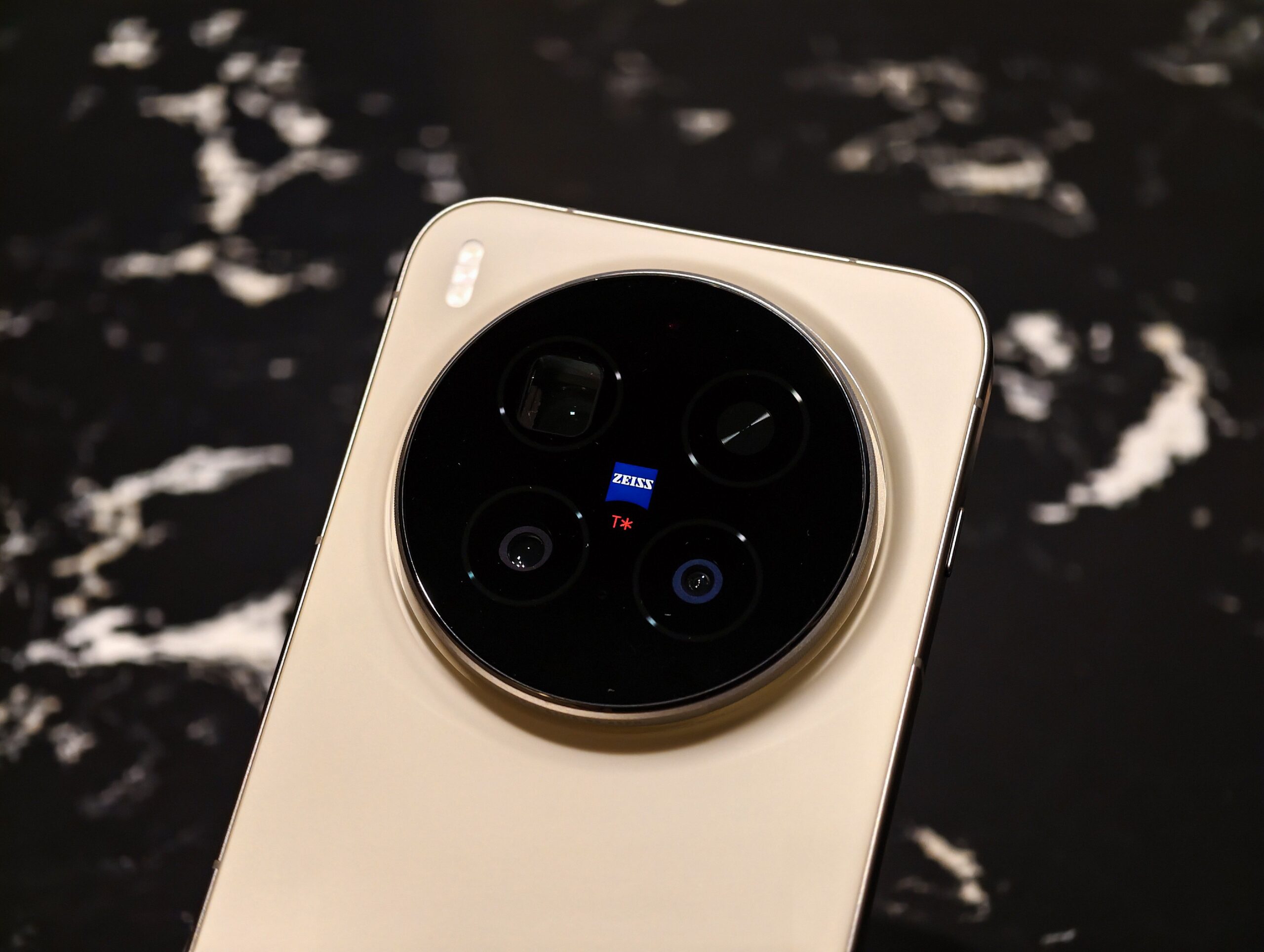
The ultrawide is again a JN1 sensor. Capable, yes, but less ambitious than the parity system used in the X200 Ultra, which duplicated the main sensor for wide and ultrawide. This is where the Pro concedes ground: Xiaomi’s 15 Ultra and Oppo’s Find X8 Ultra both employ larger ultrawide sensors that gather more light and offer broader fields of view. In stills, the gap is visible at night; in video, Vivo’s color tuning goes further in compensating.
Image Processing: The Distinctive Edge
Where the hardware converges, processing separates. Vivo’s color philosophy still leans organic, closer to film emulation than computational HDR. Portrait filters carry a cinematic feel, while landscape shots often land warmer than Apple’s cooler precision.
Apple’s iPhone 17 Pro Max wins on consistency — white balance rarely falters — but its output can feel sterile. Xiaomi’s computational style often exaggerates contrast, while Oppo’s saturation choices push skies toward excess. Vivo instead trades absolute accuracy for mood, which for many shooters is the more pleasing result.
Portrait stacking at 200 MP is Vivo’s technical showcase. Detail retention is extraordinary, though file sizes and lag make it better suited to staged work. Against the iPhone’s TrueDepth-driven portraits, Vivo still edges ahead in sheer resolution, but Apple maintains the advantage in natural rendering of skin tones.
Video Ambitions
The X300 Pro records 10-bit log video at up to 4K 120 fps, surpassing the frame rates of Oppo and Xiaomi. Apple counters with stronger microphones and an editing ecosystem that remains unrivaled.
Where the difference plays out is flexibility. Xiaomi’s and Oppo’s computational video modes are designed to look polished straight out of camera. Vivo, by contrast, produces flatter, log-style files that invite grading. For professionals who prefer to build a look later, that choice matters. For casual shooters, the immediate punch of rivals may feel easier.
OriginOS Goes Global
Perhaps the most consequential change is not optical at all. For the first time, OriginOS comes preloaded on an international Vivo flagship. The global build lacks some of the more elaborate animations and widget diversity of the China ROM, but it feels more coherent than the patchwork of FunTouch OS. Google frameworks are native, Gemini integration is present, and the interface feels designed rather than improvised.
Oppo’s ColorOS still leads in polish and Samsung’s OneUI in breadth, yet Vivo’s step here matters: it closes the awkward gap that once discouraged enthusiasts from importing.
Battery, Screen, and Weight in Context
The X300 Pro’s 5440 mAh cell is sufficient but unremarkable. Apple’s iPhone 17 Pro Max lasts longer on a smaller pack thanks to unmatched chip efficiency. Xiaomi and Honor are now fielding 7000 mAh devices, gambling that weight won’t scare off buyers. Oppo sits in the middle, offering around 5500 mAh in the Find X8 Ultra but pairing it with faster wired charging than Vivo’s 90 W.
Screen brightness is where Vivo punches higher, hitting 3000 nits compared with Apple’s 2500 and Xiaomi’s 2800. Color accuracy favors Apple, but HDR punch leans toward Vivo and Oppo. In build, the X300 Pro splits the difference: flatter and slimmer than Xiaomi, lighter than the iPhone, with better grip ergonomics than Oppo.
Flagship Comparison: Reading the Rivals
Placed against today’s flagships, the X300 Pro tells us as much about market direction as it does about Vivo itself.
- iPhone 17 Pro Max: unmatched efficiency, ecosystem strength, and audio-video integration. But its telephoto ambitions stop at 100 mm, well short of Vivo’s extender.
- Xiaomi 15 Ultra: huge sensors and huge batteries, but bulkier frames. Its ultrawide dominates, though Vivo’s processing produces subtler color.
- Oppo Find X8 Ultra: balances weight and reach, often landing between Xiaomi and Vivo. Its video output is instantly shareable but less flexible for grading.
- Vivo X200 Ultra and Pro: experimental Chinese siblings that seeded the Zeiss kit and parity ultrawide strategy. The X300 Pro distills those ideas for global markets.
In this landscape, Vivo’s approach is clear: slimmer body, expandable zoom, filmic processing, and global-ready software.
What This Means for the Market
Vivo’s Pro strategy is becoming clearer. The Ultra line remains a proving ground for concepts, often confined to China. Six months later, the Pro absorbs the best of those experiments into a frame light enough and refined enough for international audiences. The X300 Pro is that distillation: a flagship aimed at photographers who want flexibility without lugging a second body, but who also live in markets where Apple and Samsung dominate mindshare.
The contradictions are instructive. A smaller battery but heavier accessories. An ultrawide step back from parity even as portraits gain staggering resolution. A flat display that may disappoint aesthetes yet delight pragmatists. These are not oversights but trade-offs — calculated ones that reveal how Vivo reads the global buyer.
Closing Lens
The Vivo X300 Pro will not end the arms race in mobile photography. But it signals a particular stance: a phone designed to court enthusiasts outside China without trimming away the eccentric hardware that has given Vivo a reputation among niche camera fans. Against the iPhone 17 Pro Max it still wins on reach, against Xiaomi and Oppo it holds its ground through color science, and against its own Ultra sibling it offers portability that matters when you are not just testing but actually carrying.
For those watching the evolution of mobile imaging, the X300 Pro is not just another iteration. It is the point where Vivo stops treating global markets as an afterthought.
Go to TECHTRENDSKE.co.ke for more tech and business news from the African continent.
Mark your calendars! The GreenShift Sustainability Forum is back in Nairobi this November. Join innovators, policymakers & sustainability leaders for a breakfast forum as we explore sustainable solutions shaping the continent’s future. Limited slots – Register now – here. Email info@techtrendsmedia.co.ke for partnership requests.
Follow us on WhatsApp, Telegram, Twitter, and Facebook, or subscribe to our weekly newsletter to ensure you don’t miss out on any future updates. Send tips to editorial@techtrendsmedia.co.ke
TechTrends Media Podcasts

