Africa’s Mobile Money Platforms Were Built for Speed Not Unity and Now the Race to Connect Them Is Turning Into Something Else
How mobile money platforms are testing scale across African markets as MTN MoMo, M-PESA and Airtel Money push for reach, dominance and deeper services


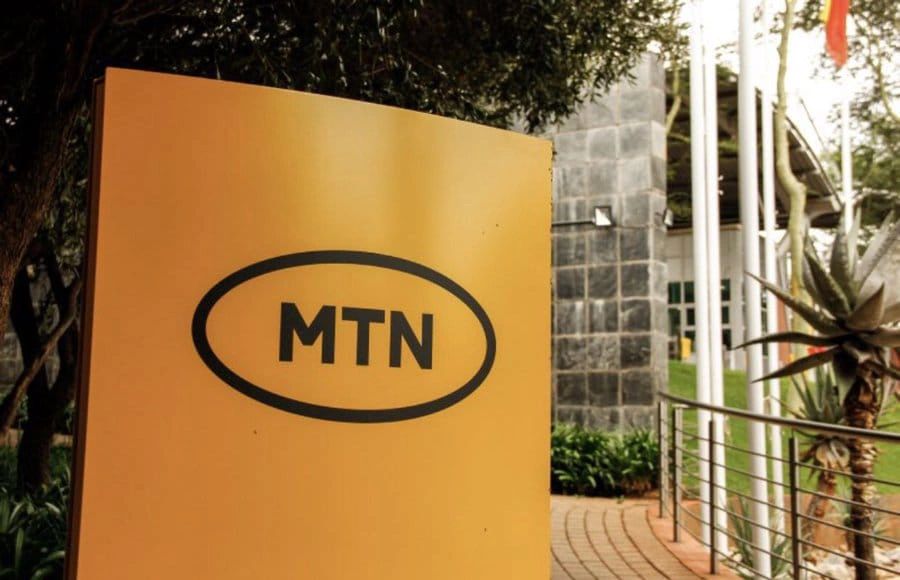
MTN’s mobile money operation has shifted from a domestic add-on to a continental engine. Its footprint now links markets where banks still have shallow reach and informal cash systems persist. The bigger story is how MoMo’s growth collides with two entrenched rivals: Safaricom’s M-PESA under the wider Vodafone/Vodacom umbrella, and Airtel Money across Airtel Africa’s territories. All three are chasing not just payments but the operating layer for future digital finance. What once looked like separate experiments in Nairobi, Lagos or Kampala now resembles a continental power structure forming in real time.

MoMo’s recent numbers are a signal. Over two hundred million active accounts across multiple regions, cross-border remittances running into billions, and transaction values in the trillions annually. That scale lets MTN pitch itself as an alternative clearing network in places where licensed banks and settlement institutions still operate at slower speeds or higher costs. The company is also leaning on telco data to extend credit in small increments that banks rarely bother with. Loans under twenty dollars might look trivial on paper, yet tens of millions of them form an invisible credit system that governments barely regulate.
M-PESA’s Stronghold and the Problem of Single-Market Dominance
M-PESA entered that phase years earlier and still sets the bar in several categories. Its infrastructure runs across Kenya, Tanzania, Mozambique, the Democratic Republic of Congo and Lesotho under the Vodafone/Vodacom umbrella. The service combines entrenched cultural familiarity with national infrastructure status. In some of these countries, M-PESA is a default utility, not a fintech product. That poses a different challenge for MoMo. Growth alone does not guarantee influence if regulatory relationships and consumer trust tilt toward the incumbent.
Airtel Money Sits Between Two Models
Airtel Money occupies an in-between position. It trails M-PESA in dominance and MoMo in expansion strategy but has carved out relevance in markets where both rivals do not always lead. Airtel Africa has been quieter about its internal fintech targets, yet its subscriber base and transaction volumes indicate that underestimating it would be a mistake. Government partnerships, cross-network integrations and agency networks give Airtel Money leverage in places where distribution sometimes matters more than branding.

The Scale Race Is No Longer About Headlines
Growth numbers are often tossed around without context, which gives a false sense of parity. M-PESA’s strength lies in usage density and integration with retail, utilities and small merchants. MoMo’s advantage is a coordinated regional push backed by a telecom with continental ambitions. Airtel Money has fewer total users but remains entrenched in markets where mobile money adoption rose late, meaning its upside is still unfolding. The most important metric is no longer registration totals but transaction persistence, cash-out friction and lending performance.
Comparative Snapshot of Three Platforms
| Operator & Scope | Active Users (Approx.) | Annual Transaction Value (Approx.) | Markets Covered |
|---|---|---|---|
| MTN MoMo (All MTN Markets) | ~283 million | ~$1.1 trillion | 14+ countries |
| M-PESA (Vodafone/Vodacom Group Markets) | ~60 million | ~$360 billion | 5+ countries |
| Airtel Money (Airtel Africa Only) | ~40 million | ~$120 billion | 14 countries |
Active user figures refer to customers who performed at least one transaction in a 30-day period, not total registrations. Transaction value represents the annual sum moved across the platform, including peer transfers, merchant payments, bill transactions, credit repayments and remittances. Markets covered reflect operational presence where payments, transfers or financial services are live, not trial rollouts.
The Next Contest: Wallet Interoperability
Interoperability has become the frontier. Consumers want to move money across networks without paying punitive fees or navigating separate USSD strings. Governments are warming to the idea but remain cautious, worried about fraud, liquidity risk and uneven oversight. MoMo has positioned itself as the player willing to stitch together corridors between West, Central and Southern Africa. M-PESA talks more about deepening service layers where it already dominates. Airtel’s strategy appears to hinge on partnerships that let it stay relevant without matching MoMo’s spending.
If interoperability scales beyond marketing pilots, these platforms will need to settle on rules for cost-sharing, agent commissions and dispute resolution. There is also the question of whether smaller fintechs latch onto their rails or build parallel systems. MTN could leverage its OpenAPI push to attract developers who want to plug into telco infrastructure instead of building from scratch. Safaricom has a similar approach inside Kenya but less clarity on how that translates across Vodacom’s territories. Airtel Money could become the neutral broker in markets where regulators distrust dominance.
Credit, Identity and the Hidden Data War
The credit race adds another layer. MoMo’s microloans depend on data that banks have never had, especially on informal earners. M-PESA has integrated savings and overdraft products that tie into household budgeting. Airtel Money experiments with lending partnerships rather than running all risk internally. Whoever controls identity verification and repayment history will shape the financial profiles of millions of people who have never held a bank account. That kind of leverage is usually invisible until regulators react.
Governments face a dilemma. They want inclusion, tax visibility and digital records yet do not want telcos dictating the financial script. Regulators in some markets are already talking about ring-fencing telco fintech arms or forcing fee caps. Others prefer to let rivalry drive down costs before stepping in. The friction will not slow expansion but will decide who secures licenses for insurance, pensions or cross-border payroll.
What Comes After Payments
Every operator now positions itself as something larger than a transfer channel. The next battlegrounds include small business finance, integration with national ID systems, public service payments and digital remittances at scale. The concept of a wallet is changing shape. It is no longer just a balance and a PIN. It is a gateway into credit, savings, investments and bill management. The risk is that services drift into complexity and leave behind those on feature phones or navigating patchy coverage.
MoMo has repeatedly said it will keep USSD channels alive and maintain agent networks. M-PESA’s offline adaptability remains one of its greatest protections against disruption. Airtel Money still relies heavily on agents in rural and peri-urban hubs. There is an unspoken understanding that mobile finance in Africa cannot follow the smartphone-only logic seen in richer markets. The race is not just for new users but for the segments that fintech apps routinely overlook.
The Shape of the Next Decade
The rivalry between MoMo, M-PESA and Airtel Money is not a corporate drama. It is the rearranging of how money moves in economies where banks did not build trust or reach scale. The platforms are converging on similar goals but from different starting points. MoMo wants to connect the map. M-PESA wants to deepen existing footprints. Airtel Money wants to stay indispensable in enough places to matter in any regional framework that emerges.
None of them can win by staying in old lanes. Cross-border interoperability, responsible lending, AI-based fraud monitoring and integration with offline systems will decide longevity. The idea that millions might eventually treat these wallets as their default financial institution is no longer far-fetched. If that happens, it will raise new questions about regulation, taxation and competition that nobody has fully mapped.
The numbers are impressive, but the tension lies in who builds the plumbing for the future African economy — and whether that infrastructure remains open, affordable and adaptable.
Go to TECHTRENDSKE.co.ke for more tech and business news from the African continent.
Mark your calendars! The GreenShift Sustainability Forum is back in Nairobi this November. Join innovators, policymakers & sustainability leaders for a breakfast forum as we explore sustainable solutions shaping the continent’s future. Limited slots – Register now – here. Email info@techtrendsmedia.co.ke for partnership requests.
Follow us on WhatsApp, Telegram, Twitter, and Facebook, or subscribe to our weekly newsletter to ensure you don’t miss out on any future updates. Send tips to editorial@techtrendsmedia.co.ke
TechTrends Media Podcasts

