There Is Momentum for an African AI Authority, but Also a Fear It Might Come Too Late
AI in Africa is moving faster than the guardrails, and leaders are starting to realise that if they do not shape the rules now they may be stuck dealing with someone else’s fallout later


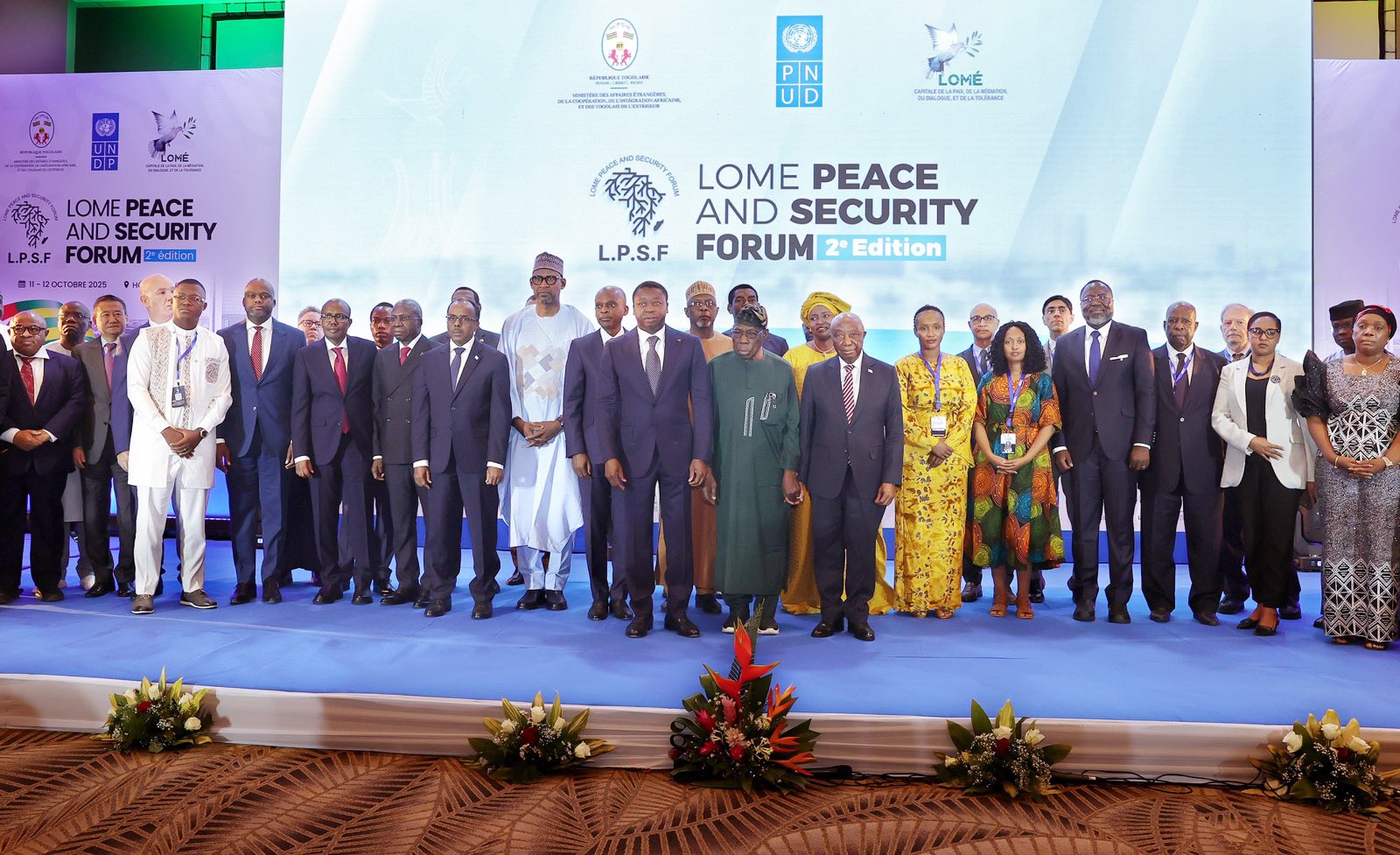
Last week’s Lomé Peace and Security Forum did what these gatherings sometimes fail to do: it turned murmur into momentum. On October 11 and 12, policymakers, security officials and technologists gathered in Togo to ask a blunt question – who will write the rules for AI in Africa, and on what terms. The conversation stopped being abstract. It named an institutional gap and a possible fix: a continental agency devoted to AI.
That demand came most plainly from Lassina Zerbo, a former prime minister who has moved into international security work. He said Africa needs a single body that can set standards, coordinate technical assistance and act quickly where AI risk becomes security risk. His point was not rhetorical. It was procedural: once a continent lacks a coordinating authority, regulation fragments, vendors pick winners, and bad actors find seams to exploit.
When governance is about stability, not headlines
The Lomé panel framed AI less as an economic prize and more as an axis where security and development intersect. Togo’s leadership put it plainly: new threats will be fought in digital space, and traditional tools will not be enough. Officials warned about weaponised misinformation and the misuse of small drones, but also about the slow erosion of institutional capacity that leaves countries unable to respond. That argument reframes AI governance as part of peacebuilding rather than as a narrow tech policy.
This matters because governance design follows the problem you name. If leaders treat AI as a business opportunity only, rules will favour market scale and foreign platforms. If they treat it as a security problem only, the response can be heavy handed and exclusionary. The Lomé discussion tried to hold those tensions at once, which makes the institutional proposal more interesting — and harder to build.


Data sovereignty is the leverage point everyone mentions
A tectonic truth underpinned the forum discussion. Africa sits on rich, underused datasets. That fact confers bargaining power if the continent can coordinate how data is collected, shared and protected. Togo’s minister for digital transformation argued that data must be an engine of future growth, but only if African states keep control of it and the rules that govern its use. That is not isolationist talk. It is a strategy to avoid becoming a passive supplier of training inputs while others reap the protocol-level gains.
There is a paradox built into this leverage. Effective data protection requires energy, secure infrastructure and technical skills. Those things are uneven across the continent. Policymakers struck a recurring note: you cannot talk about data governance in a meaningful way while most institutions still struggle with basic connectivity and reliable power.
Infrastructure is the hidden policy constraint
Numbers are blunt instruments, but they matter. Roughly 600 million Africans still lack reliable access to electricity, and a large share of the population remains offline or only intermittently connected. That reality shapes every downstream choice on AI. Model training, secure data centres and trustworthy identity systems all depend on stable power and broadband. Without them, a continental regulator will be setting standards that many will struggle to meet.
Put differently, governance can set the rules; infrastructure enables compliance. If the latter lags, the former becomes aspirational. That is why technical assistance and financing must be part of any credible blueprint for an African AI agency.
What an African AI agency would actually need to do
Proposals vary, but the plausible core functions are familiar: set interoperability standards; certify secure procurement; host shared technical resources; vet high-risk applications; and run capacity programs for regulators, judges and election officials. A credible agency would also need emergency powers to coordinate cross-border incident response when AI systems are used for harm. Those are the operational pieces that distinguish a policy paper from a functioning body.
No single model will fit every country. The challenge is to design a flexible continental framework that lets member states plug in their capacities, while maintaining common minimum standards. The design problem is institutional, not purely technical. It asks how to balance subsidiarity with uniformity, and how to fund a body that must be independent enough to regulate but accountable to democratically chosen institutions.
Scenarios the continent should plan for
Scenario one: a soft coordination body is created, driven by donor funding and pilot projects. It issues best practices but lacks enforcement. This reduces some harms but leaves large markets subject to private platform rules.
Scenario two: an AU-backed institute with standard-setting authority is established, but it moves slowly while the technology evolves. The agency becomes rule-bound and risks irrelevance if it cannot flex to rapid shifts in models and applications.
Scenario three: a nimble hybrid is built — a lightweight regulatory hub paired with regional technical nodes for compute and data stewardship. It is not everything at once, but it is a pragmatic path that matches capacity to need.
None of these scenarios is guaranteed. Each depends on political will, funding choices and whether member states prioritize shared sovereignty over short-term competitive advantage.
Geopolitics will shape the terms of engagement
Africa’s AI choices will not happen in a vacuum. External actors have an interest in both serving African markets and shaping the standards that govern them. That means geopolitics will shape technical assistance packages, cloud contracts and standards adoption. If African institutions fail to coordinate, they will be offered architectures that reflect foreign priorities. Coordinated bargaining changes the axis of that negotiation; it gives African governments the ability to insist on reciprocal benefits and technical transfer. An agency makes bargaining simpler and more visible.
Funding, talent and the political economy of oversight
Building institutions costs money and patience. Training regulators, recruiting engineers, operating secure data centres and running cross-border incident teams all require sustained financing. That is where the contours of political economy matter most. Who pays, who governs the purse, and who benefits from procurement decisions will determine whether any agency serves the public interest or becomes a vehicle for rent extraction.
Talent is another constraint. African universities are producing AI researchers, but many trained specialists migrate to private firms or institutions abroad. A continental agency can only scale if it helps retain talent through fellowship programs, secondments and clear career paths in public service.
Risks and trade-offs the continent must weigh
A central regulator can reduce fragmentation, raise standards and coordinate responses. It can also centralize power in ways that stifle local experimentation or be captured by narrow interests. There is no simple fix to that trade-off. The sensible path is layered governance: trusted regional nodes that manage operational tasks, plus a continental secretariat that focuses on norms, dispute settlement and cross-border emergencies.
Transparency and civil society participation will be essential. Without them, decisions about surveillance, algorithmic opacity and public-interest exceptions will be made behind closed doors. An African AI agency that wants legitimacy must defeat the perception that it is yet another technocratic club.
An unfinished project worth starting now
The Lomé forum did not pretend to have a map to a finished solution. It did something more useful. It calibrated the risk, sharpened the ask and put the idea of an African AI agency into diplomatic circulation. That matters because institutions follow discussion. If a critical mass of states treat this as a priority, the design questions become technical rather than rhetorical.
Policy work should now focus on three practical tracks: designing a modular governance model, investing in the necessary infrastructure for compliance, and seeding a talent pipeline for public-interest AI work. These are choices that create options. They move the continent from reaction to capability.
What success could look like
Picture a networked continental agency that sets minimum safety standards, maintains a public register of high-risk models, and runs an incident response service that can be called when AI systems are weaponised in electoral contexts or during communal violence. Picture also regional compute nodes where small states can lease secure capacity under transparent contracts. These are modest building blocks. Put together, they change power relationships in the digital economy.
If that sounds ambitious, remember that institutional innovation is often incremental. The first step is agreement about purpose. Lomé offered that. The harder work is design and delivery.
Go to TECHTRENDSKE.co.ke for more tech and business news from the African continent.
Follow us on WhatsApp, Telegram, Twitter, and Facebook, or subscribe to our weekly newsletter to ensure you don’t miss out on any future updates. Send tips to editorial@techtrendsmedia.co.ke
TechTrends Media Podcasts

