
M-Pesa 19 Years: How Safaricom’s Mobile Money Platform Became Kenya’s Financial Infrastructure
From a simple transfer tool to the background system that keeps households, traders, and small businesses moving

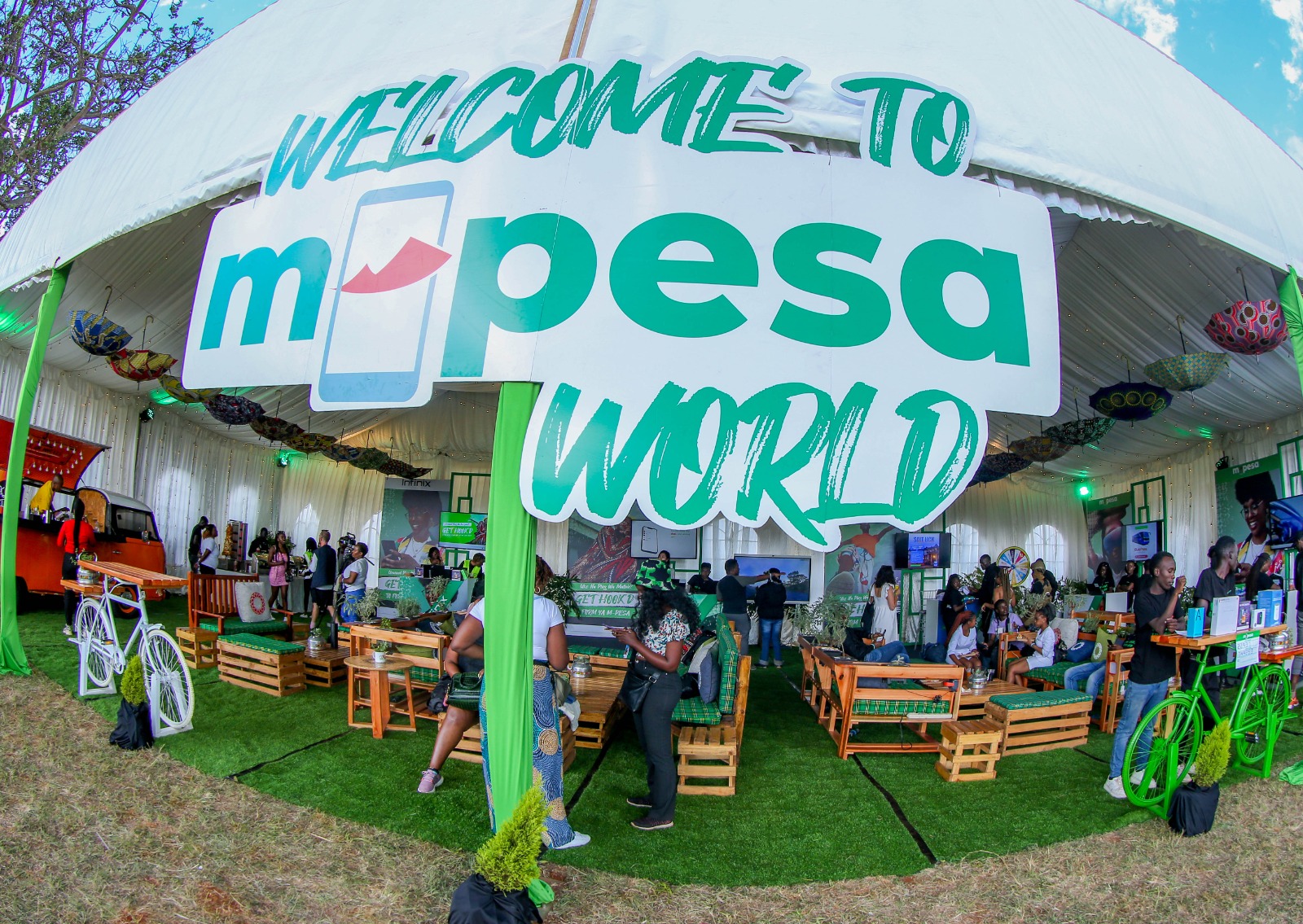
M-Pesa at 19 years after its launch shows how a simple mobile money transfer tool evolved into the core infrastructure of Kenya’s digital economy. The platform, operated by Safaricom, now serves 40 million monthly active users in Kenya, embedding payments, savings, credit, and investment tools into everyday financial life.
The service launched on March 6, 2007, initially enabling peer-to-peer transfers through mobile phones.
Over time, the platform expanded into a broader financial ecosystem that processes trillions of shillings annually and supports millions of households and businesses.
The result is a mobile financial system that functions as both a payment network and a national financial access channel.

How M-Pesa grew from simple transfers into a digital financial ecosystem
In the early years, M-Pesa focused on a single use case: allowing people to send money quickly through their phones. That functionality addressed a clear gap in Kenya’s banking landscape, where many people lacked access to formal financial services.
Over the next 19 years, the platform expanded into a broad range of financial services. Users can now save, borrow, invest, pay merchants, receive salaries, and conduct business transactions directly from their mobile wallets.
Several services illustrate this expansion:
- Fuliza, an overdraft facility allowing short-term borrowing
- KCB M-Pesa, a mobile savings and credit product developed with Kenya Commercial Bank
- Ziidi Money Market Fund and Ziidi Trader, which introduce investment products through mobile access
- Lipa na M-Pesa and Pochi la Biashara, which support merchant payments and small-business transactions
These services extend financial tools that were previously limited to bank customers into the mobile ecosystem.
M-Pesa and the rise of financial inclusion in Kenya
The expansion of M-Pesa coincided with a dramatic increase in financial inclusion across Kenya.
Government data shows the financial inclusion rate reached 84.8% of adults in 2024, up from 26.7% in 2006, the year before M-Pesa launched. The growth reflects how mobile money lowered the barriers that traditionally limited access to financial services.
Mobile phones became personal financial terminals. Millions of Kenyans now use them to send money, pay bills, save funds, access credit, and operate small businesses.
This shift changed how households interact with financial systems. Mobile wallets replaced physical distance and paperwork as the gateway to financial services.
Transaction scale shows M-Pesa’s role as national payment infrastructure
The scale of transactions flowing through the platform reflects its central position in Kenya’s economy.
M-Pesa processes about 2,600 transactions per second, supporting a continuous flow of payments across individuals, businesses, and government services.
In the financial year ending March 2025, the platform handled Sh38.3 trillion in transactions, a figure that exceeds Kenya’s annual GDP.
The network supporting those transactions has expanded significantly. By 2025, Safaricom reported 298,900 M-Pesa agents across Kenya, forming one of the largest financial distribution systems in Africa.
Agent networks connect digital wallets to physical cash points. They allow people to deposit and withdraw money in neighborhoods, markets, and rural towns.
M-Pesa’s contribution to Safaricom’s revenue growth
The mobile money platform has also become the largest contributor to Safaricom’s financial performance.
In the financial year ending March 2025, M-Pesa generated Sh161.1 billion in revenue, accounting for 41.5% of Safaricom’s total revenue.
Overall, the company reported:
- Sh388.7 billion in total revenue
- Sh69.8 billion in net income
These figures confirm that mobile money is now Safaricom’s primary growth engine.
The broader Safaricom ecosystem contributes over Sh1.21 trillion annually to Kenya’s economy, representing more than 8% of national GDP through employment, taxation, supplier spending, and digital services.
API innovation and localized liquidity are expanding M-Pesa’s financial role
Technical upgrades to the platform continue to extend its reach into new financial sectors.
Safaricom’s Daraja API architecture, including Daraja 3.0 and Fintech 2.0, enables developers and payment providers to integrate M-Pesa directly into digital services. These systems support thousands of transactions per second and allow automated verification of payments.
This infrastructure is now reshaping Kenya’s retail trading ecosystem.
Global forex brokers and fintech firms increasingly integrate M-Pesa into their platforms through payment aggregators. Instead of routing deposits through international banking networks, brokers maintain local liquidity pools in Kenyan shillings.
Deposits from traders are verified instantly through M-Pesa’s Customer-to-Business APIs. Withdrawals can also be processed automatically using Business-to-Consumer integrations.
The result is near-instant settlement, reducing transaction costs and eliminating many of the currency conversion fees associated with traditional banking rails.
M-Pesa and the evolution of Kenya’s digital finance ecosystem
Industry analysts view this localized liquidity model as a structural shift in how Kenyan traders and digital businesses interact with global financial markets.
By settling transactions locally, financial platforms reduce friction and allow smaller deposits, sometimes as low as KES 1,300, which lowers barriers for new participants.
Speed also shapes trust. When traders can withdraw funds directly to their phones within seconds, confidence in the system increases.
This architecture positions M-Pesa as more than a payment service. It functions as the financial gateway connecting everyday users to digital commerce, investment tools, and international financial markets.
Security upgrades and regulatory oversight continue to shape the platform
Safaricom continues to invest heavily in platform security, fraud prevention systems, and customer education programs.
Recent updates also include privacy improvements such as merchant payment number masking, which reduces exposure of customers’ phone numbers during transactions.
The rollout was approved by the Central Bank of Kenya as part of broader regulatory oversight of the country’s digital payment infrastructure.
These measures reflect the scale of responsibility attached to a system that processes billions of transactions each year.
M-Pesa and the future of mobile financial infrastructure
Nineteen years after launch, M-Pesa functions as a foundational layer of Kenya’s digital economy.
The platform supports commerce, savings, credit, investments, and international financial connectivity. It also provides millions of people with their first sustained access to formal financial tools.
Safaricom CEO Peter Ndegwa says the goal remains expanding that access further.
“Our goal is to give Kenyans and Africa at large digital financial tools to empower them to be more prosperous,” he said while marking the milestone.
Each transaction, he added, reflects an individual financial journey.
At scale, those millions of journeys form one of the most significant financial transformations on the African continent.
Key Facts
What does M-Pesa represent for Kenya’s financial system?
M-Pesa’s 19th year marks the evolution of mobile money from a simple transfer tool into a national financial infrastructure. The platform now supports payments, savings, credit, and investments while serving 40 million monthly active users in Kenya.
How many transactions does M-Pesa process?
M-Pesa processes roughly 2,600 transactions per second, reflecting its role as the dominant payment network in Kenya. The platform handled Sh38.3 trillion in transaction value during the financial year ending March 2025.
How has M-Pesa improved financial inclusion in Kenya?
Financial inclusion in Kenya rose from 26.7% in 2006 to 84.8% in 2024. Mobile money helped reduce barriers such as physical distance from banks, documentation requirements, and minimum account balances.
What role does M-Pesa play in Safaricom’s business?
M-Pesa generates over 40% of Safaricom’s revenue, making it the company’s largest growth driver. The platform produced Sh161.1 billion in revenue during the financial year ending March 2025.
How is M-Pesa influencing digital trading and fintech services?
Fintech platforms increasingly integrate with M-Pesa through API infrastructure such as Daraja. This enables instant deposits, automated withdrawals, and localized liquidity models that reduce reliance on international banking systems.
Go to TECHTRENDSKE.co.ke for more tech and business news from the African continent and across the world.
Follow us on WhatsApp, Telegram, Twitter, and Facebook, or subscribe to our weekly newsletter to ensure you don’t miss out on any future updates. Send tips to editorial@techtrendsmedia.co.ke

