
Payment Friction Continues to Define How African Businesses Expand Across Markets
The remarks grounded fintech ambition in the practical challenges of settlement timelines, compliance demands, and the persistent fragmentation shaping financial movement across Africa

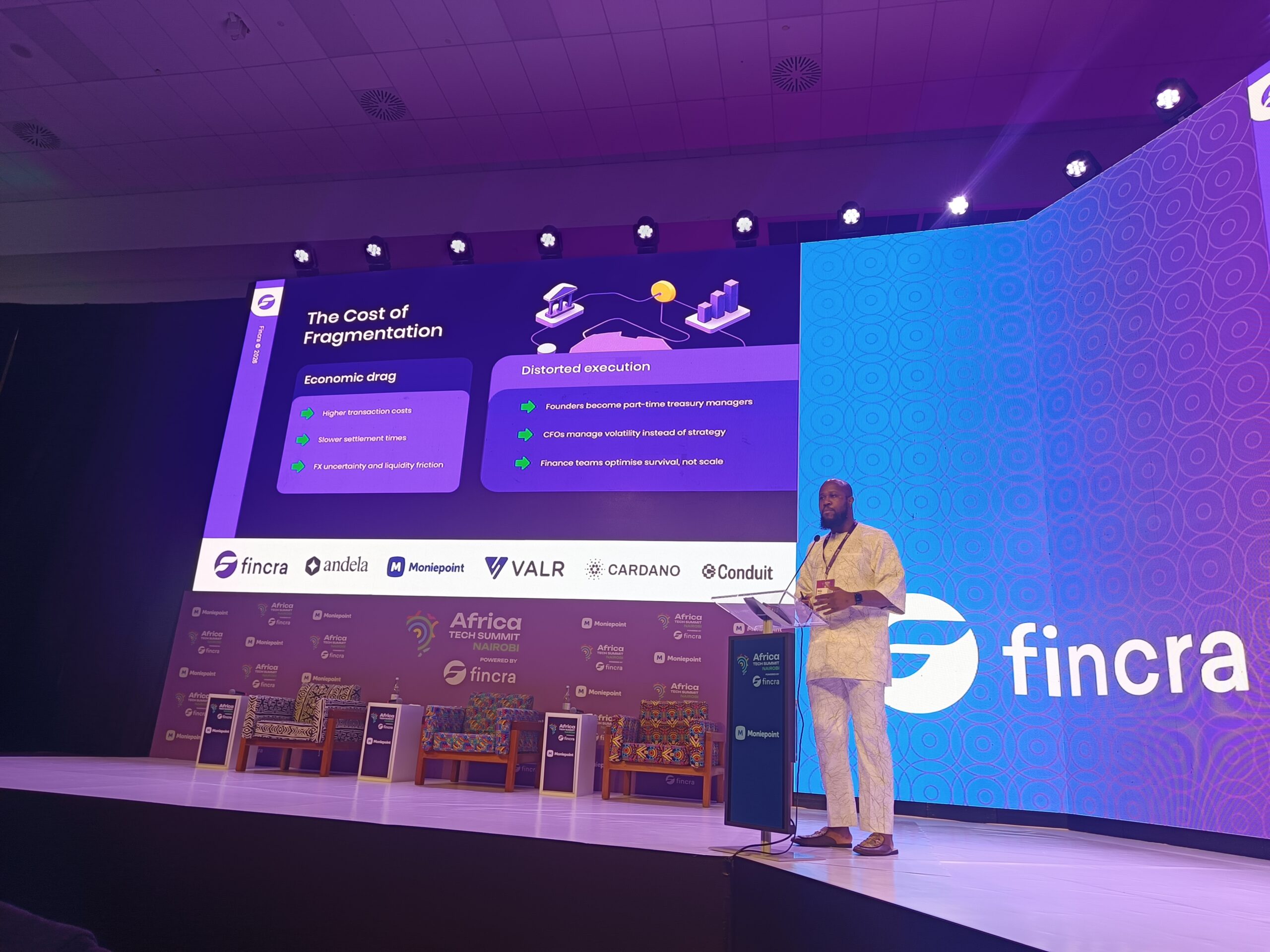
The conversation around African fintech often begins with access and scale. Fincra CEO Wole Ayodele approached it from a different angle at Africa Tech Summit Nairobi. His remarks stayed close to the mechanics of moving money across borders, not the ambition surrounding it. The gap between digital finance narratives and operational reality sat at the center of his argument.

Cross-border payments remain one of the most persistent friction points in African commerce. Businesses expand across markets faster than financial infrastructure adapts. Settlement delays, currency conversion constraints, and regulatory layers still shape how companies operate day to day. Technology may smooth parts of the process, but it does not remove the structural complexity beneath it.
Ayodele framed the issue less as innovation and more as unfinished infrastructure work.
Payments Infrastructure Still Carries the Weight of Fragmentation
African fintech has grown in parallel with fragmented financial systems. National regulations differ. Currency controls vary. Payment rails developed unevenly across markets. The result is an ecosystem where moving money across borders often introduces more uncertainty than operating locally.


The friction shows up in ordinary ways. Businesses hold multiple accounts to manage liquidity. Settlement timelines remain inconsistent. Compliance requirements expand as companies enter new jurisdictions. None of this is new, yet it continues to shape how fintech companies design products.
Ayodele’s remarks reflected a growing recognition that infrastructure determines outcomes long before user interfaces enter the conversation. Payment systems succeed when they disappear into routine use. When they do not, companies absorb the cost in delays, fees, and operational workarounds.

The industry’s attention has begun to return to these underlying systems, partly because expansion exposed their limits.
Execution Replaces Momentum as the Central Question
Fintech conversations once revolved around speed. The current tone feels more restrained. Ayodele spoke about execution in practical terms, focusing on reliability rather than ambition. Payment systems, he argued, must function consistently across different regulatory environments and currency regimes before broader scale becomes realistic.
This perspective reflects a wider change across the ecosystem. Investors have grown more cautious. Regulators have become more involved. Businesses themselves are less tolerant of uncertainty in financial operations. Payments infrastructure now carries expectations closer to utilities than startups.
That change introduces tension. Innovation moves quickly. Financial systems do not. Bridging that gap requires coordination between fintech operators, banks, and regulators, groups that do not always move at the same pace or share incentives.
The result is slower progress than early narratives suggested, but potentially more durable outcomes.
The Cost of Moving Money Across Borders
Ayodele’s remarks also touched on something less discussed in public forums. Cross-border payments affect competitiveness. When settlement takes longer or costs more than expected, businesses adjust behavior. Expansion plans change. Pricing changes. In some cases, companies avoid certain markets altogether.
This has broader implications for regional trade. African economies increasingly encourage intra-continental commerce, yet payment infrastructure still reflects national boundaries. Fintech companies often sit between policy ambition and operational constraint, expected to solve problems that extend beyond technology.
The conversation hinted at an uncomfortable truth. Payments infrastructure tends to improve incrementally rather than through sudden transformation. Progress happens through regulatory alignment, partnerships, and sustained operational work. None of it moves fast enough for startup timelines.
A More Grounded Phase for African Fintech
Africa Tech Summit Nairobi has become a space where the ecosystem takes stock of itself. Ayodele’s remarks fit within a broader mood across discussions this year. Less emphasis on expansion narratives. More attention to durability.
The fintech sector is no longer proving its relevance. The challenge now lies in proving resilience. Cross-border payments sit at the center of that challenge because they expose the friction between digital ambition and institutional reality.
What emerges from conversations like this is not pessimism. It is adjustment. Companies are learning that infrastructure determines pace, and that building financial systems across diverse markets requires patience as much as technology.
The work continues, largely in the background, where payments either function smoothly or remind businesses how far integration still has to go.
Go to TECHTRENDSKE.co.ke for more tech and business news from the African continent and across the world.
Follow us on WhatsApp, Telegram, Twitter, and Facebook, or subscribe to our weekly newsletter to ensure you don’t miss out on any future updates. Send tips to editorial@techtrendsmedia.co.ke


