
African Tech Talent Scales Faster Than the Organizations Built to Support It
What emerged from the discussion was a recognition that developer experience now shapes outcomes across global teams where distance, context, and workflow collide in ordinary ways

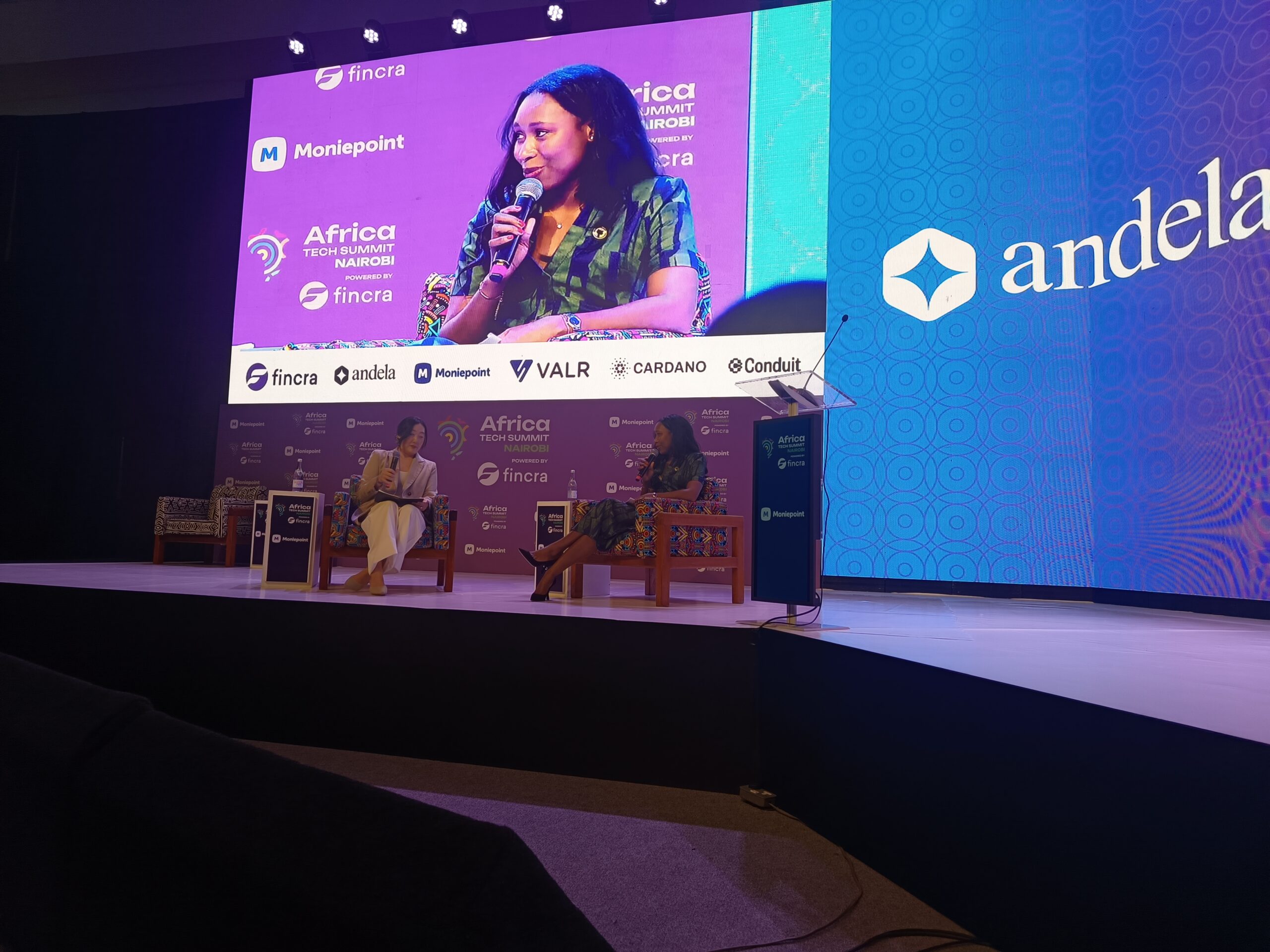
Conversations about African tech talent have for years began with scarcity. That frame is wearing thin. At Africa Tech Summit in Nairobi, the discussion between Andela CEO Carrol Chang and GitHub Vice President Aicha Bah-Gersing moved in a different direction. The problem is not finding developers anymore. It is building environments where they can keep producing meaningful work over time.

That distinction changes the conversation. Hiring expands headcount. Developer experience determines whether that headcount translates into output. The panel kept circling back to friction inside organizations, the small operational gaps that accumulate into lost momentum. Documentation that falls behind. Support structures that assume proximity. Tools chosen without considering how distributed teams actually operate. None of these issues appear dramatic in isolation, yet together they shape how work gets done.
The implication is uncomfortable for companies that still treat talent acquisition as the main story. Once talent becomes accessible across borders, internal systems become the constraint.
The Infrastructure Behind Productivity
Bah-Gersing spoke about support and customer success not as auxiliary functions but as part of the engineering environment itself. That framing reflects how software work has evolved. Developers no longer operate inside a single office or time zone. Work moves across repositories, asynchronous communication, and layered collaboration. When support breaks down, productivity follows.


GitHub sits at an unusual vantage point. The platform sees how teams interact with code rather than how companies describe themselves publicly. That view tends to expose patterns early. Teams that invest in onboarding and documentation move faster months later. Teams that rely on informal knowledge slow down as they grow. The difference rarely shows up in hiring announcements, yet it appears in delivery timelines and retention.
Chang approached the issue from a workforce perspective. Andela’s model depends on matching talent with global teams that may never meet physically. Success depends less on technical skill than on alignment between expectations, communication, and workflow discipline. When those pieces fail, the problem is often misdiagnosed as talent quality.

The discussion hinted at a broader realization. Distributed work did not eliminate management challenges. It made them more visible.
Global Teams Without the Old Center
There was an underlying tension in the conversation. Global tech companies continue to recruit from Africa, but the structures governing work remain shaped by older assumptions about where decisions happen. Distributed teams exist, yet authority and context often sit elsewhere.
That imbalance creates subtle inefficiencies. Developers work across systems designed for different rhythms. Feedback loops stretch. Context arrives late. Over time, productivity becomes uneven, not because people lack ability but because the organization has not adapted fully to its own geography.
Andela’s experience reflects this reality. The company began by exporting talent into global markets. Now the conversation leans toward integration rather than placement. How teams collaborate matters more than where individuals sit. The center of gravity becomes less physical and more operational.
GitHub’s perspective reinforces this trend. Tools alone do not solve coordination problems. Teams still need shared standards and predictable processes. Software platforms can expose friction, but organizations have to decide whether to address it.
Developer Experience as Economic Strategy
What emerged from the session was a reframing of developer experience. It is often discussed as a cultural or technical concern. Increasingly, it looks economic. Poor developer experience slows output, increases turnover, and raises long term costs. Good environments compound productivity without requiring constant expansion.
This becomes particularly relevant in African markets where talent pipelines are expanding faster than institutional capacity. Companies can scale hiring quickly. Scaling management maturity is harder. The result is a mismatch between potential and delivery that many firms struggle to articulate.
There is also a competitive dimension. Countries and companies that build environments where developers can sustain high quality work will attract more complex projects. The advantage shifts from wage arbitrage toward reliability and execution. That transition is already underway, even if it is not always acknowledged openly.
The Conversation Beneath the Optimism
Tech conferences tend to celebrate growth narratives. The Andela and GitHub discussion felt more grounded. There was recognition that global collaboration has matured beyond its early optimism. Distributed work functions, but only when supported intentionally.
The unresolved question sits beneath the surface. As African developers become embedded in global systems, will decision making follow, or will structural imbalances persist? Developer experience, in this sense, becomes more than an internal metric. It reflects who holds context, who sets priorities, and whose constraints shape the workflow.
The panel did not attempt to resolve that tension. Perhaps it cannot be resolved quickly. What was clear is that the conversation around talent in Africa has moved forward. The focus is no longer access. It is durability. Organizations that understand this will build teams that last. Those that do not will keep hiring, wondering why progress feels slower than expected.
Go to TECHTRENDSKE.co.ke for more tech and business news from the African continent and across the world.
Follow us on WhatsApp, Telegram, Twitter, and Facebook, or subscribe to our weekly newsletter to ensure you don’t miss out on any future updates. Send tips to editorial@techtrendsmedia.co.ke


