
Wananchi’s Debt Fight Raises an Uncomfortable Question About How Sustainable the Fibre Race Really Is
A supplier’s insolvency demand pulls attention to the financial strain behind Kenya’s rapid fibre expansion and the fragile balance between growth and payment cycles

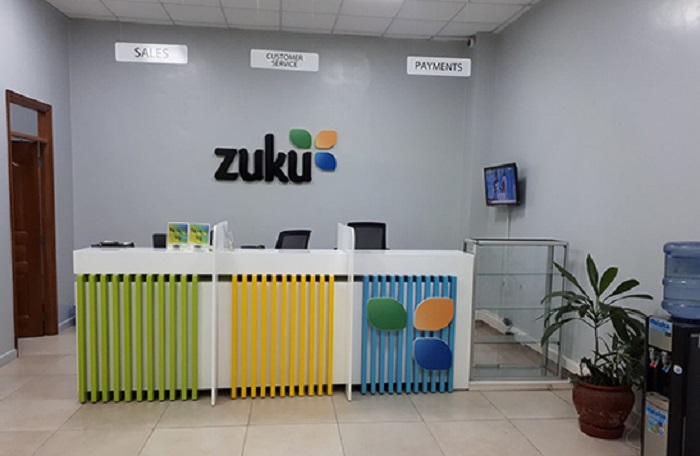
A Sh46.9 million insolvency demand rarely threatens to topple a telecommunications operator on its own. The amount is modest by industry standards. Yet the case filed against Wananchi Group, operator of Zuku, lands at an awkward intersection of debt, infrastructure cost, and a broadband market that has grown faster than its margins.

CP Cables’ statutory demand under the Insolvency Act places the dispute within a legal framework that carries weight beyond the sum involved. Under Section 384, failure to respond within 21 days becomes evidence of insolvency. That threshold changes the conversation. A commercial disagreement begins to look like a test of financial resilience, even when the underlying issue may be cash flow timing rather than structural collapse.
Wananchi has not publicly addressed the claim. Silence, in this context, becomes part of the story. Creditors read it one way. Competitors read it another. Customers tend to notice only when service falters, which has not happened here. Still, the filing exposes the fragile economics beneath Kenya’s fibre expansion race.
Fibre Networks and the Cost of Expansion
Fibre broadband looks stable from the outside. Fixed monthly subscriptions, predictable demand, long-term infrastructure. The reality is less forgiving. Network growth requires imported equipment, foreign currency exposure, and supplier relationships that depend on steady payment cycles. Revenue, meanwhile, accumulates slowly through subscriber growth and retention.

Optical network units, cables, and last-mile equipment rarely attract public attention, yet they determine whether expansion continues or stalls. Suppliers operate on thin margins and often extend credit because telecom operators order at scale. When invoices age beyond agreed terms, suppliers escalate quickly. Insolvency demands are sometimes less about liquidation and more about forcing engagement.
Kenya’s broadband market has expanded rapidly over the past decade. Prices have compressed as operators chase market share in dense urban areas. The result is a business that looks large in footprint but tight in operating cash. Growth has been visible. Profitability less so.

Wananchi sits squarely in that tension. Zuku built its reputation on bundled television and internet services, then faced a market where streaming platforms eroded pay-TV’s centrality. Broadband became the anchor product. That transition required capital at precisely the moment consumer expectations rose and competition intensified.
The Supplier Risk Nobody Talks About
Telecom discussions often focus on spectrum, subscribers, or pricing battles. Suppliers sit in the background until disputes reach court. Yet the supply chain holds leverage. Equipment vendors determine installation pace, maintenance continuity, and expansion timelines.
An insolvency demand from a supplier carries reputational consequences beyond the legal process. Other vendors begin reassessing credit terms. Some tighten delivery conditions. Financing partners notice, even when disputes are resolved quickly. The industry runs on confidence as much as infrastructure.
The Wananchi case also reflects a structural imbalance. Large operators depend on smaller specialized suppliers for components that are difficult to substitute quickly. When payments stall, suppliers have limited recovery options outside litigation. The Insolvency Act provides a direct route to pressure payment without waiting for prolonged commercial negotiations.
Whether the current dispute escalates or settles privately, the message to the market is already circulating. Suppliers are becoming less patient in a sector where expansion has often outrun cash generation.
Axian’s Bet on Scale Meets Market Reality
Wananchi’s majority shareholder, Axian Telecom, entered Kenya with an ambition to deepen broadband penetration and build scale across East and Southern Africa. The strategy assumed rising data consumption would eventually compensate for high upfront investment.
That logic still holds in principle. Demand for home internet continues to grow, particularly in urban centres. But scale alone does not eliminate short-term financial strain. Infrastructure-heavy businesses tend to experience long periods where capital expenditure runs ahead of returns.
Kenya adds another layer. Consumers remain price sensitive. Promotional pricing attracts subscribers but compresses margins. Service expectations rise as fibre becomes mainstream. Operators must maintain networks while continuing expansion, often financed through debt or supplier credit.
In that environment, disputes over unpaid invoices become more common. They rarely indicate imminent collapse. They do expose pressure points.
Pay-TV’s Slow Retreat and Broadband’s Burden
Zuku’s earlier identity as a pay-TV platform now sits in the background. Streaming services altered viewing habits, reducing the stickiness of traditional decoder subscriptions. Broadband absorbed the weight of sustaining revenue growth.
This transition carries consequences. Television infrastructure required content investment and distribution agreements. Fibre networks require continuous capital injection. The risk profile changed even if the brand remained familiar to customers.
The insolvency demand arrives as pay-TV operators across Africa confront similar realities. Subscriber numbers fluctuate while data consumption climbs. Broadband becomes essential infrastructure rather than a premium service. That status increases demand but limits pricing power.
Operators find themselves investing more to earn less per customer.
What the Case Reveals About the Sector
The Wananchi dispute reads less like an isolated legal fight and more like a snapshot of an industry reaching maturity. Early expansion phases reward aggressive rollout. Later stages demand financial discipline. The transition is rarely smooth.
Kenya’s fibre market now includes multiple providers competing in overlapping neighbourhoods. Installation costs remain high. Customer churn remains real. Suppliers expect faster payment cycles even as operators manage longer return horizons.
If Wananchi settles the claim, the episode fades from public view but remains instructive inside the industry. If it escalates, the consequences extend beyond one company. Credit conditions could tighten across the supply chain. Expansion timelines might slow. Smaller vendors may become more cautious about extending terms.
For customers, the outcome may feel distant. Internet connections either work or they do not. Yet disputes like this sit behind the infrastructure that keeps those connections running. They reveal how thin the margins can be in a sector often described as essential.
The court filing does not determine Wananchi’s future. It does, however, expose the underlying arithmetic of Kenya’s broadband economy, where growth has been visible for years while financial strain remains harder to see until it surfaces in legal documents.
[Secure Your Seat at Africa Tech Summit Nairobi 2026 | February 11–12 here] Use code TTRENDS10 at checkout to save 10% on your pass and join the leaders building Africa’s $1 trillion cross-border payment future.
Go to TECHTRENDSKE.co.ke for more tech and business news from the African continent.
Follow us on WhatsApp, Telegram, Twitter, and Facebook, or subscribe to our weekly newsletter to ensure you don’t miss out on any future updates. Send tips to editorial@techtrendsmedia.co.ke


