
A Fight Over Carbon Credits Brings Down One of Kenya’s Most Visible Clean Fuel Projects
A business built on future carbon income runs into the limits of what a country is willing to sign away

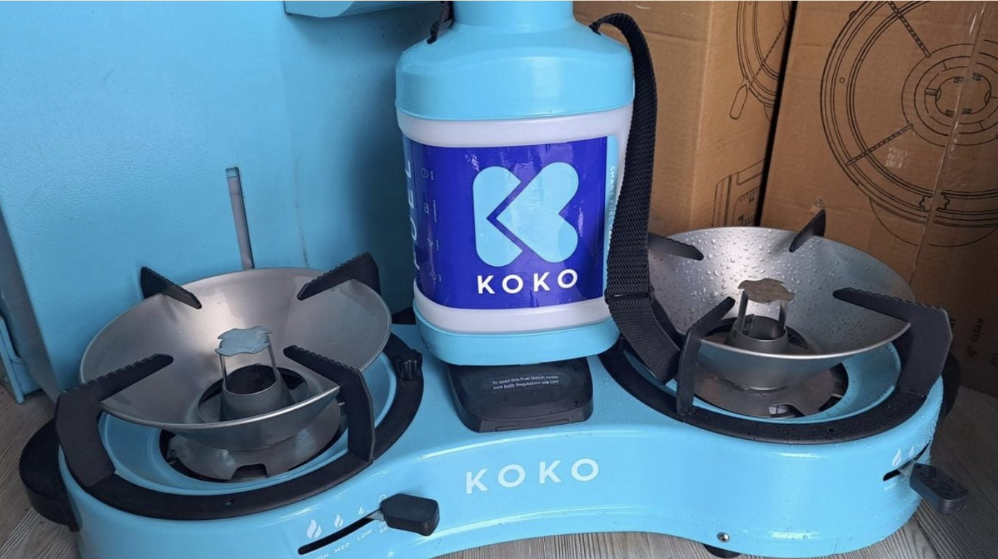
Koko Networks did not run out of customers. Its blue-flame stoves were still in kitchens across Nairobi when administrators took over on February 1. Demand held. The technology worked well enough. What failed sat elsewhere, in paperwork, permissions, and a disagreement over who ultimately owns the value of avoided emissions.

The Koko Networks collapse rests on a less visible fault line. Carbon markets function through political approval. Without it, the numbers on which investors build their models do not convert into revenue. That approval never arrived.
For nearly 7 years, Koko built a business around a simple premise. Sell bioethanol cooking fuel cheaply, absorb the losses, and recover the difference through carbon credits sold abroad. The model depended on access to compliance markets under Article 6 of the Paris Agreement, where credits can fetch about $20 each, far above prices in voluntary markets. Without those sales, the subsidy structure could not hold.
Kenya declined to authorise the volume of credits Koko sought to transfer. The disagreement proved terminal.


Carbon Credits and Sovereign Limits
Carbon trading often appears technical from the outside. Inside government, it is treated as a national asset. Countries have limits on how many emissions reductions they can transfer abroad without undermining their own climate commitments. Every credit authorised for export reduces what a country can count toward its own targets.
Officials argued that Koko’s request would have consumed the bulk of Kenya’s available allocation in compliance markets. Authorising that volume for one company raised an uncomfortable question. What happens to agriculture, manufacturing, or other clean energy projects seeking similar approvals later?

The dispute was not only about numbers. It touched on precedent. Granting one private company access to most of the country’s transferable carbon reductions risked narrowing future policy choices. Government officials framed the refusal as a matter of fairness and credibility, particularly in markets where verification standards remain contested.
For Koko, the refusal removed the revenue stream that made subsidised fuel viable. The business model assumed scale and continuity in carbon sales. Instead, negotiations stalled.
A Business Built on Future Value
Koko’s economics always leaned forward into expectation. The company invested about $300 million in Kenya, deploying roughly 3,000 fuel vending machines and building supply chains that reached about 1.5 million households. Fuel refills priced from Sh30 and stoves costing about Sh1,500 made ethanol competitive with charcoal for low-income families.
The subsidy was deliberate. Carbon finance would close the gap.
That logic attracted investors. The World Bank’s Multilateral Investment Guarantee Agency insured the project for $179.6 million, covering risks including breach of contract. The insurance reflected confidence that carbon markets could anchor large-scale clean cooking transitions in emerging economies.
Yet carbon credits differ from conventional commodities. Their value depends on political agreement as much as environmental calculation. Emissions avoided in a Nairobi kitchen only become tradable assets once the host country agrees to transfer them abroad.
When that consent stalls, the financial structure underneath begins to unravel.
The State’s Dilemma
Kenya’s position exposes a tension that is becoming harder to ignore. Governments are encouraged to attract climate investment while also protecting long-term control over environmental assets. Carbon markets compress those objectives into a single decision.
Approving large volumes of credits can attract capital and accelerate adoption of cleaner technologies. It can also constrain future policy flexibility. Countries that authorise too much too early risk limiting their own room to manoeuvre as climate commitments tighten.
Officials also raised concerns about transparency and the methodology used to calculate avoided emissions from reduced charcoal use. These debates are common in carbon accounting. They rarely make headlines, yet they shape whether projects survive.
In this case, disagreement over tabulation became an existential problem.
The Founder’s Bet on Scale
Greg Murray built Koko around the idea that climate finance could subsidise everyday energy needs. His background in environmental ventures across frontier markets informed that bet. Clean cooking presented both a social and environmental argument, and Kenya offered density, urban demand, and regulatory openness at the time.
The company expanded quickly. Ethanol distribution infrastructure spread through informal settlements and middle-income estates alike. For many households, the appeal was practical rather than ideological. Less smoke, predictable fuel costs, faster cooking.
The ambition extended beyond cities. Plans aimed at reaching rural areas by 2027, where the economics depended more on time savings than direct cost comparisons.
The collapse interrupts that trajectory. Equipment remains in homes. Supply chains stop. The promise of a gradual move away from charcoal now faces uncertainty.
When Climate Finance Meets Political Reality
The Koko Networks collapse illustrates a broader problem inside carbon markets. Private investors price projects on projected credit flows. Governments evaluate them through national interest and long-term climate accounting. Those perspectives do not always meet in the middle.
Compliance markets under Article 6 remain young. Rules continue to evolve. Countries are still deciding how much control to retain and how much to release in exchange for investment. Early projects carry the burden of setting precedent.
Kenya now faces potential liability of about Sh23.1 billion if insurance claims proceed through MIGA. That exposure complicates the narrative. A refusal intended to preserve national space may still carry financial consequences.
The outcome also raises questions for similar projects across Africa and Asia. Clean cooking initiatives often rely on carbon revenue to subsidise adoption. If host governments become more cautious about authorisation volumes, business models built on large credit transfers may need redesign.
After the Blue Flame
In parts of Nairobi, Koko canisters remain stacked in kitchens where fuel deliveries have stopped. The technology did not fail. Neither did consumer demand. What failed was alignment between a private financing model and a public resource governed by national limits.
Carbon markets promise efficiency. Reality looks more negotiated. Each credit sits at the intersection of climate policy, domestic politics, and investor expectations. Agreement has to exist on all sides at once.
Koko’s collapse leaves an open question hanging over future clean energy ventures. Climate finance can move quickly. Governments rarely do. When those timelines diverge, even well-funded projects can stall before reaching maturity.
The lesson is not about one company. It is about the boundaries of consent in a market that depends on it.
[Secure Your Seat at Africa Tech Summit Nairobi 2026 | February 11–12 here] Use code TTRENDS10 at checkout to save 10% on your pass and join the leaders building Africa’s $1 trillion cross-border payment future.
Go to TECHTRENDSKE.co.ke for more tech and business news from the African continent.
Follow us on WhatsApp, Telegram, Twitter, and Facebook, or subscribe to our weekly newsletter to ensure you don’t miss out on any future updates. Send tips to editorial@techtrendsmedia.co.ke


