

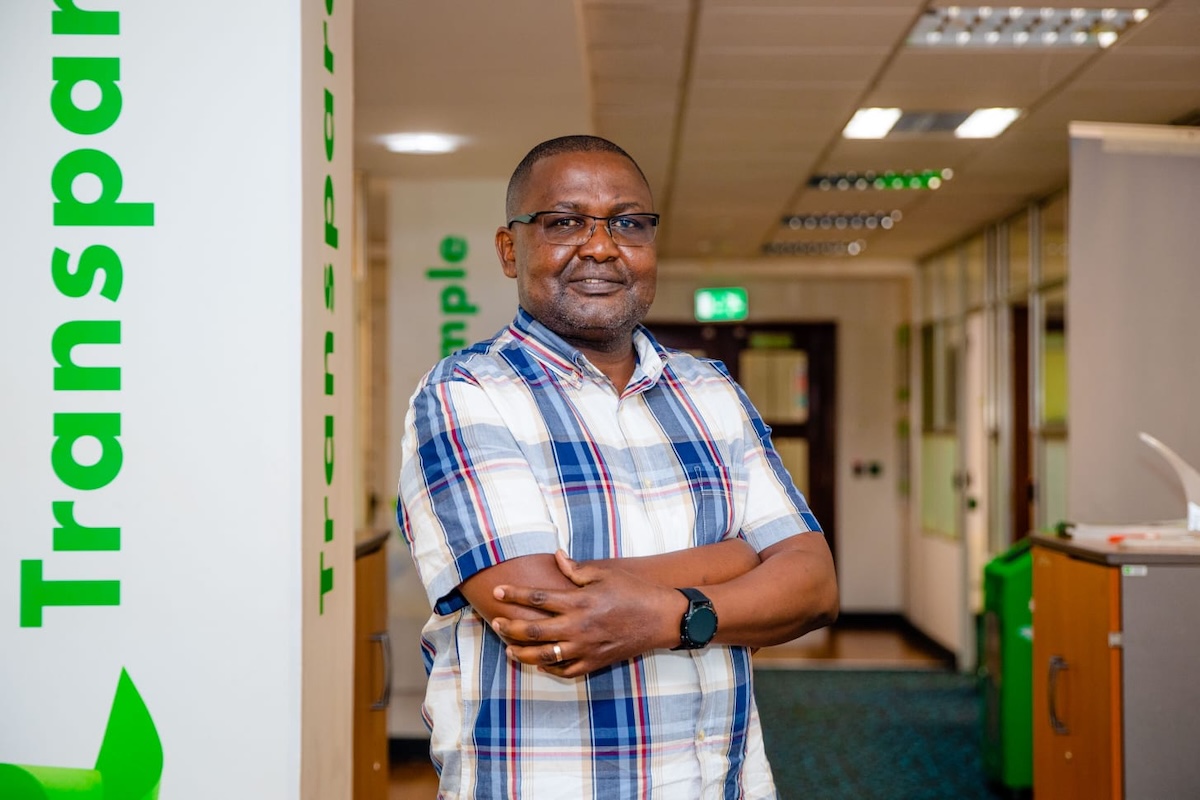
In the rapidly evolving landscape of African telecommunications, the phrase “Transforming Lives” is often seen on billboards and marketing collateral. However, at Safaricom’s headquarters, a specialized unit is working to ensure that this mission is backed by more than just data points and revenue targets.

Leading this charge is Benjamin Makai, Senior Manager for Technology for Development (T4D). In an exclusive interview with TechTrends Media, Makai unpacked the vision behind T4D, a unit that sits at the intersection of high-end innovation and grassroots impact.
“Technology for Development is Safaricom’s purpose-driven innovation initiative,” Makai explains “It leverages digital technology and data to create scalable, sustainable solutions addressing societal challenges, such as food security, healthcare access, education gaps, and humanitarian needs, while improving lives and supporting business growth.”
The nuance lies in the shared value model. Unlike traditional Corporate Social Responsibility (CSR), which is largely philanthropic, T4D is embedded in Safaricom’s core business strategy. It isn’t a separate silo; it is a sustainable business unit.


“It’s not charity, but innovation for shared value,” Makai emphasizes. By creating products that solve real problems, Safaricom ensures these solutions are commercially viable enough to stay in the market long after a “donation” would have run out. This approach turns Safaricom’s connectivity and M-PESA into more than just services they become tools for national development.
If T4D has a success story, it is undoubtedly DigiFarm. For a country where agriculture contributes nearly a third of the GDP and employs half the population, the stakes couldn’t be higher.

Makai describes DigiFarm as a flagship agricultural solution that connects over three million farmers to a comprehensive ecosystem. By dialling a simple USSD code, smallholder farmers gain access to a digital companion that offers direct market access by removing middlemen, financial inclusion by leveraging M-PESA history to provide credit, and digital extension services that provide AI-driven insights on weather patterns and soil health.
“We are boosting productivity and improving incomes,” says Makai. “It’s about leveraging M-PESA for transactions to transform agriculture and rural livelihoods in line with Sustainable Development Goals (SDGs).”
While health and agriculture are the traditional pillars of T4D, Makai’s personal vision extends into the Humanitarian Response sector, where technology serves as a literal lifeline.
In crises, coordination is the difference between life and death. Safaricom uses its connectivity and mobile platforms to coordinate disaster relief and deliver digital aid. This includes enabling refugee inclusivity through M-PESA access. Historically, refugees in Kenya struggled to register for mobile money due to ID constraints. Today, through T4D-led initiatives, refugees in camps like Kakuma can own their own M-PESA lines, receive direct cash transfers, and use voucher systems for food and essentials.
“We are proving technology can be a lifeline,” Makai notes. Success here isn’t just about the number of transactions; it’s about restoring the dignity of vulnerable populations who were previously excluded from the digital economy.
As a leader, Makai is bombarded with proposals for “the next big thing.” His framework for deciding which projects to champion is rigorous. Success a year from now, in his view, is determined by three factors: alignment with purpose, scalability, and user-centric design.
“We prioritize initiatives that solve real problems through technology with clear pathways to adoption,” he says. “Projects lacking these criteria are declined.”
Interestingly, Makai identifies User Adoption, not the technology itself, as the single greatest challenge to scaling T4D in Kenya. A brilliant app is useless if the target user doesn’t trust it or lacks the digital literacy to navigate it. Therefore, a large part of his leadership involves bridging these literacy gaps and ensuring affordability.
In a world obsessed with KPIs and ROI, Makai pushes his team to look beyond platform metrics like acquisition and monetization.
“We measure real impact,” he insists. “We track behavioral change and quality-of-life improvements. Are there better learning outcomes because of our Shupavu e-learning platform? Are there higher crop yields for DigiFarm users? Is there improved healthcare access? We validate this through direct user feedback and community engagement.”
This philosophy ensures that the T4D unit remains an engine for Safaricom’s core mission. By transforming M-PESA into a tool for education and health, the unit ensures that every project delivers a tangible improvement in the quality of life for Kenyans.
Looking toward the future, Makai remains very ambitious. He sees T4D evolving into a data-driven innovation hub. The next frontier isn’t just connectivity; it’s the intelligence on top of that connectivity. He is particularly excited about using Artificial Intelligence for predictive agriculture to warn farmers of impending climate shifts, deploying Internet of Things sensors for real-time health monitoring, and harnessing blockchain for transparent aid distribution in humanitarian efforts.
“Technology is the bridge to a better future,” Makai concludes. “T4D ensures that bridge is accessible, inclusive, and transformative for every Kenyan. We are building solutions that don’t just improve lives but accelerate progress toward the SDGs.”
[Secure Your Seat at Africa Tech Summit Nairobi 2026 | February 11–12 here] Use code TTRENDS10 at checkout to save 10% on your pass and join the leaders building Africa’s $1 trillion cross-border payment future.
Go to TECHTRENDSKE.co.ke for more tech and business news from the African continent.
Follow us on WhatsApp, Telegram, Twitter, and Facebook, or subscribe to our weekly newsletter to ensure you don’t miss out on any future updates. Send tips to editorial@techtrendsmedia.co.ke


