
Samsung’s Fold Strategy Just Split in Two and the Fold 7 Tells You Which Side It’s On
What the Fold 7 smooths over becomes clearer once you see where Samsung is pushing size, software, and risk

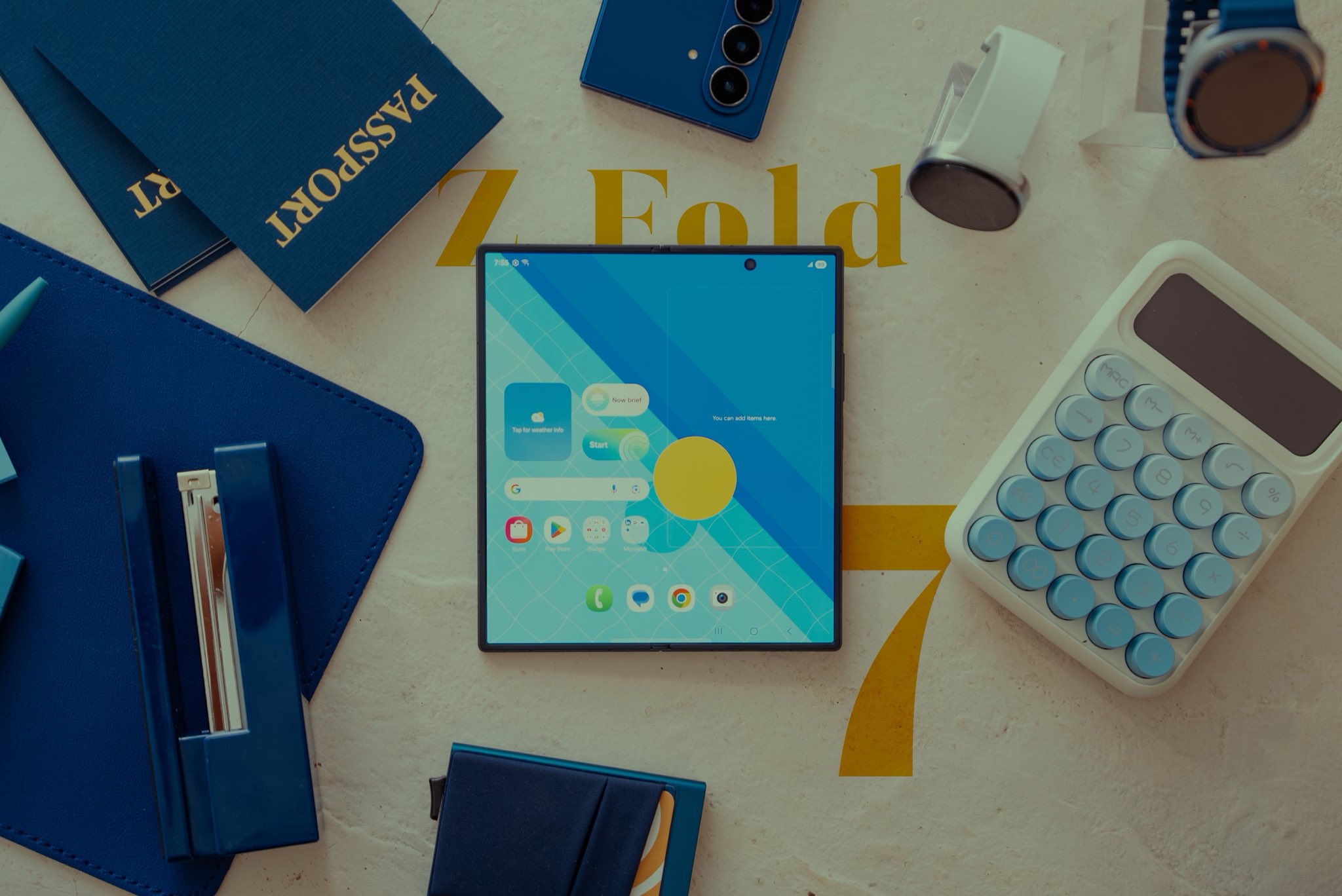
The Galaxy Z Fold 7 was designed to feel settled. That quality mattered more before Samsung showed its hand with the Tri-Fold.

On its own, the Fold 7 reads as a refinement cycle done carefully. Slightly easier to hold. Slightly less demanding in daily use. A device shaped by years of watching people hesitate before opening it. The goal appears simple enough. Make the Fold behave like a normal phone that happens to open, not a fragile experiment that asks for special treatment.
Then Samsung unveiled a phone that opens twice.
The presence of the Tri-Fold does not make the Fold 7 obsolete. It makes it legible.

Refinement Stops Looking Like Progress When Expansion Appears
The Fold 7 improves by subtraction. Less friction in the hinge. Fewer compromises on the outer display. Marginal gains that add up to comfort. This is Samsung smoothing the edges of a form factor it wants people to stop questioning.
But the Tri-Fold exposes the ceiling of that approach.

By unfolding into a full 10-inch rectangle, the Tri-Fold reframes what foldables can actually do when screen shape stops fighting content. Video fills the display instead of shrinking into letterboxed corners. File management stretches horizontally instead of stacking vertically. Three apps sit side by side without crowding each other.
The Fold 7’s 8-inch square panel still works. It just looks like a compromise once a wider canvas exists inside Samsung’s own lineup.
That contrast is not accidental. It suggests the Fold 7 is no longer Samsung’s ambition device. It is the stabilizer.
Display Size Finally Changes Behavior
Samsung has spent years trying to convince users to open foldables more often. The Fold 7 takes a softer approach. Improve the cover display enough that people stop resenting it, then let habit form naturally.
The Tri-Fold takes a different bet.
At 10 inches, the inner screen stops asking whether it is worth opening. It assumes it is. The aspect ratio rewards the effort immediately. That matters more than raw diagonal size. It changes posture, usage time, and intent.
This difference reveals something important about the Fold 7. Samsung no longer believes that display size alone will change how people use it. The Fold 7 accepts partial engagement as normal. The Tri-Fold challenges it.
Software Carries More Weight Than Hardware Now
On the Fold 7, Samsung’s multitasking tools feel familiar. They work because they have been iterated on for years. Floating windows behave. Split views make sense. The phone rewards muscle memory.
The Tri-Fold pushes those tools harder.
Running three full apps side by side. Managing folders across visible columns. Using DeX directly on the internal screen without an external monitor. This is where Samsung’s software finally stops compensating and starts expressing intent.
The contrast exposes the ecosystem gap more clearly. Many third-party apps still stretch rather than adapt. On the Fold 7, that feels tolerable. On the Tri-Fold’s 10-inch canvas, it becomes obvious.
Samsung can polish its own tools indefinitely. It cannot force developers to rethink layouts. The Tri-Fold makes that limitation harder to ignore.
Weight, Thickness, and the Reality of Carrying It
The Galaxy Z Fold 7 feels reasonable in a pocket. That has always been part of its pitch.
The Tri-Fold does not.
It weighs over 300 grams. It feels dense when closed. It reminds you that you are carrying something unusual. And yet, once unfolded, the weight spreads across a much larger surface. At its thinnest point, it undercuts many tablets.
This trade-off clarifies Samsung’s internal logic. The Fold 7 prioritizes tolerability when closed. The Tri-Fold prioritizes payoff when open.
One is about endurance. The other is about justification.
Pricing Draws a Hard Line Between Roles
The Fold 7 is expensive, but it still argues for itself as a daily device. The Tri-Fold does not attempt that conversation.
At roughly $2,500 in markets where it is already on sale, the Tri-Fold exits mainstream consideration entirely. That price tells you who it is for. People who want a real tablet without carrying a tablet. People willing to accept weight and cost in exchange for screen dominance.
The Fold 7, by contrast, is trying to remain defensible. Not accessible. Defensible.
Galaxy Z Fold 7 reflects Samsung’s careful foldable strategy, balancing maturity, limits, and purpose as bigger ideas wait offstage.
This split suggests Samsung has stopped trying to make one foldable for everyone.
Competition Presses the Fold, Not the Experiment
Rivals continue to chase thinness and aggressive pricing in conventional foldables. That pressure shapes the Fold 7. It explains the careful tuning, the restraint, the lack of spectacle.
The Tri-Fold sits outside that competitive lane. Few companies can build it. Fewer can support it globally. Samsung knows this.
The result is a two-track strategy. The Fold 7 absorbs competitive pressure. The Tri-Fold absorbs ambition.
Who the Galaxy Z Fold 7 Is For Now
The Galaxy Z Fold 7 is built for people who already made peace with foldables. Users who want fewer reasons to second-guess carrying one. Professionals who value screen space but still want a device that behaves predictably.
It is not trying to seduce skeptics. It is trying to retain believers.
The Tri-Fold is not chasing either group. It is aimed at people who want the argument settled by scale alone.
The Fold 7 as an Anchor, Not a Statement
The most revealing thing about the Galaxy Z Fold 7 is not what it adds. It is what Samsung chose to place beside it.
By launching the Tri-Fold, Samsung implicitly defines the Fold 7 as the conservative center of its foldable strategy. The phone you live with. The one that absorbs daily friction. The one that does not ask for attention.
The Fold 7 does not point forward. It holds the line.
That may be its most important job yet.
Go to TECHTRENDSKE.co.ke for more tech and business news from the African continent.
Follow us on WhatsApp, Telegram, Twitter, and Facebook, or subscribe to our weekly newsletter to ensure you don’t miss out on any future updates. Send tips to editorial@techtrendsmedia.co.ke
TechTrends Media Podcasts


