
Samsung Teases HDR10 Plus Advanced, Its Answer to Dolby Vision 2
Years of watching from behind might be ending, though the road to equal footing runs through every studio and streaming deal yet to be signed.

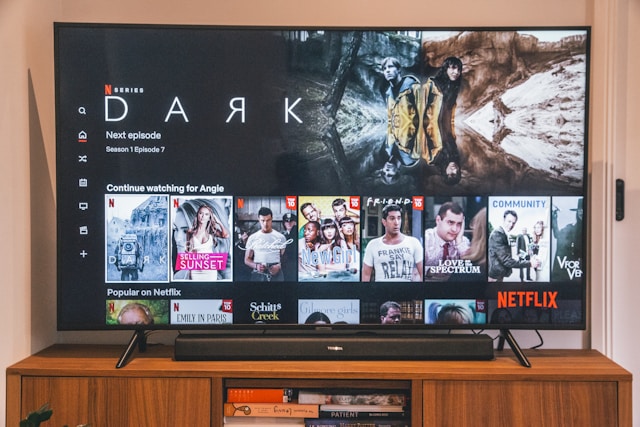
Samsung isn’t backing down from Dolby. At a closed-door demo last week, the company previewed HDR10 Plus Advanced, a next-gen version of its open HDR standard designed to compete with Dolby Vision 2 — and to close a gap that’s been widening for years.

The format, still in development, builds on HDR10 Plus’s dynamic metadata system with new layers of precision. Samsung claims it can fine-tune brightness, tone mapping, and color reproduction at a per-scene level, scaling all the way up to the new 4,000- to 5,000-nit panels already hitting the market.
For a company that’s never supported Dolby Vision — not on TVs, not on Galaxy phones — this is more than a technical tweak. It’s Samsung doubling down on its own ecosystem, betting that open standards can still compete in an HDR landscape increasingly defined by Dolby’s dominance.
A Technical Counterpoint to Dolby Vision 2
At its core, HDR10 Plus Advanced takes the metadata idea further. It doesn’t just adjust brightness dynamically — it adjusts it intelligently, by genre and by viewing environment. The demo showed how it could enhance the color contrast of a streamed game in real time, then scale back for a dialogue-heavy movie scene without oversaturating skin tones.
Six key features were shown:
- Dynamic control over tone mapping across different screen areas
- Fine-tuned motion smoothing control
- Optimized performance for high-nit displays
- Genre-based brightness and contrast adjustment
- Real-time adaptation to ambient lighting
- Precise color management to reduce clipping
That’s roughly parallel to what Dolby Vision 2 promises. But the challenge, as always, isn’t what the standard can do — it’s whether anyone will support it.

HDR10 Plus Advanced vs. Dolby Vision 2
| Feature | HDR10 Plus Advanced | Dolby Vision 2 |
|---|---|---|
| Standard Type | Open, royalty-free | Proprietary, licensed |
| Dynamic Metadata | Scene-by-scene and area-based adjustments | Frame-by-frame optimization |
| Max Brightness Target | Up to 5,000 nits | Up to 10,000 nits (theoretical) |
| Color Control | Genre-specific and adaptive tone mapping | Automated per-frame tone control |
| Motion Control | Adjustable motion smoothing level | Fixed based on content metadata |
| Ambient Adaptation | Adapts to room lighting | Not yet disclosed |
| Content Support (2025) | Amazon Prime Video (confirmed) | Netflix, Disney+, Apple TV+, others |
| Hardware Support | Samsung TVs, Panasonic (select models) | LG, Sony, TCL, Hisense, and others |
The differences are less about capability and more about control. Dolby Vision 2 still has the upper hand in adoption, but HDR10 Plus Advanced is trying to catch up with adaptability — a way to match Dolby’s precision without locking manufacturers into licensing fees.
The Long Game Against Dolby
Samsung’s rivalry with Dolby Vision has always been ideological. Dolby’s approach is proprietary and licensed, while HDR10 Plus — backed by Samsung, Amazon, and Panasonic — is royalty-free. In theory, that should’ve helped it spread faster. In practice, the opposite happened.
For years, streaming services and studios prioritized Dolby Vision because of its wider adoption and early support from LG, Sony, and Apple. Netflix and Disney didn’t even add HDR10 Plus support until 2025 — seven years after its debut. That lag has kept Samsung TVs technically behind in premium HDR playback, even if the difference is subtle to most viewers.
HDR10 Plus Advanced could finally change that equation, but only if more partners climb aboard. Amazon Prime Video is in, but the real prize is Netflix and Disney — the same services that took years to move the first time around. Until they adopt, HDR10 Plus Advanced will remain a Samsung showcase rather than an industry standard.
What Viewers Might Actually Notice
For TV buyers, the improvements could feel less like a new era and more like refinement. Picture brightness will look cleaner at higher nits, colors more consistent across different content types, and motion control less artificial. That’s the kind of fine-tuning that matters most on flagship OLED and Mini LED panels.
But none of it will matter unless you’re watching content mastered in HDR10 Plus Advanced — and for now, that’s a short list. Samsung expects broader support to emerge after CES 2026, once the format’s finalized and its partner roadmap expands.
So while the demo hints at a more even fight between Dolby and Samsung, the reality is still one of staggered adoption. For most viewers, the promise of HDR10 Plus Advanced will arrive later than the technology itself.
Go to TECHTRENDSKE.co.ke for more tech and business news from the African continent.
Follow us on WhatsApp, Telegram, Twitter, and Facebook, or subscribe to our weekly newsletter to ensure you don’t miss out on any future updates. Send tips to editorial@techtrendsmedia.co.ke


