
Kenya Builds a Sovereign Wealth Fund Aimed at Long-Term Stability, Digital-Era Strategy, and Generational Equity
Kenya’s new sovereign wealth fund raises questions about how a digital-minded state plans to balance oil money, global markets, and public trust.

In 2025, as Kenya prepares to launch its first sovereign wealth fund, the idea of saving resource revenues is finally crossing from aspiration to design. The proposed fund, backed by earnings from minerals and petroleum, arrives in a decade marked by fiscal fatigue and digital possibility. It promises to manage windfalls with restraint while using technology to build credibility — a balance few emerging economies have mastered. For a country that has built its reputation on digital ingenuity rather than oil abundance, the experiment carries more than economic weight; it tests whether the “Silicon Savannah” can also pioneer a smarter, data-driven form of public finance.

The anatomy of Kenya’s proposed fund
The draft Kenya Sovereign Wealth Fund Bill, 2025 lays out a three-part structure designed to manage volatility, finance infrastructure, and preserve wealth for future generations.
The Stabilisation Component will act as a cushion against swings in resource revenues and global commodity shocks. The Strategic Infrastructure Investment Component will finance national projects across sectors such as energy, transport, and housing — aligning with ongoing public-private partnerships. The third arm, Urithi, is a savings pool intended to preserve value for future generations once mineral and petroleum revenues decline.
The draft law bars investment in local securities, speculative assets, or unlisted real estate. Instead, the fund will channel its resources into foreign-currency instruments, including investment-grade bonds and deposits in offshore banks. By keeping exposure outside Kenya’s domestic markets, the fund seeks to create a natural hedge against internal economic turbulence.
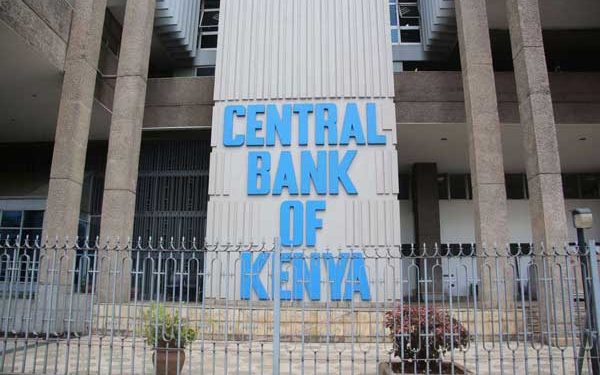
So far, the State estimates nearly Sh200 billion in mineral-sector income will seed the fund, drawn from royalties, licences, and acreage leases. Oversight will rest with the National Treasury, while the Central Bank of Kenya will maintain the holding account that receives, invests, and distributes earnings.
How other African nations manage resource wealth — and the lessons for a digital era
Across Africa, sovereign wealth funds have become laboratories for managing resource income, with mixed results. Nigeria’s Sovereign Investment Authority, established in 2011, splits its assets across stabilisation, future generation, and infrastructure funds — an approach that Kenya mirrors. Botswana’s Pula Fund remains a benchmark for transparency, while Ghana’s Heritage and Stabilisation Funds have achieved credibility through clear legal reporting requirements.

Others have struggled. Angola’s FSDEA and Gabon’s FGIS have faced criticism for opacity and political entanglements. Rwanda’s Agaciro Fund, by contrast, stands out as a citizen-backed model of national savings.
Kenya’s proposal fits structurally within this lineage, but its opportunity lies in building digital trust from day one. Around the world, sovereign funds are entering a phase where data transparency and technology-driven oversight define credibility.
Norway’s Government Pension Fund Global runs an open database of every investment. Singapore’s Temasek and GIC use artificial intelligence and sustainability analytics to evaluate long-term risks. Abu Dhabi’s ADIA secures global transactions through fintech-enabled systems. These examples illustrate that in the digital era, a credible sovereign fund is one that is not only capitalised — it is visible.
For Kenya, that visibility could take the form of a public digital dashboard showing fund performance, holdings, and audited outcomes in near real time. By linking fiscal accountability to digital access, the fund could embed transparency into its architecture rather than treat it as a later reform.
As the Urithi component builds long-term savings, that digital openness would serve as a guardrail for future generations. The real measure of success will not only be what the fund earns but how clearly Kenyans can see where it flows.
Kenya’s tech advantage in building a modern fund
Kenya enters this phase with a digital edge unmatched by most of its continental peers. Often called the “Silicon Savannah,” it has led the continent in mobile money innovation, startup investment, and broadband penetration.
Its fintech backbone — symbolised by M-Pesa — has redefined how citizens transact and how government services integrate with the digital economy. Investments in fibre infrastructure under the National Optic Fibre Backbone Initiative (NOFBI) have expanded connectivity, while Nairobi’s thriving startup ecosystem continues to draw global venture capital, especially in Climate Tech and Agritech.
Compared with other tech powers in Africa — Nigeria’s fintech scale, South Africa’s mature research networks, and Egypt’s digital infrastructure — Kenya’s strength lies in execution and adaptability. Its regulatory environment, particularly with the Startup Bill and innovation-friendly ICT policies, has created fertile ground for integrating technology into public finance management.
That readiness matters. If the sovereign wealth fund’s oversight tools align with Kenya’s existing digital systems — linking Treasury reporting, Central Bank data, and citizen-access platforms — the result could be one of the most transparent fiscal institutions in the region.
Future-forward sovereign funds and what Kenya can learn
Several of the world’s leading sovereign wealth funds have redefined themselves as tech-focused investment engines. Their evolution offers practical lessons for Kenya as it designs its framework.
Singapore’s Temasek Holdings channels significant capital into AI, fintech, and digital infrastructure firms worldwide. Abu Dhabi’s Mubadala invests in semiconductors, space technology, and smart energy systems, aligning national strategy with tech growth. Saudi Arabia’s Public Investment Fund underpins Vision 2030 with large-scale investments in electric mobility and digital cities like NEOM.
Even Ireland’s Strategic Investment Fund and New Zealand’s Super Fund direct part of their portfolios toward automation, green technology, and digital sustainability.
The shared thread among these funds is an understanding that financial returns are now tied to technological capacity. They do not treat digital infrastructure as a cost centre but as an investment pillar.
Kenya can draw from that playbook. The Strategic Infrastructure and Urithi components could co-invest in domestic innovation — channeling a fraction of earnings into local Climate Tech, fintech, and digital agriculture startups. Doing so would link the fund’s returns to Kenya’s most resilient economic frontier: its technology ecosystem.
A fund built for visibility and resilience
The Kenya Sovereign Wealth Fund arrives at a moment of both caution and ambition. It seeks to correct years of debt dependence while laying a foundation for generational savings. Yet its lasting relevance will depend less on the volume of its assets and more on how it harnesses the digital culture that defines Kenya’s economy.
A transparent, tech-enabled fund could become the country’s most important fiscal innovation since mobile money — not because of how much it earns, but because of how openly it shows what it earns for everyone.
Go to TECHTRENDSKE.co.ke for more tech and business news from the African continent.
Mark your calendars! The GreenShift Sustainability Forum is back in Nairobi this November. Join innovators, policymakers & sustainability leaders for a breakfast forum as we explore sustainable solutions shaping the continent’s future. Limited slots – Register now – here. Email info@techtrendsmedia.co.ke for partnership requests.
Follow us on WhatsApp, Telegram, Twitter, and Facebook, or subscribe to our weekly newsletter to ensure you don’t miss out on any future updates. Send tips to editorial@techtrendsmedia.co.ke
TechTrends Media Podcasts


