
[Interview] George Mudhune on Strategy, Growth and Renewable Energy Access in Africa

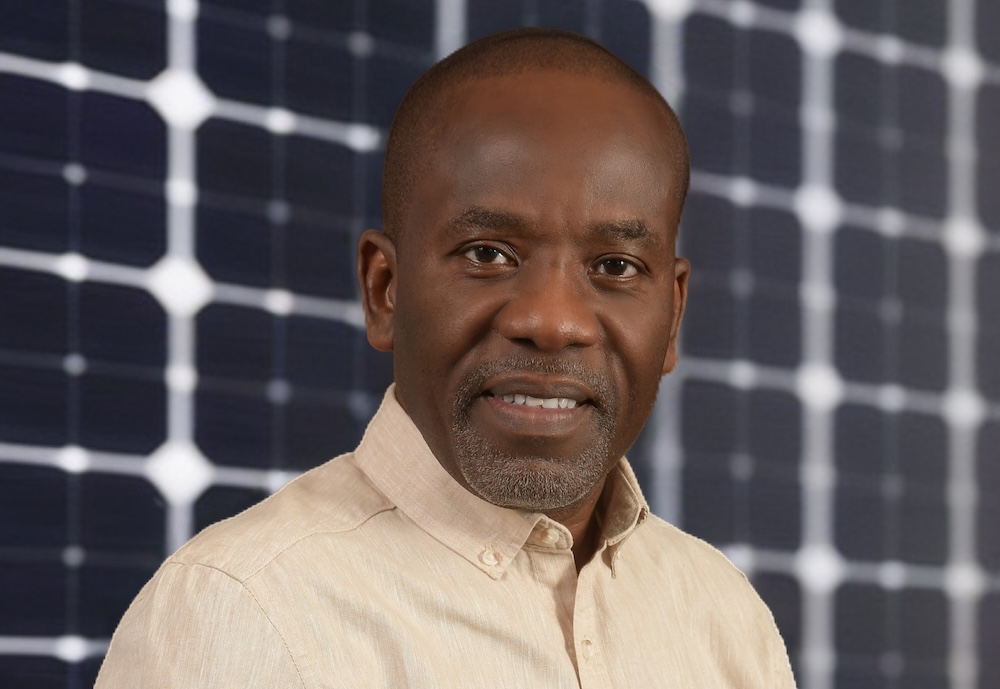
Africa’s business and energy sectors are entering a period of rapid transformation, where innovation and sustainability must go hand in hand. At the centre of this shift is George Mudhune, Head of Wholesale & Partnerships for Africa at ENGIE Energy Access, and a strategic leader known for scaling startups, building partnerships, and driving market growth across the continent.

In this interview, George shares his perspective on how renewable energy and evolving market dynamics are reshaping Africa’s economic future, the key disruptors businesses must prepare for, and the strategies needed to unlock opportunities from B2B to B2C markets.
How do you foresee the convergence of sustainable energy solutions and evolving market dynamics reshaping the African economic landscape over the next decade?
I foresee a growing shift from energy deficit to energy diversification, accelerated electrification of productive use and infrastructure development of power distribution. From energy deficit to energy diversification, I foresee rapid build-out of solar, wind and hydro refurbishments. We should expect to see hybrid systems (solar + storage + grid backup) becoming standard for industry and cities. In the electrification of productive uses, I foresee cold chains, irrigation and milling driving rural job creation. In the infrastructure development of power distribution, mini-grids, commercial & industrial solar and PAYGo will evolve from access solutions into mainstream infrastructure for SMEs, agri-processing, data centres and health. This will cut off the disruptive power outages and diesel use, thereby lifting productivity across sub-Saharan Africa.


What are the biggest disrupters you anticipate in the African business landscape, and how should established and emerging companies prepare to not just survive, but thrive amidst these changes?
In my perspective, the biggest disrupters ahead in the African business landscape are digital & financial services transformation, mobility & logistics reinvention, online market evolution, renewable energy & infrastructure, policy and trade games. Established and emerging companies should anticipate change and not just wait to respond to them. They should build at least three plausible futures. Optimistic, pragmatic and disruptive for their sectors. They should build a resilient core, prioritising a strong working capital cycle over vanity growth. They should embed agility into their operations, designing offerings that can scale up/down or shift segments with minimal rework. They should focus on winning through partnering with fintechs, telcos, agri-coops, and logistics firms to accelerate reach. They should redefine customer value by offering upgradeable products/services to capture customers early and grow lifetime value. They should play offense and not just be comfortable in market defense. Own new niches early. Be the reference brand before the market matures.
In a rapidly evolving technological landscape, what framework do you use to identify truly disruptive product opportunities that resonate with African consumers, and how do you mitigate the risks associated with introducing new technologies?
I have always adopted a framework that tests both market resonance and execution viability in the African market landscape. I always run through the idea of a new product against these questions. Does it solve a critical unmet need with wide relevance? Is it adapted to local infrastructure, culture, and user habits? Can consumers or enterprises afford to adopt and sustain it? Can it expand fast and create secondary benefits? If I am convinced it passes through these, I carry out a market product test to ascertain execution viability. In mitigating risks associated with introducing new technologies, it narrows down to reducing uncertainty at every stage of the product lifecycle, which includes design, market entry and scaling. Before mitigation, I clearly map out the type of risks I am likely to face, which I have always classified as technical/operational, market/adoption and financial/commercial. With the type of risks defined, I ensure the product survives real-world conditions before big rollouts under the technical/operational risk. I endeavour to remove uncertainty around whether people will use and pay for it under market/adoption risk and make sure the economics work under realistic conditions to overcome financial/commercial risks.
Having pioneered solar refrigeration PAYGo business start-up from the ground up and scaled operations across Eastern Africa at SureChill, what fundamental shifts in consumer behavior and market infrastructure were most crucial to understand and leverage for success in that space?
The most significant shift was consumers increasingly demanding upgradeable solar PAYGo systems that power TVs, fridges, fans, irrigation pumps, and milling machines, which eventually drifted to demand for productive use equipment. I quickly learned that building solar PAYGO modular systems with clear upgrade paths, designing pricing for lifetime value, not just the initial kit sale, was fundamental for success, and I leveraged on this. I also endeavoured to understand income volatility & seasonal repayment patterns of solar PAYGo consumers. PAYGo defaults often spike in lean agricultural seasons, then rebound post-harvest. I used repayment analytics to design seasonally adjusted payment plans by lowering installments during planting and catch-up after harvest. Key market infrastructure shit of solar PAYGo portfolios becoming securitizable assets meant that banks and funds could buy receivables if repayment data is transparent. I therefore built a robust portfolio analytics with credit scoring from day one to tap cheaper capital and recycle cash faster.
What are some of the challenges within the renewable energy partnership sector in Africa?
The most significant challenge is financial barriers. The high cost of capital in Africa deters private investors. Public finances are strained by debt and competing priorities, making it difficult to fund renewable energy projects. Additionally, many renewable energy projects require innovative financing models to overcome high initial capital costs. The other is regulatory complexity. The diverse regulatory landscapes across African countries can create hurdles for international investors. Variations in local laws, permitting processes, and compliance requirements necessitate specialised expertise to navigate effectively.
What’s your advice for building trust and fostering long-term partnerships across Africa?
Start with mutual value. Prove reliability early to the partners you engage with. Build relationship capital, not just transactional ties. Ensure that trust built in one relationship spills over to others to widen your network of those who believe in you. Always avoid actions that make future collaboration impossible. Maintain relationships, even when conflicts arise.
Could you elaborate on how you apply a differentiated approach to crafting go-to-market strategies for B2B versus B2C segments in the African context, particularly when dealing with complex distributor networks?
Though both B2B and B2C eventually go through distributors, buyers in each of the segments behave very differently in the African market landscape. The go-to-market strategies should therefore be tailored to those differences. Key aspects to focus on are purchase driver, sales cycle, decision makers, value proposition and support expectations. In B2B, purchase drivers are ROI, productivity, risk reduction, and regulatory compliance, while in B2C, they are aspirations, lifestyle, social proof and affordability. When we look at the sales cycle in B2B, it is long, relationship-driven and multi-stakeholder, while in B2C it is shorter, agent-led and impulse with referral. B2B decision makers are procurement heads, engineers, finance managers, and boards, while in B2C they are household heads, influencers, spouses and peers. Value proposition in B2B focuses on efficiency gains, total cost of ownership and uptime, while in B2C the focus is on quality-of-life improvement, reliability and status. B2B support expectations look at SLAs, training, integration support and financing, while in B2C, it is after-sales service, warranties and easy payment options.
West Africa is a massive opportunity (population size, resources, urbanisation), but it is often considered a tougher market to penetrate and scale business compared to East, Central, and Southern Africa. What are some of the key fundamentals that create this difference?
Price sensitivity in West Africa is higher, with consumers demanding affordability first, leaving little room for premium positioning. Moving goods across borders within West Africa is slower and costlier compared to East & Southern Africa’s more integrated corridors. Informal markets dominate West Africa, making contract enforcement and scaling formal businesses harder. The regulatory environment in the region is also less predictable.
Given your involvement in sustainable energy solutions, how do you personally envision the impact of your work contributing to a better future for communities across Africa?
The impact of sustainable energy solutions in Africa goes far beyond simply lighting homes. It touches economic growth, health, education, gender equity, and climate resilience, creating a transformative ripple effect across communities. That is how I see the impact of my work through ENGIE Energy Access across Africa.
Go to TECHTRENDSKE.co.ke for more tech and business news from the African continent.
Mark your calendars! The GreenShift Sustainability Forum is back in Nairobi this November. Join innovators, policymakers & sustainability leaders for a breakfast forum as we explore sustainable solutions shaping the continent’s future. Limited slots – Register now – here. Email info@techtrendsmedia.co.ke for partnership requests.
Follow us on WhatsApp, Telegram, Twitter, and Facebook, or subscribe to our weekly newsletter to ensure you don’t miss out on any future updates. Send tips to editorial@techtrendsmedia.co.ke


