
Copia Founders Launch Stahili, a New E-commerce Platform Offering Cashbacks and Data Rewards in Kenya
Just months after their billion-shilling venture shut down, Copia’s former leaders are back with a new platform built around discounts, feedback, and redemption.

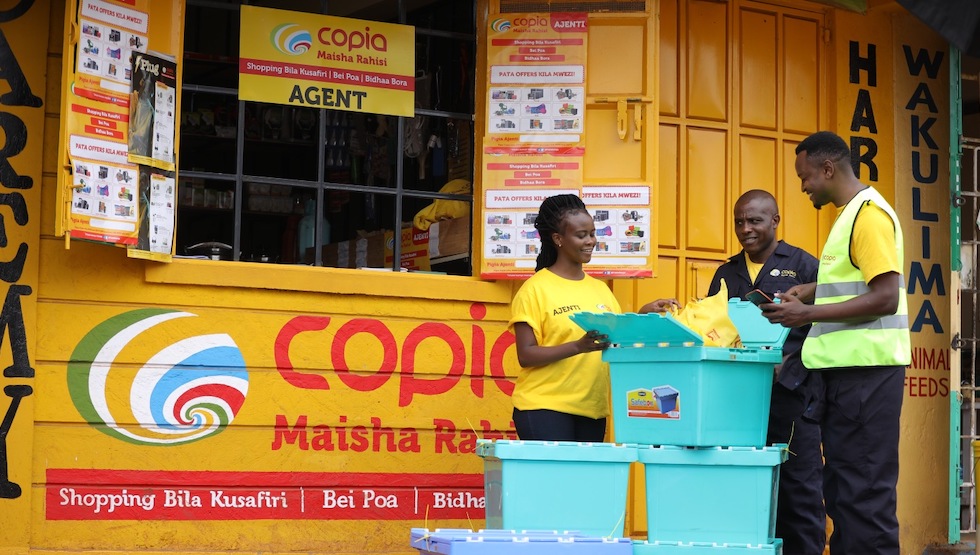
Months after the abrupt end of Copia Global, the e-commerce firm that raised over Sh15.8 billion in funding, its key leadership is back in Kenya with new projects—and familiar ambitions.

Timothy Steel, Copia’s former CEO, has teamed up once again with ex-CTO Michael King and Copia’s co-founder Tracey Turner to launch Stahili, a consumer-facing e-commerce platform built around rewards and customer feedback. The company was registered in June 2024, a few weeks after Copia’s administration process began. Steel now serves as CEO, King as CTO, and Turner as chairperson.
Company registration data reveals that Stahili is fully owned by Copia Holding Company, a U.S.-based entity previously linked to Copia Global. The holding firm remains active despite Copia’s operations ceasing in 2024, and appears to be the launchpad for this new effort.
Inside the Stahili Model
Stahili offers digital deals to users who participate in product surveys and give market feedback. Customers earn mobile data bundles and cashbacks as incentives for their engagement. According to Turner’s LinkedIn profile, the model draws influence from Groupon’s early approach in the U.S. and Coupang’s e-commerce framework in South Korea, both known for pairing affordability with strong merchant partnerships.

Whether Stahili can carve a path in Kenya’s competitive e-commerce landscape remains to be seen. The market is saturated, logistics remain expensive, and profit margins are often narrow. But the new company appears to be positioning itself for value-seeking shoppers, especially those in lower and middle-income brackets—similar to Copia’s original target market.
A Parallel Project: Olverra
In addition to Stahili, Turner has launched another venture—Olverra. This platform connects African artisans with buyers overseas, beginning with the U.S. market. Turner is listed as executive chair, while Kenyan data engineer Vijay Otieno serves as CEO. The business isn’t listed in Kenyan registries, suggesting it may be incorporated abroad.

Unlike Stahili, which focuses on domestic consumer engagement, Olverra aims to support local creators by offering global reach, potentially bypassing the delivery and scaling challenges that undermined Copia.
The Copia Collapse: A Rapid Descent
Founded in 2012, Copia Global blended digital ordering with an in-house logistics network tailored to underserved regions. The company gained traction quickly, attracting global capital from firms including DOB Equity, Goodwell Investments, Lightrock, and the U.S. Development Finance Corporation (DFC). Its final known round was $20 million in late 2023.
Despite this, Copia never reached profitability. Its expansion into Uganda stalled, and by mid-2024, financial strain forced the company into administration. By September, liquidation proceedings had begun, with over 1,000 jobs affected and assets put up for sale.
Lessons and Second Acts
Some investors and analysts are cautious about what the return of Copia’s leadership means. There’s growing concern about the recurring pattern of foreign-funded startups collapsing before becoming sustainable.
People familiar with Copia’s inner circle had long anticipated that a new project was in the works. Now that Stahili and Olverra have launched, attention is turning to execution: Will these ventures avoid the pitfalls of their predecessor?
Follow us on WhatsApp, Telegram, Twitter, and Facebook, or subscribe to our weekly newsletter to ensure you don’t miss out on any future updates. Send tips to editorial@techtrendsmedia.co.ke


