Pesalink Connects Kenya to PAPSS Cross-Border Payments
Africa has spent years talking about regional trade, yet money moving between its own economies still travels a slow and expensive route. The Pesalink and PAPSS connection attempts to fix that gap.

Cross-border payments in Africa still move with the drag of another era. A trader in Nairobi wiring money to Lagos can wait days for confirmation, even when both sides use modern banking apps. The delay rarely comes from the apps themselves. It sits deeper in the plumbing of the financial system, where transactions bounce through correspondent banks and often pass through a dollar clearing system that neither sender nor receiver actually uses in daily life.

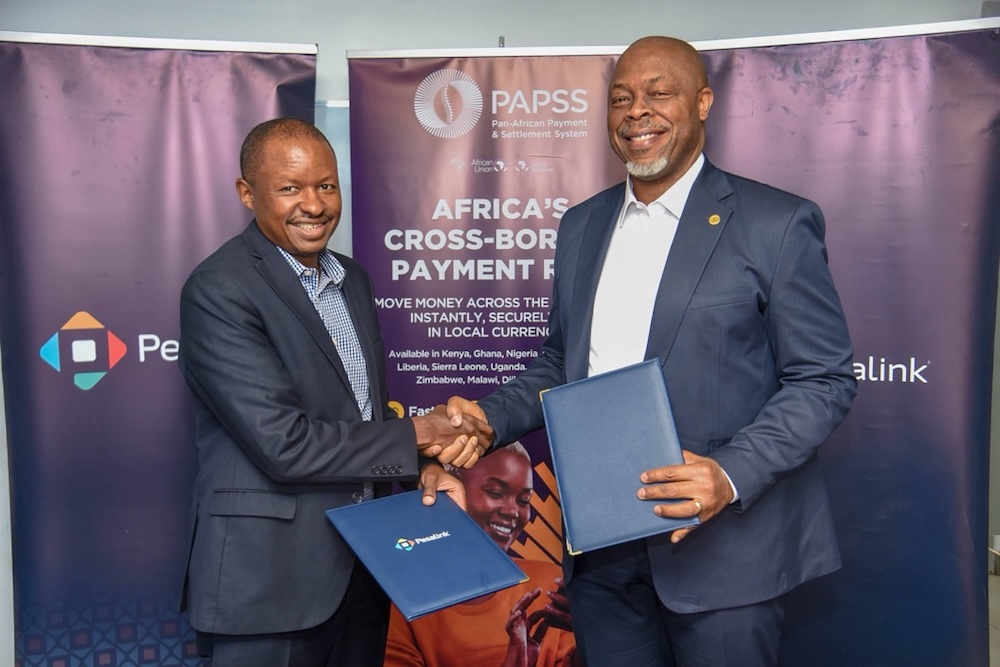
The partnership between Pesalink and Pan-African Payment and Settlement System attempts to tackle that old bottleneck. The two networks are now connected in a way that allows transfers from participants on the PAPSS platform to reach banks and mobile money operators in Kenya through Pesalink’s rails, with settlement in local currencies.
It sounds technical, and in many ways it is. Yet the ambition sits squarely in the political economy of African trade. Payments shape the speed and confidence of commerce. When the payment layer works poorly, trade itself tends to stall.
The Long Detour of African Payments
The cost problem has been documented for years. The 2023 report by World Bank placed average African remittance fees between 7 percent and 8 percent of the transaction value. Global averages sit closer to 6 percent to 7 percent.


Time is another friction point. Settlements commonly take 3 to 7 business days. For an SME buying goods across borders, that delay can freeze working capital. The trader pays upfront yet waits for the system to confirm movement of funds.
This is partly a structural inheritance. Many African banking relationships rely on overseas correspondent institutions, particularly those linked to dollar or euro clearing systems. A payment between 2 African countries can therefore take a detour through financial hubs far outside the continent.
That design reflects how the global banking system evolved, not necessarily how African commerce now operates.
Connecting Two Payment Worlds
Pesalink functions as Kenya’s instant payment switch. The network connects more than 80 domestic institutions, including commercial banks, fintech platforms, SACCOs, and telecom operators that run mobile money services. Transfers inside the network move instantly, any hour of the day.
By linking with PAPSS, Pesalink becomes a technical bridge between that domestic ecosystem and a wider continental settlement platform. PAPSS itself connects over 160 commercial banks and fintech operators across several African markets.
The connection works in a practical way. A participant on the PAPSS network can initiate a transfer that lands directly in a Kenyan bank or mobile wallet linked to Pesalink. Settlement happens in local currencies rather than routing through foreign reserve currencies.
In effect, the transaction bypasses layers that once slowed down regional payments.
Mike Ogbalu, the chief executive of PAPSS, describes collaboration with national payment switches as essential if the network is to function at scale. Kenya’s system became the first location where PAPSS tested transaction termination through a domestic switch.
The Architecture Behind the Experiment
PAPSS was launched through a collaboration between African Export-Import Bank, the African Union, and the African Continental Free Trade Area Secretariat.
The idea behind the platform is straightforward. If African countries want a functioning free trade area, the payments layer must match the ambition of the trade policy.
Trade agreements can remove tariffs on paper. Yet businesses still face friction if paying suppliers across borders feels complicated or expensive.
PAPSS attempts to build a settlement network that allows banks in different African countries to exchange funds directly while balancing currency positions through central banks. The system reduces reliance on foreign clearing institutions and limits the need for dollars in routine regional trade.
The Pesalink link brings that architecture closer to ordinary users in Kenya.
The Kenyan Corridor
Kenya’s financial infrastructure already runs at a pace uncommon in many regions. Mobile money platforms dominate retail transactions, and instant bank transfers are widely used for both personal and business payments.
Pesalink sits at the center of that domestic environment. It acts as a switch connecting financial institutions rather than as a consumer-facing brand.
By joining the PAPSS framework as a technical connectivity provider, Pesalink effectively plugs Kenya’s entire digital banking ecosystem into a continental payment corridor.
Gituku Kirika, chief executive of Pesalink, frames the development in commercial terms. Banks in Kenya gain the ability to offer cross-border transfers that move faster and cost less than traditional channels.
Yet the broader question concerns usage. Payment systems only prove their value once people trust them enough to change habits.
Infrastructure Alone Does Not Change Behavior
African payment networks have a long history of ambitious launches followed by slower adoption curves.
Businesses often remain cautious. Traders want certainty that funds will arrive without complications from currency rules or compliance checks. Banks also weigh operational risk when routing money through new systems.
Trust grows gradually, transaction by transaction.
There is another factor as well. Informal networks already handle large volumes of cross-border trade across Africa. Cash couriers, informal agents, and community finance channels continue to move money outside formal banking rails.
For PAPSS and Pesalink, the task is not simply technical integration. The challenge lies in persuading traders, banks, and fintech operators that the system can match the reliability of existing habits.
A Contest Over the Payment Layer
The timing of the partnership also reflects a wider contest in the African payments sector.
Fintech platforms, telecom operators, and traditional banks all want influence over cross-border transaction flows. Control of the payment layer carries strategic weight because it determines where transaction data accumulates and which institutions earn settlement fees.
China-linked payment providers and regional fintech networks are already expanding across the continent. Many promote digital wallets or alternative transfer rails that bypass traditional banking channels.
The PAPSS model takes a different route. It keeps banks and central institutions in the architecture while modernizing the infrastructure underneath them.
That institutional design may prove attractive to regulators who prefer systems that remain closely tied to the formal financial sector.
The Currency Question
One of the more interesting aspects of the Pesalink PAPSS cross-border payments model lies in how it treats currency.
Traditional cross-border payments often convert local currencies into dollars before converting them again into the recipient’s currency. Each conversion adds cost and exposure to exchange rate fluctuations.
The PAPSS framework instead settles transactions directly between participating currencies.
This approach depends heavily on central bank coordination. Currency balances must still be reconciled between countries, and exchange rates need to remain stable enough for banks to manage risk.
The system therefore sits at the intersection of technology and monetary policy.
Trade Ambitions Meet Payment Reality
The broader backdrop is the African Continental Free Trade Area. The agreement aims to expand trade within the continent, which currently accounts for roughly 15 percent of Africa’s total commerce.
For comparison, intra-regional trade in Europe and Asia sits far higher.
Payments are rarely the first factor policymakers mention when discussing trade barriers. Tariffs, logistics, and customs rules usually dominate the conversation. Yet payment infrastructure can quietly shape the pace of cross-border business.
If paying a supplier across the border feels slow or unpredictable, companies often limit those transactions altogether.
Pesalink’s link with PAPSS attempts to close that gap from the financial side.
A Network Still Taking Shape
The partnership represents one connection in a larger network that remains under construction. PAPSS continues to onboard banks and fintech operators across the continent, while national payment switches explore how their domestic systems can plug into the platform.
Success will depend less on announcements and more on transaction volumes over the next few years.
If the network reaches meaningful scale, cross-border payments in Africa could begin to resemble domestic transfers in speed and cost. The change would ripple outward into trade finance, supply chains, and small-business activity.
If adoption stalls, the system risks becoming another well-designed platform waiting for users.
Payment infrastructure rarely attracts public attention. Yet beneath the surface, it determines how easily money moves through the economy.
The Pesalink PAPSS cross-border payments link represents an attempt to rebuild that infrastructure from within the continent itself. Whether it becomes the backbone of African trade or just another rail in an already crowded payment landscape will depend on something far less glamorous than technology.
Usage.
Go to TECHTRENDSKE.co.ke for more tech and business news from the African continent and across the world.
Follow us on WhatsApp, Telegram, Twitter, and Facebook, or subscribe to our weekly newsletter to ensure you don’t miss out on any future updates. Send tips to editorial@techtrendsmedia.co.ke

