Galaxy Buds 4 Launched With Louder Bass, Tighter Noise Control, and a Bigger Role Inside Samsung’s AI Plans
Samsung’s latest audio hardware hints at a future where the most constant interface with your phone may be the device sitting in your ear

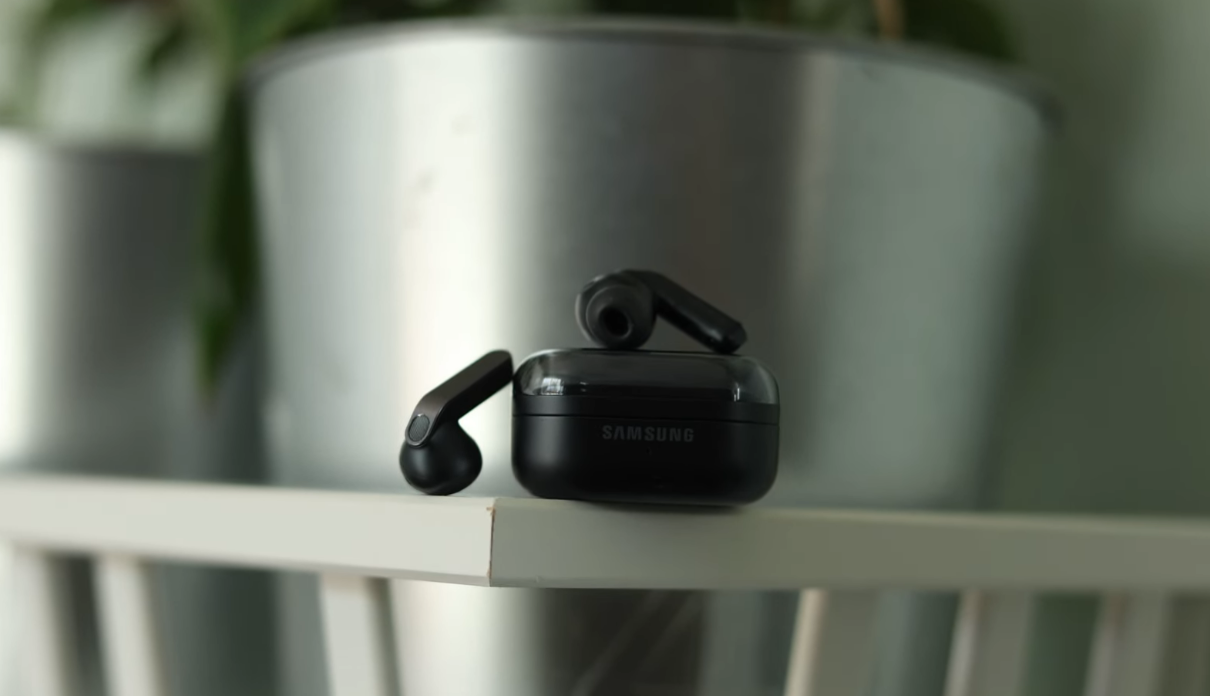
When Samsung unveils a new smartphone generation, the spotlight usually stays fixed on the devices. Screens get larger. Cameras gain new tricks. Processors grow faster. Yet the small objects sitting beside those phones have become just as strategic.

Wireless earbuds now function as the everyday interface to a phone. They handle calls, deliver music, relay notifications, and increasingly interact with voice assistants. The result is that earbuds have evolved from accessories into something closer to a daily operating layer.
That context explains the direction behind the Samsung Galaxy Buds 4 and Samsung Galaxy Buds 4 Pro. On the surface they appear to be routine generational updates. Slightly stronger sound hardware. Better noise cancelation. A few comfort adjustments. But the more revealing story sits beneath the hardware, where Samsung is knitting audio devices into its broader AI and device ecosystem.
The earbuds are not simply meant to sound good. They are meant to behave like extensions of the phone.
Sound hardware that tries to close the gap with wired audio
Wireless earbuds spent years battling a reputation problem. Convenience was obvious. Sound quality lagged behind.
Samsung’s approach with this generation leans heavily on driver design. Both earbuds use a two-way speaker configuration that combines a woofer with a separate tweeter. That arrangement allows each driver to focus on a narrower frequency band instead of forcing a single speaker to handle the entire spectrum.
In practice that translates into a familiar listening pattern. Bass gains more presence while treble becomes clearer without turning brittle. Samsung says the woofer itself is roughly 20% larger than the one used in the previous generation, a change that tends to improve low-frequency response.
Samsung is leaning further into that driver architecture with the Pro model. The Buds 4 Pro use a 5.5 mm planar tweeter paired with an 11 mm “super wide woofer.” Samsung says the woofer’s effective surface area is nearly 20% larger than the previous generation, a change the company claims reduces distortion by as much as 50%. Those figures come from Samsung’s internal measurements, but the direction is clear. The company is attempting to extract more clarity from a form factor that leaves little room for acoustic compromise.
Planar drivers have traditionally appeared in larger headphones where space and power are less constrained. Bringing that design into earbuds reflects how aggressively manufacturers are now pushing miniaturized audio hardware. Planar drivers move a thin diaphragm across a magnetic field more evenly than conventional dynamic drivers, which can improve detail in higher frequencies. The engineering challenge is size and efficiency. Shrinking that technology to fit inside something smaller than a coin requires careful tuning and careful power management. The presence of a planar tweeter inside the Samsung Galaxy Buds 4 Pro suggests Samsung believes wireless earbuds are reaching a stage where acoustic engineering, not simply software tuning, will determine which products stand apart.
High-resolution audio support remains part of the equation. The earbuds can handle 24-bit, 96 kHz playback through Samsung’s proprietary Bluetooth codec when paired with compatible Galaxy devices. That level of fidelity often exceeds the quality of the source material many listeners stream. Still, it reinforces the argument that wireless listening no longer demands a clear sacrifice in sound quality.
Whether listeners notice the difference will depend on their ears and their music libraries. Many will simply hear stronger bass and slightly better instrument separation. That alone may be enough.
Noise cancelation becomes a software problem as much as a hardware one
Noise cancelation once depended mostly on microphones and signal processing. Those elements remain the foundation, yet software now carries much of the responsibility.
Samsung describes the Buds 4 lineup as using adaptive noise cancelation guided by machine learning. The earbuds monitor surrounding sound and adjust how aggressively they counter it. Street traffic, train rumble, office chatter. Each produces a different acoustic profile, and the earbuds attempt to respond accordingly.
Samsung estimates around a 3 dB improvement in active noise cancelation on the Buds 4 Pro compared with the previous generation. Numbers like that rarely translate into dramatic real-world differences. What they usually represent is steady refinement rather than a sudden jump in performance.
Ambient listening modes remain part of the experience as well. Users can allow outside sound to pass through when walking through a city or speaking with someone nearby. The earbuds attempt to balance isolation and awareness without forcing the listener to remove them.
It is a subtle interaction. Remove too much outside sound and people feel cut off from their surroundings. Allow too much through and the purpose of noise cancelation begins to erode.
The Pro model focuses on fit and acoustic sealing
The most visible difference between the two models lies in their physical design.
The standard Buds 4 rely on hard plastic tips that sit loosely in the ear. Some listeners prefer this approach because it avoids the pressure created by in-ear silicone seals. The compromise is weaker passive isolation.
The Buds 4 Pro move in the opposite direction. Soft silicone tips create a tighter seal inside the ear canal. That physical barrier blocks more outside sound before the electronics begin their work.
Acoustically the difference matters. Passive isolation often improves both bass response and the effectiveness of active noise cancelation. Samsung also allows deeper sound customization on the Pro model, including equalizer adjustments that let listeners fine-tune bass levels and tonal balance.
Comfort ultimately determines which version people gravitate toward. Ear shapes vary widely, and earbuds succeed or fail depending on how they feel after several hours of use.
AI assistants move closer to the ear
Voice assistants once lived almost entirely inside the phone. Increasingly they appear first through earbuds.
Samsung has woven several AI-driven interactions into the Buds 4 lineup. Head gestures can answer or reject calls. Voice commands adjust volume. Integration with Samsung’s broader software environment allows assistants like Bixby and Google Gemini to respond through the earbuds without requiring users to unlock the phone.
At first glance that may sound like a minor convenience. Over time it alters how people interact with devices. Instead of unlocking a handset to issue commands, they speak naturally through whatever audio device happens to be in their ears.
The effect is gradual. Yet it nudges computing closer to something ambient, where requests travel through voice rather than taps and swipes.
Pricing reveals Samsung’s broader strategy
Pricing for the new earbuds lands in familiar territory. The Buds 4 start at $179 while the Buds 4 Pro reach $249.
Those figures place them directly alongside competitors such as Apple AirPods Pro, which occupy the same premium bracket. Most flagship earbuds now converge around similar capabilities. High-quality sound. Active noise cancelation. Wireless charging. Deep integration with the device ecosystems that produced them.
The more meaningful competition sits inside those ecosystems themselves.
Samsung’s earbuds perform best when paired with its own phones, tablets, and laptops. Features such as seamless device switching and high-resolution Bluetooth codecs depend on that environment. Outside it, the earbuds still function, but some of the deeper capabilities fade.
Both models follow Samsung’s typical launch cadence. Preorders opened on February 25, with retail availability scheduled for March 11. The earbuds arrive in black and white, while the Pro version adds a pink gold option sold through Samsung’s online store.
In other words, the Buds 4 are not merely accessories. They are connective tissue tying users more tightly to Samsung hardware.
The long arc of wireless listening
Wireless earbuds began as simple Bluetooth accessories. Over several product generations they have become layered computing devices. Sensors, microphones, processors, and machine learning models now sit inside objects small enough to disappear into a pocket.
The Samsung Galaxy Buds 4 and Buds 4 Pro fit neatly into that trajectory. Their hardware improvements are incremental rather than dramatic. The more important development lies in how earbuds participate in the wider device environment.
Audio products once lived at the edge of the computing experience. Now they operate near the center, carrying calls, notifications, and voice interactions throughout the day.
For Samsung, the earbuds serve a persistent role in its broader strategy. Phones still command the headlines. Yet the devices resting in people’s ears may end up shaping how those phones are actually used.
Go to TECHTRENDSKE.co.ke for more tech and business news from the African continent and across the world.
Follow us on WhatsApp, Telegram, Twitter, and Facebook, or subscribe to our weekly newsletter to ensure you don’t miss out on any future updates. Send tips to editorial@techtrendsmedia.co.ke

