
At Ksh 200 a Seat, BasiGo Fixed-Route Commuting Tests What Time Is Really Worth in Nairobi
A fixed seat, a fixed price, and a city that rarely holds still long enough for either

Nairobi has long run on improvisation. Routes bend. Fares float. Timetables exist mostly in the driver’s head. For decades, that elasticity has been the system. It moves millions each day, even if it frays tempers and steals hours.

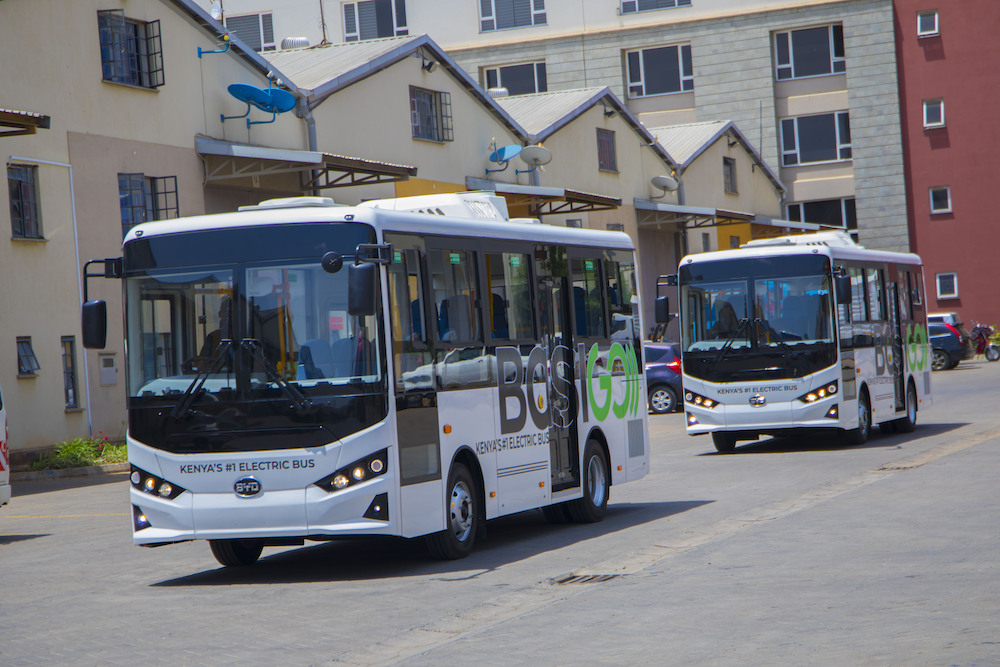
Now BasiGo fixed-route commuting is pressing into that space as first reported by TechCabal, with something more structured: electric mid-sized buses running non-stop between estates such as Nyayo and Mwiki and commercial nodes like Westlands and Upper Hill. Seats are pre-sold. Departure times are fixed. Payment flows through an M-PESA till number. The fare from Nyayo Estate to Westlands via the Nairobi Expressway stands at KES 200. From Mwiki to Upper Hill, KES 150.
Those numbers sit above the KES 80 to KES 120 common on diesel matatus. The wager is that predictability can command a premium in a city where time is scarce and congestion is routine.
The model is not new to Nairobi. Swvl tried a similar commuter play before exiting in 2022. The difference now lies in how BasiGo is approaching power and ownership.


Working With Saccos, Not Around Them
Instead of building a parallel fleet, BasiGo is embedding its electric buses within existing transport cooperatives. Saccos retain 75% of revenue after operating expenses. BasiGo takes 20%. Traditional operators provide drivers and manage daily operations. BasiGo layers on route data, booking software and charging infrastructure.
This arrangement is less confrontational than earlier platform models that attempted to displace incumbents. Nairobi’s public transport is not simply a market. It is a web of political interests, Sacco hierarchies and informal agreements that have evolved since liberalisation in the 1990s. Any entrant that ignores that architecture usually learns the limits of disruption quickly.
By tying its fortunes to Saccos, BasiGo is trying to avoid becoming an outsider in a system that protects its own.
Still, integration comes with trade-offs. Saccos are not passive fleet managers. They negotiate, they resist, they recalibrate. If electric buses underperform financially, pressure will not fall only on a startup balance sheet. It will reverberate through cooperative structures that are already sensitive to fuel volatility and loan repayments.
The Electric Bus as a Status Object
There is also a social layer here. In Nairobi, private car ownership has been more about identity. Driving into the CBD remains, for many professionals, a marker of autonomy. The daily crawl on Waiyaki Way or Thika Road is endured partly because it preserves that sense of control.
BasiGo’s pitch aims at that psychology. The company argues that a vibration-free cabin, charging ports and guaranteed seating can uncouple status from steering wheels. Its data suggests 90% of riders are corporate employees. Average occupancy on the 3-bus pilot sits at 80%, with about 300 unique weekly riders.
Those figures are modest in a metro area of more than 4 million people. Yet they hint at something specific: a slice of Nairobi’s middle class willing to pay KES 30 to KES 80 more per trip for time reclaimed. BasiGo claims up to 40 minutes saved on a one-way commute along certain corridors. In a city where 2 hours in traffic is common, 40 minutes is not trivial.
But there is fragility here. The willingness to pay a premium depends on steady income. Kenya’s urban professionals have faced rising living costs, higher taxes and currency pressure over the past 2 years. Commuting budgets are not immune. If disposable income tightens further, even structured mobility may struggle to justify KES 200.
Digital Payments and the Discipline of Data
About 80% of payments flow through M-PESA. The remainder book weekly through BasiGo’s Jani platform, which offers priority seating during peak hours. This is not simply a billing detail. It changes how risk is distributed.
Traditional matatu economics rely on cash collected per trip, often with little demand forecasting beyond instinct. Pre-booking converts demand into data. Routes can be adjusted before losses compound. Underperforming corridors can be paused. High-demand time slots can be priced more deliberately.
In theory, this creates a feedback loop that diesel matatus rarely enjoy. In practice, it also narrows flexibility. Nairobi commuters are accustomed to spontaneous route changes and informal stops. A fixed schedule imposes discipline on both rider and operator. The question is how much discipline the city will tolerate.
The Memory of Swvl
When Swvl entered Nairobi, it promised structured, app-based commuting for office workers. It left in 2022 after struggling to maintain margins in a price-sensitive environment. Fuel costs swung sharply. Demand proved inconsistent outside peak corridors.
Electric buses alter part of that equation. Electricity is less volatile than imported diesel. Maintenance profiles differ. Yet capital expenditure rises. Charging infrastructure must be built. Vehicle delivery timelines stretch. BasiGo plans to add 10 buses over the next 12 to 24 months, contingent on supply and infrastructure rollout.
The arithmetic is unforgiving. If occupancy dips below 70% on a KES 200 route, revenue compresses quickly. If charging downtime interrupts service, reliability erodes. Nairobi commuters have long memories. Once disappointed, they revert to familiar habits.
If this approach fails, the lesson will not simply be about electric vehicles. It will reinforce the idea that Nairobi’s transport system resists formalisation beyond a certain threshold.
Competing With Convenience
BasiGo does not operate in a vacuum. Ride-hailing platforms such as Uber and Bolt have entrenched themselves among urban professionals. Executive diesel shuttles still serve corporate parks. Private cars remain aspirational.
Fixed-route commuting occupies a narrow band between affordability and convenience. It must be cheaper than daily ride-hailing yet more predictable than matatus. That middle ground is thin. Too expensive, and it becomes a niche service. Too cheap, and margins collapse.
There is also geography. Nairobi’s sprawl is uneven. Some estates generate dense commuter flows. Others scatter demand across multiple corridors. Electric buses thrive on concentration. Sparse routes weaken the model.
What Happens If It Works
If BasiGo manages to sustain 80% occupancy while expanding beyond 3 buses, Saccos may begin to view electric fleets more as revenue stabilisers. Access to structured data could influence route licensing debates and financing terms with lenders. Banks, seeing clearer cash flows, might extend credit on better terms than those offered to diesel operators.
At scale, a structured commuter layer could reduce pressure on arterial roads during peak hours. Even a few hundred car owners opting out daily would ease congestion marginally. The impact would not be dramatic at first. Cities change in increments.
If it falters, the lesson will not simply be about electric vehicles. It will reinforce the idea that Nairobi’s transport system resists formalisation beyond a certain threshold. Informality has endured because it adapts quickly and spreads risk widely.
BasiGo fixed-route commuting sits at that tension point. It is neither a wholesale replacement for matatus nor a boutique shuttle for a corporate enclave. It is an attempt to insert order into a system that has survived on improvisation.
Whether Nairobi embraces that order depends less on technology than on trust. Commuters must believe the bus will depart at 7:00 and arrive when promised. Operators must believe revenue shares will hold at 75% and 20%. Investors must believe occupancy will remain near 80% rather than slip to 50%.
Transport stories in Nairobi rarely end with neat conclusions. They evolve, stall, resurface. For now, 3 electric buses move between estates and office towers, charging at depots and carrying 300 riders a week. It is a small number in a restless city. Sometimes that is how change begins.
Go to TECHTRENDSKE.co.ke for more tech and business news from the African continent and across the world.
Follow us on WhatsApp, Telegram, Twitter, and Facebook, or subscribe to our weekly newsletter to ensure you don’t miss out on any future updates. Send tips to editorial@techtrendsmedia.co.ke

