
Google’s New Face Unlock Could Finally Work in the Dark but the Fingerprint Sensor Fight Is Far from Over
Google’s latest face unlock is promising more reliability in low light but the fingerprint sensor remains the anchor for everyday use

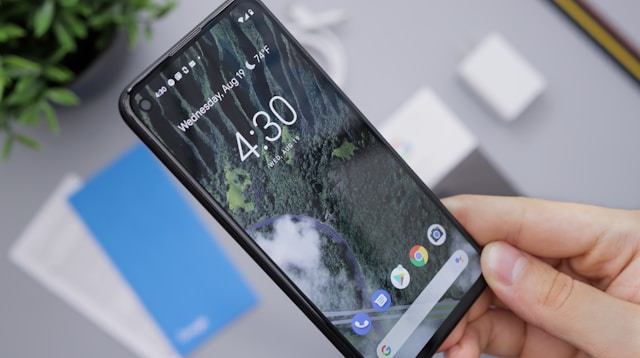
Google is reportedly working on a more advanced Android face unlock upgrade for Pixel phones and Chromebooks. The early accounts suggest a system that can function in low light without expanding the camera cutout. If that holds, it would close a gap that has trailed Android devices since Apple introduced Face ID on the iPhone X in 2017.

For nearly a decade, Android’s facial recognition has existed in the shadow of that decision. On most devices, face unlock felt like a convenience feature rather than a security pillar. It opened the phone, sometimes. It struggled at night. It rarely earned the kind of trust required for payments or banking apps. Google improved matters with the Pixel 8 line by elevating face unlock to Class 3 biometric status, meaning it could authenticate within sensitive APIs. Even then, performance in dim environments left users reaching for the fingerprint sensor.
The reported Android face unlock upgrade, known internally as Project Toscana, suggests a more capable architecture. The claim is that it can rival Face ID while using the standard hole-punch camera layout seen on devices like the Pixel 10 Pro. No sprawling sensor array carved into the display. No dramatic hardware redesign. If accurate, that is not cosmetic progress. It is architectural.
Yet the real tension is not technical. It is strategic. History shows that when biometric systems improve, hardware tradeoffs follow.


The ghost of Pixel 4
Google has already tried a face-first future. The Pixel 4 and Pixel 4 XL removed the fingerprint sensor entirely. At the time, Google framed the move as confidence in its 3D face unlock system. The result was mixed. Face unlock worked well under the right conditions. It also frustrated users wearing masks, looking sideways, or holding their phone at awkward angles. Adoption lagged. The fingerprint sensor returned in later generations.
Apple never reversed course after Face ID replaced Touch ID on flagship iPhones. Instead, it normalized the notch and built around it. The difference lies in ecosystem leverage. Apple controls hardware, software, and user expectation with a tighter grip. Android operates across a more diverse hardware landscape. Users are accustomed to options.
That context shapes the stakes around any Android face unlock upgrade. If Google delivers near parity with Face ID, it will face a choice. Keep fingerprint sensors as redundancy, or simplify the hardware stack and push face unlock as the default path.
Redundancy costs space. It adds bill of materials pressure. It complicates internal layout in an era when phone makers compete for thinner frames and larger batteries. Engineers count millimeters. Finance teams count dollars. Design teams count visual symmetry.
Users count seconds.
Biometric classes and the politics of trust
Android classifies biometrics into 3 tiers. Class 1 cannot authorize sensitive transactions. Class 2 and Class 3 can. Class 3 grants access to BiometricPrompt and the Android Keystore, which in practice determines whether you can approve a banking transfer or tap to pay with confidence.
The Pixel 8 series marked the first time Google’s face unlock met the Class 3 threshold. That required passing defined Spoof Acceptance Rate, Imposter Acceptance Rate, and False Acceptance Rate metrics. These are not marketing abstractions. They are statistical gates. Miss them and the feature remains cosmetic.
Apple has long claimed a false acceptance probability of 1 in 1,000,000 for Face ID, compared with roughly 1 in 50,000 for Touch ID. Whether or not those figures translate perfectly across ecosystems, the framing shaped perception. Face unlock was positioned as mathematically superior.
Google’s Android face unlock upgrade appears aimed at closing both the technical and perceptual gap. If it functions reliably in darkness without visible hardware expansion, it changes the equation. Low-light performance has been the Achilles’ heel of camera-only systems. An infrared component, even one tucked discreetly behind existing glass, would alter reliability without reshaping the display.
Trust, though, is not built on spec sheets. It is built on repetition. On unlocking your phone at 2 am without thinking about it. On approving a payment without repositioning your head. Biometrics become invisible only after they become boring.
The convenience paradox
There is a practical reason many Android users never enable face unlock even when it meets Class 3 standards. Fingerprint sensors are predictable. They work when the phone is on a desk. They work when you are wearing sunglasses. They work in the dark without projecting light at your face.
They also align with muscle memory. Thumb lands. Phone opens. No eye contact required.
Facial recognition changes posture. It asks you to present your face at a certain angle. It requires a glance. That interaction feels natural in some contexts and awkward in others. Standing in line at a checkout counter, phone held low, mask half-on, it can feel like a small negotiation.
If Google were to remove fingerprint sensors in favor of a perfected Android face unlock upgrade, it would be making a bet not only on security but on behavioral conformity. That users will adapt their habits to match the system.
Some will. Others will resent it.
Hardware economics in the background
Every additional component inside a smartphone competes for finite internal volume. A modern flagship already accommodates multiple camera modules, a battery often exceeding 4,500 mAh, 5G antennas, vapor chambers, haptic motors, and biometric hardware. Removing a fingerprint sensor frees space and marginal cost.
The temptation is obvious. A single advanced facial recognition stack could handle unlocking, payments, and authentication across devices, including Chromebooks. One system to maintain, optimize, and market.
Yet Android’s competitive landscape complicates that logic. Samsung, Xiaomi, and others continue to deploy ultrasonic or optical in-display fingerprint sensors. Consumers comparing spec sheets often equate more options with more value. Removing one pathway can feel like subtraction, even if the remaining one is technically superior.
Google must weigh uniformity against flexibility. Android’s strength has never been strict uniformity.
The Chromebook angle
Project Toscana reportedly extends to Chromebooks as well. That is not trivial. Laptops introduce different angles, distances, and lighting environments. A biometric system that functions across phone and laptop form factors would anchor a broader identity layer inside Google’s ecosystem.
Chromebooks have historically leaned on PINs and passwords. Integrating a high-grade face unlock system could streamline enterprise deployment, particularly in education and corporate fleets where device management policies hinge on authentication reliability.
If that happens, the Android face unlock upgrade becomes more than a phone feature. It becomes an identity infrastructure spanning devices.
Infrastructure decisions tend to persist.
A fork in the road for Pixel
The Pixel line has often served as Google’s laboratory. Some experiments endure. Others are reversed. The return of the fingerprint sensor after the Pixel 4 episode is one example. The oscillation between rear and in-display sensors is another.
This time, the stakes are higher because biometric trust is now tied to payments, digital IDs, and passkeys. The conversation is no longer about unlocking a screen. It is about authorizing access to financial systems and personal credentials.
If Google keeps both fingerprint and advanced face unlock on future Pixel devices, it reinforces Android’s reputation for optionality. If it drops one, it declares confidence in a single path.
The prudent move is not hard to identify. Keep both. Let usage patterns decide over time. Data will reveal whether face unlock overtakes fingerprints organically. Removing choice prematurely risks replaying the Pixel 4 lesson.
An Android face unlock upgrade that rivals Face ID would be a technical achievement. But technical success does not automatically justify hardware subtraction. In consumer technology, progress that narrows user agency rarely ages well.
Google stands at a familiar crossroads. It can streamline. Or it can respect the habit of millions who unlock their phones with a thumb and expect that habit to remain undisturbed.
Go to TECHTRENDSKE.co.ke for more tech and business news from the African continent and across the world.
Follow us on WhatsApp, Telegram, Twitter, and Facebook, or subscribe to our weekly newsletter to ensure you don’t miss out on any future updates. Send tips to editorial@techtrendsmedia.co.ke

