
Koko Networks Goes to Market Under PwC Administration With $300 Million at Stake and No Carbon Approval
With carbon revenue stalled and creditors waiting, PwC moves to sell Koko Networks’ fuel systems, vehicles and software before the February 26 deadline closes in

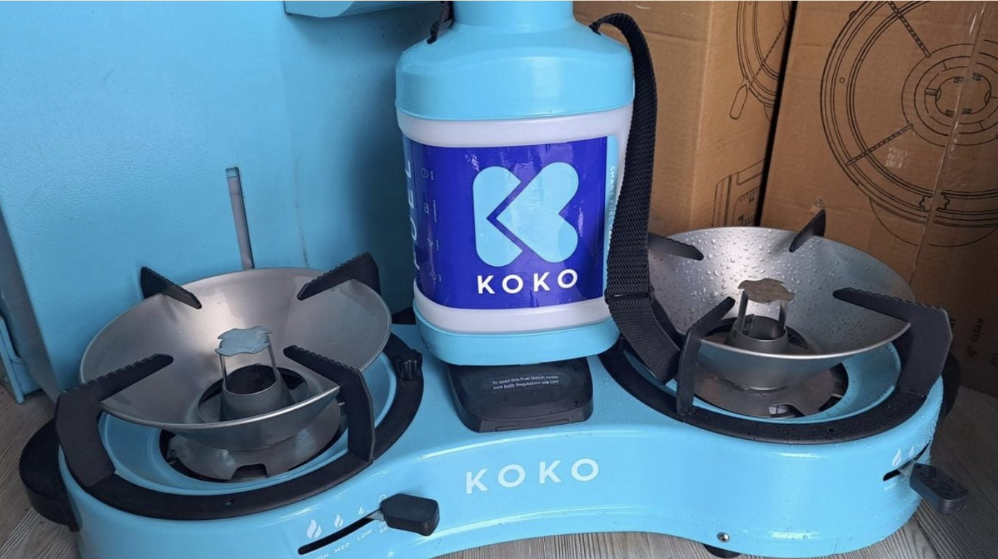
The Koko Networks collapse did not begin with empty fuel tanks or shuttered depots. It began with a missing document.

On February 1, 2026, the clean-cooking company filed for administration after failing to secure a Letter of Approval from Kenyan authorities. That letter would have allowed it to export carbon credits into compliance markets under Article 6 of the Paris Agreement. Without it, the revenue engine stalled. The rest followed.
Administrators from PricewaterhouseCoopers have since invited Expressions of Interest for a sale of the business or selected assets. The list reads like the blueprint of a small infrastructure utility: smart fuel-dispensing machines, tanker and depot systems, trucks, motorbikes, software platforms, intellectual property, office equipment. Submissions are due by February 26. The firm says significant capital will be required to resolve insolvency.
At stake is not only a startup that invested $300 million in Kenya and employed 700 people. The question is whether Kenya’s carbon market architecture can sustain private-sector bets tied to global compliance pricing.


Subsidised Stoves and a Global Offset Machine
Koko’s pitch was simple to households. A stove that should retail at Sh15,000 sold for Sh1,500. Fuel priced at Sh200 per litre was offered at Sh100 through a network that reached more than 1.5 million homes. For many families, the arithmetic worked.
The subsidy was never meant to be carried by fuel sales alone. The margin was in carbon credits. By replacing kerosene and charcoal with bioethanol derived from molasses, Koko claimed avoided emissions. Those reductions were converted into credits sold abroad, including to airlines operating under United Nations-backed compliance frameworks. Compliance credits traded around $20, roughly 10 times voluntary market prices.
That price gap explains the urgency. In voluntary markets, credits fluctuate with corporate pledges and public relations cycles. Compliance markets are mandatory and regulated. High-emission industries buy credits to meet legal obligations. It is steadier ground, if you can access it.
Koko needed Kenya’s approval to export credits into that system. The approval did not come.
The Government’s Guardrails
The dispute turned on scarcity.
Officials argued that granting Koko access would have allowed a single company to exhaust Kenya’s allocation in global compliance markets. Trade Cabinet Secretary Lee Kinyanjui said the model did not align with national interests and risked locking out sectors such as agriculture and manufacturing. The implication was that carbon capacity is finite and must be rationed.
In June 2024, President William Ruto’s administration signed an investment framework agreement that appeared to clear a path for compliance credit sales. Yet by early 2026, the position had hardened. Kenya’s Climate Change Regulations, 2024 require independent verification of project results and adherence to ecological, social, cultural and economic safeguards. The state’s posture suggests that macro allocation now outweighs individual project readiness.
There is also a political undercurrent. Carbon credits have become shorthand for sovereignty in climate negotiations. Allowing large volumes to be exported at $20 per credit may be rational for a private balance sheet. It may look different from the vantage point of a treasury trying to conserve negotiating leverage.
Insurance, Exposure and the MIGA Question
In March 2025, the Multilateral Investment Guarantee Agency insured Koko’s Kenyan investment for $179.6 million. It was described as the first carbon-linked political risk coverage of its kind. The logic was straightforward: if government action derailed the carbon revenue stream, the insurer would step in.
Whether Koko has pursued a claim remains undisclosed. If it does, the state could face exposure near that $179.6 million figure. For a country navigating fiscal constraints, that is not abstract.
Political risk insurance is designed for precisely this friction, where regulatory discretion collides with investor expectation. Yet it carries diplomatic weight. A payout would formalise the dispute and potentially chill future climate-aligned capital, particularly where returns depend on cross-border carbon flows.
Kenya has spent years positioning itself as a carbon market hub. The Koko Networks collapse complicates that narrative. Investors will read the file closely.
Compliance Markets Are Not a Side Bet
Compliance carbon markets are dense with rules. They are also lucrative because participation is compulsory for regulated emitters. Airlines such as British Airways buy credits to meet obligations under international aviation schemes.
Access requires government authorisation because exported credits count against national inventories. Under Article 6, host countries must issue a Letter of Approval and apply corresponding adjustments to prevent double counting. It is bureaucratic, technical work. It is also political.
Kenya’s argument hinges on allocation discipline. If Koko’s volumes were large enough to crowd out future projects in agriculture or manufacturing, the state may have concluded that immediate household benefits did not justify long-term constraints. That trade-off, however, was not obvious when the company scaled to 1.5 million households.
Here lies the tension. Clean cooking reduces indoor air pollution and deforestation. It touches public health and gender equity. Yet carbon accounting treats it as a tradable commodity subject to caps and quotas.
Administration as a Holding Pattern
PwC’s administrators have said they aim to maintain the business as a going concern and secure a better return for creditors than liquidation. That implies at least 2 paths.
One is a buyer willing to inject capital and renegotiate the carbon pathway, perhaps pivoting toward voluntary markets despite the $20 versus $2 pricing gap. That would require recalibrating subsidies. A stove sold at Sh1,500 cannot survive on thin voluntary margins unless costs fall or fuel prices rise.
Another is a buyer interested in the infrastructure alone. The smart dispensers, logistics network and software platform have value independent of carbon credits. Bioethanol distribution at scale is not trivial. It resembles a mini utility grid embedded in retail shops.
What seems unlikely is a simple rewind. The political context has moved. Any acquirer would study the regulatory file line by line before wiring funds.
The Households in the Middle
For 1.5 million households, the story is less abstract. The stove price and fuel discount were tangible. Kerosene and charcoal are volatile in both cost and health impact. When Koko folded, families faced a choice between reverting to old fuels or waiting for clarity.
Clean cooking in Kenya has long depended on donor programmes and incremental market experiments. Koko attempted scale, underwriting it with international carbon revenue. The collapse leaves a gap that neither public subsidy nor small private operators can easily fill.
There is a risk that policymakers underestimate the social cost of regulatory caution. A carbon allocation debate in Nairobi has consequences in kitchens from Kisumu to Mombasa.
Kenya’s Carbon Strategy at a Crossroads
Kenya’s carbon framework is still young. The 2024 regulations emphasise safeguards and national priorities. That is defensible. Carbon markets have a history of overpromising and underdelivering.
Yet the Koko Networks collapse raises a harder question. Can Kenya design a system that attracts $300 million-scale private capital while retaining control over allocation? Or will caution tilt the field toward smaller, less ambitious projects that never test the ceiling?
There is also timing. Global compliance markets are tightening as countries formalise climate commitments. If Kenya hesitates too long, buyers may lock in supply elsewhere.
None of this absolves Koko of risk. Its model relied heavily on regulatory approval that was never guaranteed. Selling a Sh15,000 stove for Sh1,500 on the expectation of $20 credits was always contingent on state consent.
But the broader issue is not a single company’s miscalculation. It is whether Kenya wants carbon markets to function as a development tool or a reserve asset.
Administration buys time. It does not resolve that choice.
Go to TECHTRENDSKE.co.ke for more tech and business news from the African continent and across the world.
Follow us on WhatsApp, Telegram, Twitter, and Facebook, or subscribe to our weekly newsletter to ensure you don’t miss out on any future updates. Send tips to editorial@techtrendsmedia.co.ke

