
Rack Hospitality Puts Pesapal at the Center of Kenya’s Restaurant Economy
As Rack Hospitality rolls out, Pesapal tightens its grip on how Kenyan restaurants track money and stock

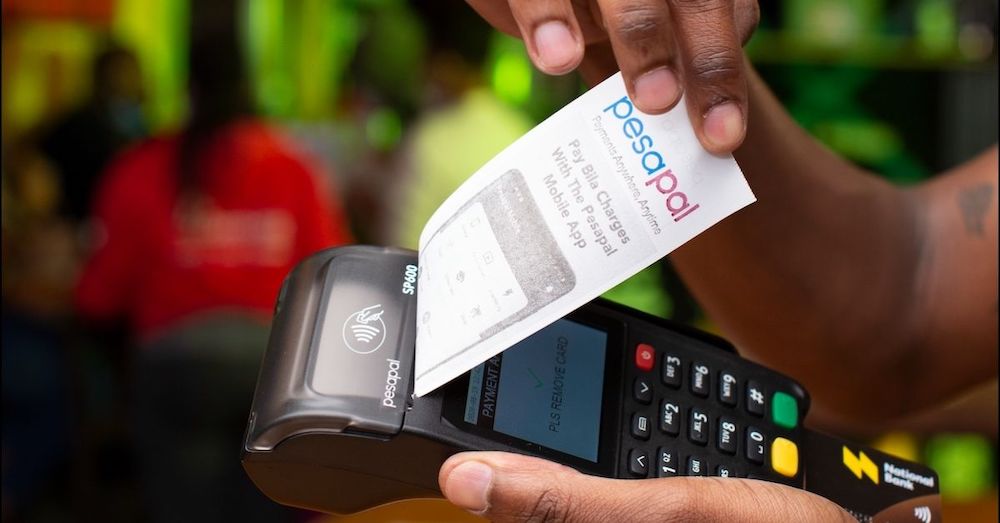
Rack Hospitality is being introduced as restaurant software. In practice, it is infrastructure.

Built by Drift Consult and embedded with payment rails from Pesapal, Rack Hospitality pulls ordering, kitchen displays, billing, inventory, and settlement into one operating loop. The pitch is operational clarity. The underlying story is consolidation.
In many Kenyan restaurants, systems have grown organically. A card terminal sits beside a mobile money till. Stock is recorded in spreadsheets. Reconciliation happens after closing, sometimes at 23:30, when the staff is tired and errors slip through. It works, but it leaks.
Rack Hospitality closes those leaks by design. An order placed at a table flows to the kitchen display. Ingredients are deducted automatically. Payment settles inside the same environment. Reporting becomes continuous rather than retrospective.

The restaurant stops being a collection of tools and starts behaving like a controlled system.
Pesapal Steps Inside the Workflow
Pesapal has operated since 2009 as a digital payments provider. Its core business involved processing transactions across mobile and card rails. Competitive territory. Margins shaped by scale.
Rack Hospitality places Pesapal inside daily operations rather than at the edge of them. Payments are no longer an endpoint. They become one component of a broader software environment.
This matters because replacing a payment terminal is simple. Replacing a system that governs inventory, billing, and settlement is disruptive. Historical sales data must be migrated. Staff retrained. Hardware reconfigured. For a restaurant generating KSh 1,800,000 in monthly turnover, downtime has real cost.
Embedding payments into Rack Hospitality increases stickiness. The provider is no longer just handling the transaction. It is embedded in the rhythm of the business.
Data Accumulates Where Plates Turn Over
Kenya’s hospitality sector runs on volume. Orders are frequent. Margins are thin. A 2 percent discrepancy in reconciliation on KSh 2,000,000 monthly sales equals KSh 40,000. Inventory shrinkage of 3 percent compounds quietly over time.
Rack Hospitality addresses that friction by enforcing discipline. Ingredient-level tracking ties each sale to stock movement. Settlement records update in real time. The end-of-day reconciliation that once took 90 minutes can compress to 30.
The appeal is immediate. Cleaner books. Faster service. Less manual adjustment.
Yet data does not sit idle. Once transaction history, settlement timing, and inventory behavior exist within one environment, they form a detailed merchant profile. Patterns emerge. Peak hours. Seasonal dips. Supplier dependencies.
Control of that dataset carries financial weight.
Credit Trails Behind Settlement Data
Where consistent transaction data exists, credit follows.
If a restaurant’s digital turnover averages KSh 150,000 per day, and settlement flows are visible in real time, underwriting becomes less speculative. Short-term facilities priced between 14 percent and 20 percent annually can be extended with repayment deducted directly from daily inflows. A 90-day advance structured against projected receipts carries lower uncertainty than unsecured lending assessed only on paperwork.
Rack Hospitality does not advertise itself as a lending tool. Yet the architecture makes embedded finance feasible. Payments, operations, and reporting converge in one system. That convergence simplifies credit modeling.
For SMEs facing supplier price swings or seasonal lulls, liquidity can determine survival. For the platform provider, lending deepens integration.
The restaurant floor becomes part of a financial feedback loop.
Dependence as a Byproduct of Integration
Efficiency carries consequence.
When ordering, inventory, billing, and payments sit inside Rack Hospitality, switching providers requires operational overhaul. Exporting years of sales data, rebuilding stock databases, retraining staff, and reconfiguring workflows create friction. For a small operator managing daily cash needs, disruption is costly.
There are also data protection obligations. Kenya’s Data Protection Act of 2019 establishes compliance standards for processing personal and transactional data. Enforcement structures exist, though institutional capacity evolves gradually. Concentrated datasets increase both analytical power and exposure.
Cyber risk in such an environment affects multiple functions at once. An outage touches kitchen displays, billing screens, and settlement records simultaneously.
Operators weigh that against reduced manual error and faster reconciliation. Many will choose integration. The decision is pragmatic.
The Competitive Undercurrent
Kenya’s point of sale ecosystem includes local developers, regional SaaS providers, and payment-linked systems. Competition increasingly centers on depth rather than surface features.
Rack Hospitality positions itself at the operational core. That position enables pricing flexibility. A restaurant might pay a 1.9 percent transaction fee alongside a monthly subscription of KSh 5,000 for software access. For venues with KSh 2,500,000 in monthly turnover, that cost structure may be justified by tighter inventory control and improved reporting. Smaller establishments may hesitate.
The market will sort along volume lines. High-turnover venues gravitate toward integration. Lower-volume operators may prefer modular tools.
Retention, not acquisition, becomes the strategic prize.
A Friday Night Stress Test
Technology claims often dissolve during peak service. A Nairobi restaurant at 8:45 pm on a Saturday runs on instinct and speed. Orders stack up. Delivery riders wait. Staff improvise substitutions when stock dips unexpectedly.
Rack Hospitality must operate under that pressure. If it slows billing or complicates workflow, it will be abandoned. If it streamlines service and reduces reconciliation disputes, it will entrench itself.
Hospitality tolerates little friction when tables are full.
The Platform Inside the Plate Economy
Rack Hospitality reflects a broader consolidation within fintech. Payments alone are low-margin at scale. Software generates recurring revenue. Data supports lending. When those elements combine in one architecture, the provider occupies a durable position.
Pesapal’s involvement ensures that settlement sits at the center of that architecture. The company moves from processing transactions to influencing how restaurants run.
For operators, the benefits are concrete. Faster reconciliation. Real-time visibility. Structured reporting.
For the market, the implications run deeper. Kenya’s hospitality economy, long characterized by improvisation and fragmented systems, is being pulled into tighter digital frameworks. Choice remains, but dependency increases as integration deepens.
Rack Hospitality is presented as restaurant software. In practice, it is part of a larger financial infrastructure forming beneath everyday commerce.
The plate leaves the kitchen. The data stays behind.
Go to TECHTRENDSKE.co.ke for more tech and business news from the African continent and across the world.
Follow us on WhatsApp, Telegram, Twitter, and Facebook, or subscribe to our weekly newsletter to ensure you don’t miss out on any future updates. Send tips to editorial@techtrendsmedia.co.ke

