
Sh800m in Fresh Capital Puts Mogo Kenya at the Center of the Boda Credit Surge
Kenya’s growing asset financing market ties bond investors to the daily earnings of riders

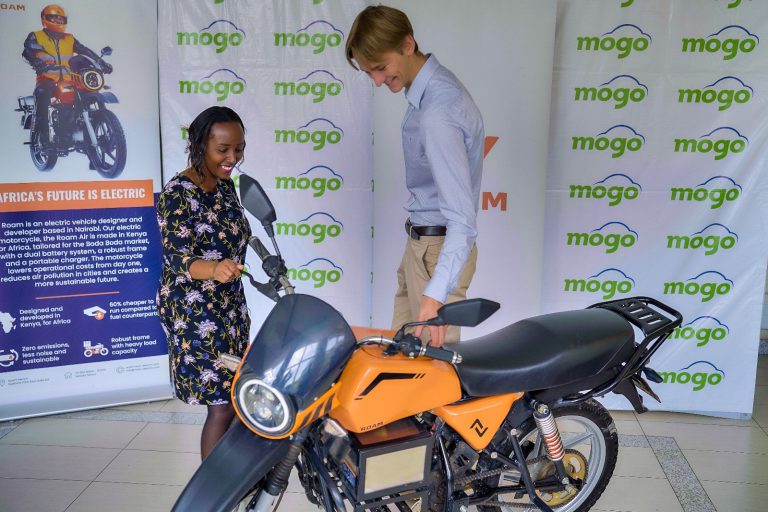
Mogo Kenya’s funding has entered a new phase. The company has secured Sh800m from I&M Bank and Ecobank and is seeking a further Sh1.5bn through a 2-year bond programme arranged by Dry Associates Investment Bank. On paper, this is expansion capital. In practice, it is a deeper wager on the informal transport economy that keeps Kenya moving.
Motorcycles have become collateral for ambition. For years, riders rented bikes from fleet owners, handing over daily payments that left little room to save. Asset financing firms stepped into that gap. The pitch is simple: own the bike, own your income. What rarely gets equal attention is the cost of that ownership and the way risk travels up and down the chain.
The Sh800m facility pushes more liquidity into a sector already estimated at Sh660bn in annual turnover, contributing 4.4% of GDP and employing over 2.5m people. That is not a fringe economy. It is structural.
Local Money, Local Currency, Local Risk
There is another layer here. More than 80% of Mogo Kenya’s funding is now denominated in Kenyan shillings. The company’s overall funding mix stands at 60% local and 40% international. Currency alignment is not a cosmetic detail. Lending in shillings while borrowing in euros or dollars leaves non-bank lenders exposed when exchange rates move against them. Many have learned that lesson the hard way.

By turning to domestic banks and local bond investors, Mogo is insulating its balance sheet from foreign exchange volatility. That reduces one category of instability. It does not remove credit risk. If riders default, local lenders absorb the strain. In other words, the risk stays within Kenya’s financial system rather than being exported.
This matters for the domestic bond market as well. A Sh1.5bn corporate programme backed by a European parent and secured by loan collateral gives institutional investors a new type of paper to consider. For a market long dominated by sovereign debt, corporate issuance of this size adds depth. It also ties investor returns to the repayment capacity of motorcycle riders in Kisumu, Eldoret, and the outskirts of Nairobi.
The Ownership Question
Asset financing firms often frame ownership as liberation from rental cycles. There is truth in that. A rider who owns a bike keeps the daily margin after fuel, maintenance, and loan instalments. Over time, the asset can be sold or leveraged. Some build fleets of their own.
Yet the arithmetic is rarely neutral. Loan terms, effective interest rates, insurance requirements, and repossession clauses determine whether ownership builds equity or drains income. In a sector where daily cash flow fluctuates with fuel prices, police crackdowns, and weather, missed payments are not theoretical.
Kenya’s boda-boda economy is vast but uneven. Urban riders can gross more on high-density routes. Rural operators face longer distances and lower fares. Financing models often apply uniform structures to diverse income realities. When repayment pressure rises, repossession follows. The asset returns to the lender. The rider returns to the rental market or exits altogether.
None of this is abstract. Non-bank lenders across Africa have faced criticism over aggressive recovery practices. Mogo Kenya’s 88 branches and 1,500 employees suggest a model that remains physically embedded in communities. That proximity can build trust. It can also intensify collection dynamics when loans sour.
Digital Inclusion, or Another Layer of Debt?
The funding is also earmarked for smartphone financing. That is not incidental. Smartphones are tools of work in Kenya’s platform economy. Riders depend on ride-hailing apps, mobile money, and navigation services. Owning a device can expand earning potential.
But credit for phones adds another repayment stream to households already juggling rent, school fees, and fuel costs. Kenya’s informal sector often carries multiple micro-loans simultaneously. The boundary between productive credit and consumption debt blurs quickly when devices are both tools and lifestyle markers.
Financial inclusion has become a durable refrain in banking corridors. Access to credit does widen opportunity. It also redistributes risk from institutions to individuals. When credit expands faster than income growth, pressure accumulates in places regulators rarely see in real time.
The Political Economy of Two Wheels
Motorcycles are not just vehicles. They are political infrastructure. Campaigns court riders. County governments regulate stages and routes. National policy debates touch on safety standards, licensing, and taxation. Financing companies operate within that web.
By directing Sh800m into asset loans, Mogo is embedding itself further into a constituency that carries weight beyond economics. Riders move people to work, students to school, patients to clinics. They also mobilise quickly during protests or rallies. Control of transport has always intersected with power.
Banks such as I&M and Ecobank are not entering this space lightly. Corporate facilities of Sh500m and Sh300m reflect a view that asset-backed lending to informal workers is commercially viable. It also reflects confidence that default levels can be managed. Whether that confidence holds will depend on fuel costs, enforcement patterns, and broader macro conditions.
Capital Markets Meet the Street
Dry Associates Investment Bank’s role in structuring the 2-year bond programme points to a deeper integration between Kenya’s capital markets and its informal economy. Investors buying that paper are, in effect, buying exposure to boda-boda cash flows.
This raises a structural question. When informal earnings become securitised through bonds and bank facilities, does the sector gain stability or inherit the volatility of financial markets? If repayment rates dip, bondholders demand returns regardless of weather patterns or local crackdowns.
At the same time, access to long-term local capital reduces reliance on short-term offshore funding. That can create more predictable lending conditions. Stability at the top of the capital stack may allow lenders to price loans more sustainably. Or margins may remain tight, preserving high effective costs for borrowers.
Where the Friction Will Surface
The real tension will not appear in press statements. It will surface in repayment books and branch offices. Kenya’s household debt has been climbing in recent years, even as income growth has slowed. Fuel prices remain volatile. Insurance premiums for motorcycles have risen in response to accident claims.
If incomes plateau while instalments remain fixed, stress will follow. Lenders can extend tenors, restructure loans, or tighten underwriting. Each choice carries consequences. Extend too far and capital turns sluggish. Tighten too much and growth stalls.
The Sh800m injection gives Mogo room to expand its book. Expansion increases exposure. The calculus is straightforward: more loans mean more revenue, but also more potential defaults. The balance between those two forces will define the next chapter of Mogo Kenya funding.
A Market Growing Up, With Questions Attached
Kenya’s financial ecosystem has matured since the first wave of mobile lending apps. Regulators have tightened oversight. Consumers are more aware of credit costs. Corporate bond issuance by non-bank lenders suggests confidence in governance and reporting standards.
Still, transparency around effective interest rates and recovery practices remains uneven across the sector. Investors may scrutinise collateral structures closely. Borrowers will scrutinise instalment schedules. Trust sits at the centre of both relationships.
The motorcycle on a dusty road in Bungoma or Machakos is now tethered to bank balance sheets and bond prospectuses in Nairobi. That linkage can create opportunity. It can also amplify fragility.
For now, Mogo Kenya’s funding has widened the channel between capital markets and informal transport. Whether that channel strengthens livelihoods or deepens debt will not be settled in boardrooms. It will be settled in daily repayments, in fuel queues, in the unpredictable rhythm of Kenya’s roads.
Go to TECHTRENDSKE.co.ke for more tech and business news from the African continent and across the world.
Follow us on WhatsApp, Telegram, Twitter, and Facebook, or subscribe to our weekly newsletter to ensure you don’t miss out on any future updates. Send tips to editorial@techtrendsmedia.co.ke

