Nairobi’s FM Dial Is Out of Room. Kenya Is Turning to Digital to Breathe Again
The airwaves are finite, the appetite for broadcast space is not, and regulators are now gambling on compression over expansion

Nairobi’s airwaves are crowded in a way most listeners never see. The FM dial, fixed between 87.5 and 108.0 MHz, looks spacious on paper. In practice, it is close to capacity in major towns. Each station occupies 200 kHz. Add licensing layers, interference buffers, commercial incumbents, and you arrive at a spectrum that feels finished.

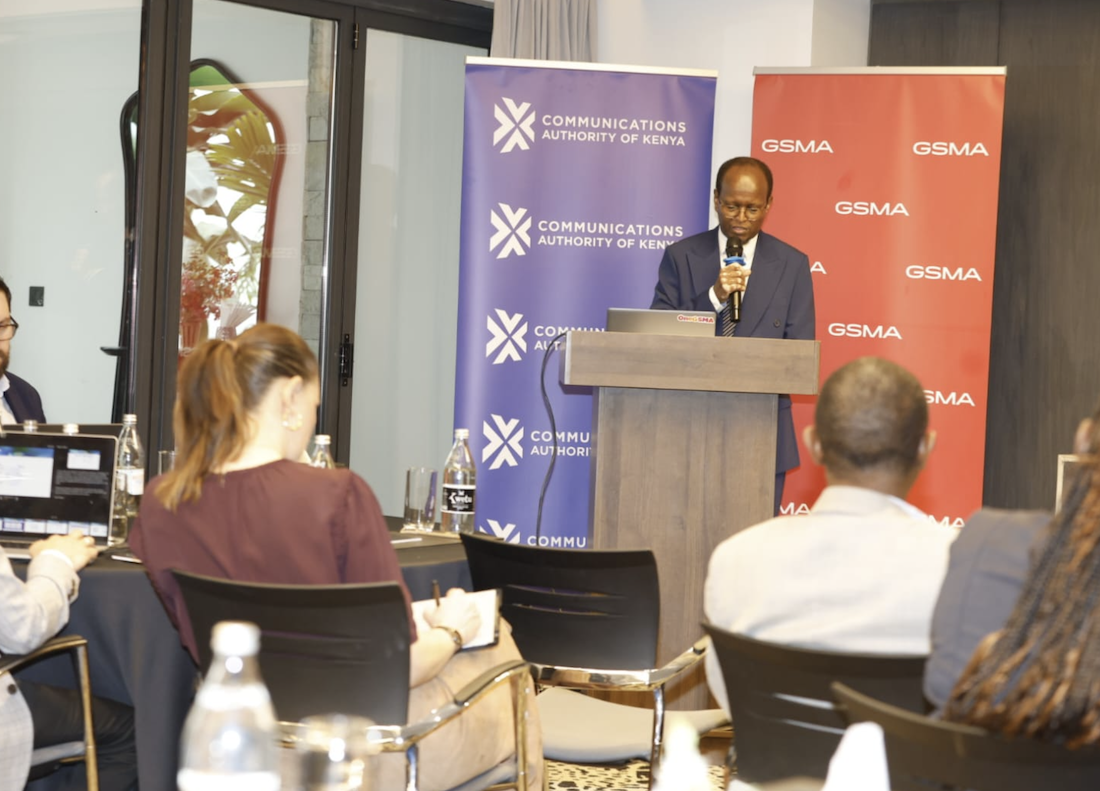
Now the Communications Authority of Kenya has launched a 12-month digital sound broadcasting pilot in Nairobi. It is the country’s first live public transmission of digital radio. The experiment is modest in footprint. Its implications are not.
At first glance, digital radio sounds like an incremental technical update. Convert analogue audio into compressed data. Bundle multiple stations into a single multiplex. Transmit them over VHF Band III between 174 and 230 MHz. Let listeners scroll through names instead of tuning to 96.3 FM. That is the technical shorthand.
The deeper story sits elsewhere. This is about spectrum scarcity, broadcast economics, and who gets to enter Kenya’s radio market next.


The FM Band Is Full. That Has Consequences.
The FM band in urban Kenya is saturated. That is not hyperbole. When regulators describe VHF Band II as fully allocated in major coverage areas, they are describing a market constraint. No spare lanes. No new frequency blocks without pushing into interference risk.
FM’s design assumes 1 station per 200 kHz channel. Digital radio collapses that logic. A single multiplex can carry multiple stations within the same bandwidth footprint. In Nairobi’s current trial, 14 radio programmes are already riding on one DAB+ network deployed by Mast Rental in January 2026.
That arithmetic alone reframes the conversation. Instead of 1 frequency hosting 1 voice, 1 digital channel carries a cluster. Capacity is no longer a one-to-one ratio.
The FM model made spectrum a finite storefront. Digital radio turns it into shared infrastructure.
Broadcasting’s Cost Structure Is About to Be Exposed
Analogue broadcasting ties each station to its own transmission chain. Tower leases. Power consumption. Site maintenance. Engineering staff. It is capital heavy, especially outside Nairobi.
Digital radio centralises transmission. In many jurisdictions, 1 multiplex operator runs transmitters and leases capacity to stations. Studios remain intact. Microphones do not care whether the signal leaves the building as FM or compressed data. But the transmission economics change.
In theory, carriage costs per station decline because infrastructure is shared. In practice, much depends on pricing discipline. If multiplex access becomes expensive, smaller broadcasters may find themselves trading 1 bottleneck for another.
The regulator has hinted at reserved capacity for community broadcasters at nominal carriage costs. That phrase deserves scrutiny. Nominal is a political word. The invoice will be a technical one.
The Listener’s Experience Is the Easiest Part
For consumers, digital radio promises clearer sound and less interference. No hiss when you drive under power lines. No frequency drift between towns. Instead of remembering numbers, listeners select stations by name.
DAB and DAB+ receivers do not require internet connectivity. They work through terrestrial transmission, just like FM. Smartphones streaming radio apps are a different ecosystem entirely. That is broadband, not broadcasting.
The complication lies in hardware. FM radios cannot decode digital signals. A DAB-enabled device becomes necessary. Cars with built-in digital receivers will have an advantage. Households relying on legacy FM sets will not.
Kenya has not set an analogue switch-off date. For now, digital complements FM. That coexistence could last years. It also risks creating a two-tier audience where some access expanded programming while others remain on crowded analogue bands.
Spectrum Policy Is Becoming More Visible
Digital sound broadcasting is not unfolding in isolation. It sits within a broader conversation about spectrum reform across telecommunications. Kenya’s regulators have been reviewing pricing models, allocation frameworks, and efficiency guidelines. In broadcasting, inefficiency has been structural. 200 kHz per station is generous by digital standards.
Moving radio services into VHF Band III releases pressure on Band II. It does not create new spectrum. It reallocates use cases.
That distinction matters. Digital radio is not about inventing new airwaves. It is about compressing what already exists and distributing it differently.
Community Radio Could Gain. Or It Could Be Squeezed.
Kenya licenses more than 300 radio stations. Radio reaches roughly 98 percent of households. Community stations operate on tight budgets. Transmission costs often define survival.
Digital multiplexing creates theoretical space for niche, regional, or thematic services that would never justify a standalone FM frequency. A sports-only channel. A language-specific station serving a small urban diaspora. A youth format experimenting without national advertiser backing.
But concentration risk follows centralised infrastructure. If multiplex operators consolidate, carriage terms become gatekeeping tools. The barrier to entry may shift from frequency allocation to access fees.
The regulatory framework will determine whether digital radio expands plurality or consolidates it.
International Lessons Are Mixed
In the United Kingdom, DAB runs alongside FM. Many stations simulcast. Niche services have proliferated. In Germany, public and private broadcasters share multiplexes across regions. Adoption was gradual, not forced.
Ghana launched a DAB trial in August 2023 with capacity for up to 18 FM stations on a single multiplex within the 174 to 230 MHz range. South Africa and Algeria have experimented in similar bands. None flipped a switch overnight.
The pattern is incremental layering. Digital does not eliminate analogue immediately. It coexists, competes, then gradually absorbs audience share as receiver penetration increases.
Kenya appears to be following that cautious arc.
The Politics of Access
Radio remains the country’s most pervasive medium. In counties such as Turkana and West Pokot, internet penetration sits at 12.7 percent and 9.1 percent respectively. Broadcasting remains the connective tissue.
If digital radio remains urban and device-dependent, it risks widening informational divides. If multiplex expansion reaches the Mombasa–Nairobi–Kisumu corridor first, rural uptake will lag.
The state’s Universal Service Fund could become relevant here. Infrastructure subsidies have historically targeted telecom rollout. Digital broadcast expansion may soon join that ledger.
Access is not only about clarity of sound. It is about whether a pastoralist in Lodwar hears the same breadth of programming as a commuter in Westlands.
A Structural Question, Not a Cosmetic Upgrade
It is tempting to frame digital radio as a technical refresh. That misses the structural layer.
FM congestion forced regulators into a corner. Urban spectrum was exhausted. Digital compression offers relief. Yet relief does not equal transformation. Market structure, pricing oversight, device affordability, and rural rollout strategy will determine who benefits.
If multiplexes remain competitively priced and geographically expanded, Kenya could see a more plural radio landscape. If costs cluster around a few network operators, the market could narrow.
The 12-month Nairobi pilot is the opening chapter. It will reveal engineering reliability, commercial appetite, and consumer curiosity. It will also test regulatory resolve.
The airwaves are finite. How they are shared is not.
Go to TECHTRENDSKE.co.ke for more tech and business news from the African continent and across the world.
Follow us on WhatsApp, Telegram, Twitter, and Facebook, or subscribe to our weekly newsletter to ensure you don’t miss out on any future updates. Send tips to editorial@techtrendsmedia.co.ke

