The Price Behind Nedbank’s Bet on NCBA’s Digital Engine
As Nedbank moves to take control of NCBA Group, the price reflects more than assets on paper and raises harder questions about where banking value is now being created across the region

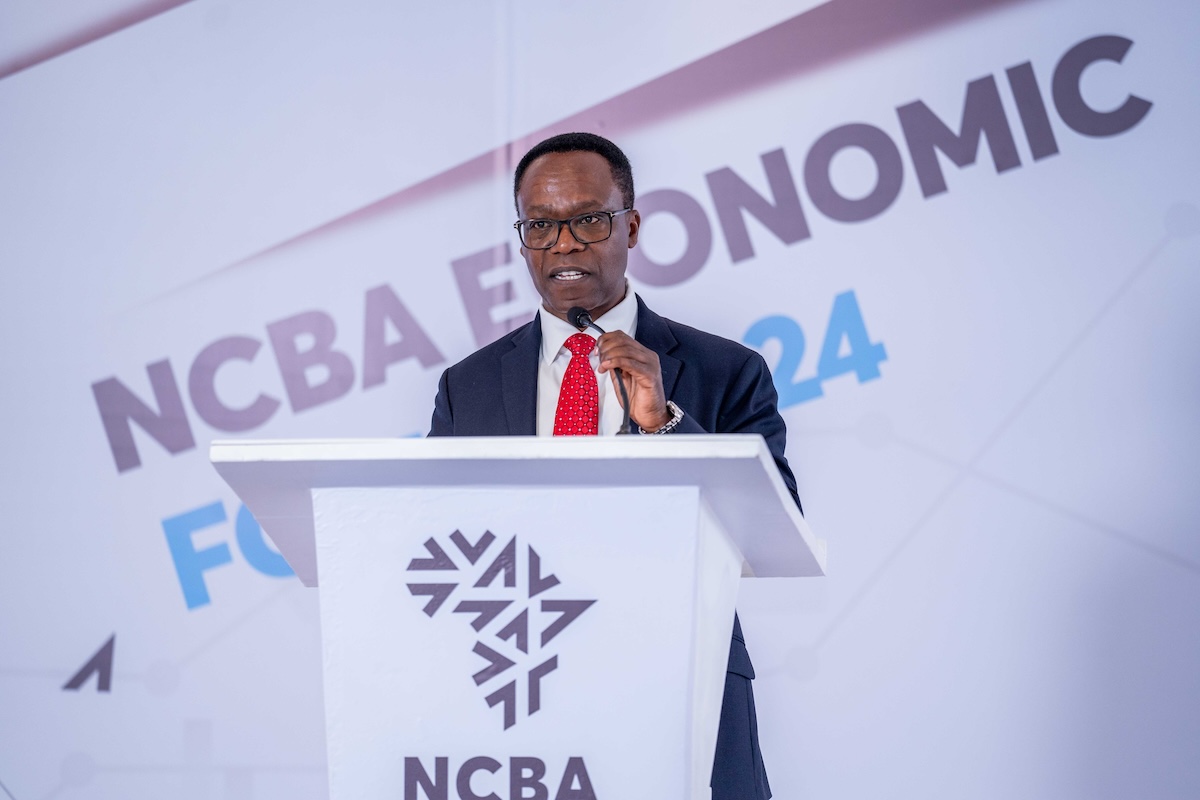
When Nedbank moved to acquire a 66 percent stake in NCBA Group, the headline number drew attention first. Sh110.4 billion in cash and stock, valued at 1.4 times book value, stood above recent banking transactions in the region. On paper, it looked expensive. In practice, the pricing reflected something less visible than balance sheet strength.

Regional banking deals rarely reward scale alone anymore. Asset size still matters, but the market has grown wary of expansion that adds complexity without improving earnings quality. The appeal here lay elsewhere. NCBA’s digital lending infrastructure, built through years of consumer-facing experimentation and partnerships, presented something closer to a transferable capability than a domestic franchise. Technology, in this case, was treated less as support infrastructure and more as exportable capital.
Jason Quinn, Nedbank’s chief executive, framed it directly. Technologies that scale alter how value is calculated. Price-to-book ratios begin to look incomplete when a platform can be replicated across markets with lower marginal cost. The logic is familiar in telecoms and payments. Banking has been slower to adopt it, though pressure from mobile money ecosystems in East Africa has accelerated that change.
Digital Credit as Infrastructure, Not Product
Kenya’s banking sector has spent the past decade adapting to an environment where digital access reshaped customer behaviour faster than regulation could keep pace. NCBA’s role in digital credit placed it close to that transition. The bank learned early that lending through mobile channels requires different risk assumptions, shorter feedback cycles, and a tolerance for volatility during growth phases.


What attracted Nedbank was not simply volume. Digital lending produces data loops that traditional banking struggles to replicate. Repayment behaviour feeds underwriting models in real time. Product adjustments happen faster. Expansion into new markets becomes less dependent on physical presence. For a South African lender operating in a mature domestic environment, this offers a pathway into growth without starting from scratch.
There is also an implicit admission in the deal. South African banking, long regarded as technologically advanced within the continent, now faces competition from innovations developed further north. The direction of learning is no longer one way.
Dividends and the Return of Cash Discipline
Technology alone does not justify a premium. Investors have grown cautious of narratives built solely on future scale. What steadied the valuation was cash flow. NCBA’s dividend record provided a different form of reassurance.
In 2024, the bank paid Sh5.5 per share, amounting to Sh9 billion in total distributions and a payout ratio of 41.4 percent. Between 2020 and 2024, shareholders received Sh31 billion. Those figures matter because they anchor growth claims in realised returns. Earnings that convert consistently into dividends suggest operational discipline rather than expansion driven by optimism.
Nedbank’s recent experience elsewhere appears to have shaped this preference. Its exit from Ecobank in 2025 followed years of uneven dividend flows, particularly from Nigeria. West African exposure delivered scale but not predictable repatriation of profits. In contrast, NCBA offered earnings that translated into distributable cash with fewer complications.
For an acquiring bank, that stability reduces integration risk. A business that pays dividends regularly is less likely to require aggressive restructuring after acquisition.
Valuation in a Changed Banking Cycle
The 1.4 times book value multiple places NCBA above recent peer transactions. Access Bank acquired National Bank of Kenya in 2024 at 1.25 times net assets. A consortium’s purchase of a 39 percent stake in Sidian Bank valued that lender at 0.95 times book value. Equity Group paid 1.26 times net assets for a 92 percent stake in Cogebanque in 2023.
A decade earlier, Kenyan banks traded at up to 3 times net assets. That period ended after interest rate caps introduced in September 2016 compressed margins, followed later by the economic shock of Covid-19. Valuations adjusted downward and never fully returned. Investors became less willing to price growth assumptions aggressively.
The NCBA transaction sits somewhere between those eras. It does not reflect the exuberance of earlier cycles, yet it suggests renewed confidence in banks capable of generating both digital growth and steady income. The premium acknowledges scarcity. Few lenders in the region combine technological reach with consistent capital returns.
Regulation, Relationships, and the Politics of Ownership
The next phase of the acquisition will unfold outside boardrooms. Nedbank’s leadership has already begun engagement with the Capital Markets Authority and the Central Bank of Kenya. Approval processes in cross-border banking deals often become negotiations about systemic stability rather than ownership alone.
Kenya’s regulators have historically balanced openness to foreign capital with caution around control of major financial institutions. Banking remains deeply tied to domestic economic policy, credit allocation, and financial inclusion goals. A foreign majority shareholder introduces new expectations around governance and capital deployment.
There is also the question of how technology built in Kenya evolves under regional ownership. Scaling digital credit into other markets brings regulatory friction. Data protection rules differ. Consumer lending oversight varies widely. What works in Nairobi may require recalibration elsewhere.
A Regional Bet on Where Growth Comes From Next
The proposed completion timeline of 6 to 9 months suggests confidence that approvals will proceed without major disruption. Yet the longer significance of the deal lies beyond the transaction itself. African banking consolidation is entering a phase where technology capability, not branch networks, drives acquisition logic.
Nedbank’s decision indicates that future competition may revolve around platforms that can travel across borders more easily than traditional banking models allowed. Kenyan banks, shaped by mobile money competition and a digitally literate customer base, have developed tools that larger markets now want to import.
Whether that advantage holds depends on execution. Technology ages quickly. Digital lending carries credit risks that only become visible during downturns. Dividend strength can fade if growth stalls. None of that is guaranteed to remain constant.
Still, the valuation tells its own story. Investors are no longer paying simply for assets under management. They are paying for systems that can generate earnings repeatedly, in multiple places, under changing economic conditions. In that sense, the premium attached to NCBA reflects a broader reassessment of where banking value now sits across East Africa.
Go to TECHTRENDSKE.co.ke for more tech and business news from the African continent and across the world.
Follow us on WhatsApp, Telegram, Twitter, and Facebook, or subscribe to our weekly newsletter to ensure you don’t miss out on any future updates. Send tips to editorial@techtrendsmedia.co.ke

