Africa’s Venture Capital Era Enters Its Reckoning
Africa’s venture capital cycle reaches the point where exits and governance decide what lasts


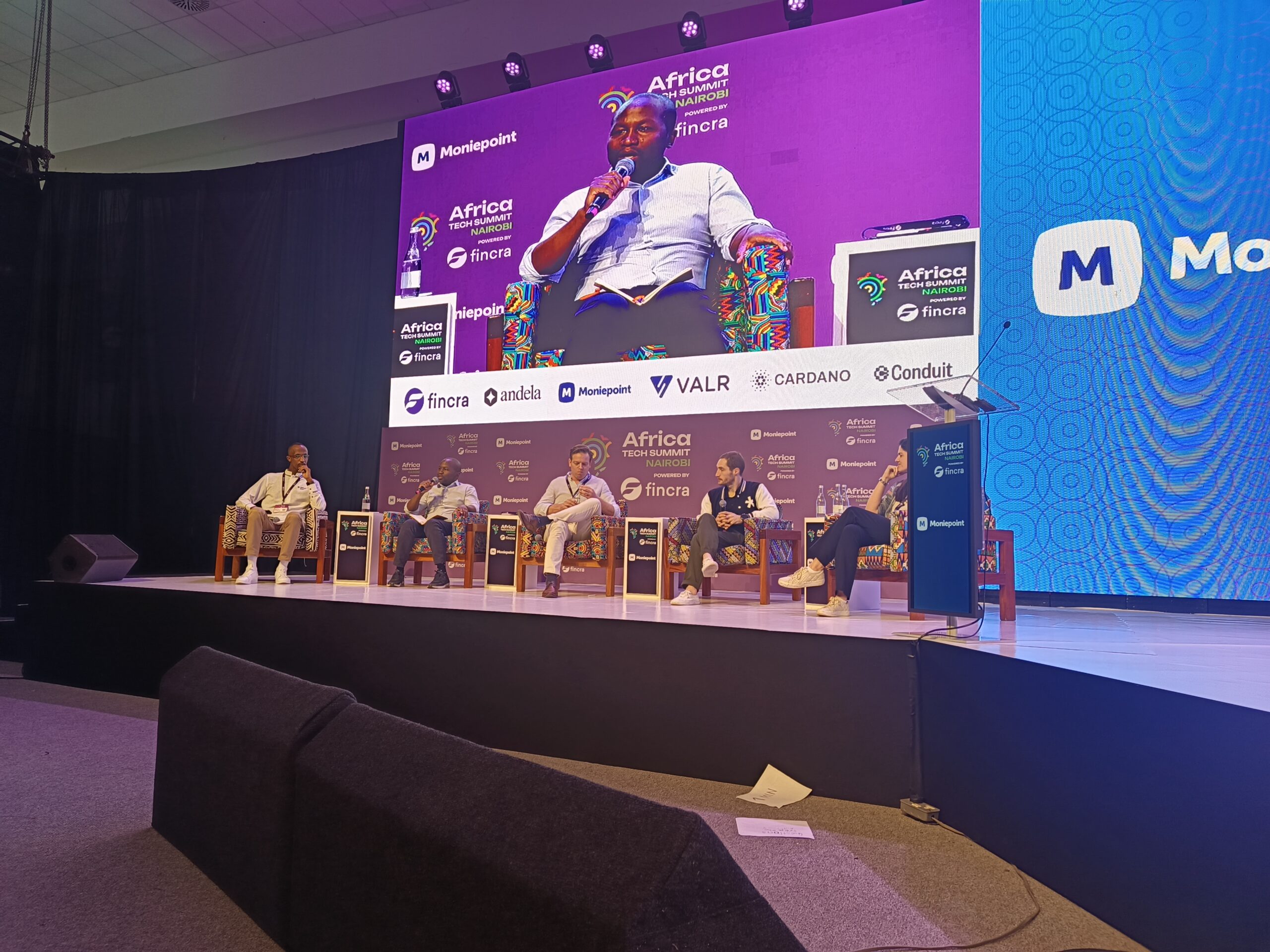
By late afternoon at the Moniepoint Stage, the mood felt less celebratory than reflective. That alone said something. For years, conversations around African venture capital leaned on momentum, expansion, new capital entering the market. Language has changed. Investors now speak in terms that sound closer to accounting than ambition.

The session titled Investing in Africa 2030: Building, Backing, and Scaling the Next Generation of Ventures sat inside that mood. Pim Engels of FMO framed the discussion around a simple observation. Funding into African tech has stabilised since 2023, hovering around $2.5 billion annually. Not collapsing, not accelerating. Holding steady.
Stability forces uncomfortable questions. Growth stories can carry uncertainty for a while. Plateauing numbers force people to look inward. What emerges is less about how much capital enters the ecosystem and more about what that capital actually produces.
Conversation drifted toward maturity, though no one used the word directly. Instead, speakers talked about governance, fund structures, exits, and discipline. Subjects that tend to surface only after an ecosystem has lived through its first cycle of optimism.


A Second Generation Learns From the First
Pierre-Alain Masson of Seedstars described a founder base that looks different from the one investors encountered a decade ago. Early venture capital on the continent funded experimentation, sometimes recklessly. Many companies failed. Some survived. A smaller number exited. The lasting effect was experience.
Operators who worked inside those early startups are now founding companies themselves. They arrive with scar tissue. They understand fundraising mechanics, hiring mistakes, regulatory friction. They know growth can outrun fundamentals.
That experience alters how early-stage investing works. Capital alone no longer secures access to strong founders. Investors talk more about networks, operational support, introductions to regulators, and access to markets. In practical terms, venture capital is being forced to justify itself beyond writing cheques.
There is also a subtle change in how technology enters the discussion. Artificial intelligence appears less as spectacle and more as tooling. Investors describe it as a way to structure experimentation, measure outcomes, compress learning cycles. The excitement feels restrained. Efficiency has replaced novelty as the dominant concern.
Yet optimism remains. Not loud optimism, but a belief that the talent pipeline is improving because it has already failed once.
Growth Stage Capital Wants Proof, Not Promise
Ngetha Waithaka of Norrsken22 approached the conversation from further along the capital curve. Her focus stayed on companies that have already survived early-stage volatility. The tone here was different again. Less about building, more about accountability.
Funding surge between 2020 and 2022 expanded expectations. Digitisation accelerated during the pandemic, capital followed, and valuations rose faster than underlying businesses in many cases. The correction that followed forced investors to revisit assumptions about scale.
Now the emphasis sits on sustainability. Companies reaching Series A and beyond are expected to show operational clarity earlier. Governance comes up repeatedly. Not as compliance language, but as survival infrastructure. Several investors noted that companies often fail because of capital structure decisions made too early, long before revenue problems appear.
There is also an emerging impatience around exits. African venture capital has produced large funding rounds, recognisable brands, regional expansion stories. Liquidity events remain limited. Public listings, acquisitions, secondary sales. These conversations are no longer theoretical. Investors increasingly frame them as necessary for recycling capital back into the ecosystem.
The implication hangs in the background. Without exits, growth capital eventually stalls.
The DFI Question No One Avoids Anymore
Amanda Cotterman of the IFC addressed a structural tension that has existed for years but rarely receives open discussion. Development finance institutions remain the largest providers of venture capital on the continent. Their role has been catalytic. Without them, many early-stage funds would not exist.
At the same time, DFIs operate within institutional constraints. Mandates, reporting requirements, risk tolerance. Innovation moves faster than bureaucracy. Fund managers often want flexibility that DFIs struggle to provide.
The conversation acknowledged something uncomfortable. DFI capital is necessary, but it is not intended to be permanent. Fund managers are expected to mature into commercially sustainable vehicles capable of attracting private institutional investors. That transition has proven slower than expected.
Africa’s venture ecosystem therefore sits in an in-between state. Commercial capital has grown, but not enough to replace development finance at scale. The next decade likely determines whether that balance changes or hardens.
Regulation as Infrastructure, Not Obstacle
Hervé Frederic Rugwizangoga from the Kigali International Financial Centre approached the discussion from outside the venture capital lens. His focus rested on regulatory design.
Rwanda’s sandbox framework, operated through both the central bank and capital markets authority, reflects a broader attempt to reduce friction between innovation and oversight. Companies can test products within defined regulatory boundaries for periods ranging from 6 months to 12 months before full licensing decisions are made.
The idea is straightforward. Innovation moves faster when regulators engage early rather than react late. For investors, regulatory clarity lowers perceived risk. For governments, it maintains control over consumer protection.
What stands out is how regulation has moved from being treated as a constraint to being framed as infrastructure. Not glamorous, rarely headline material, but essential if startups are expected to scale beyond pilot markets.
Africa Tech Investing Moves Toward Consequence
Across the session, a pattern emerged that went largely unspoken. The ecosystem is entering a phase where outcomes begin to matter more than narratives. Funding rounds no longer carry the same symbolic weight they once did. Investors talk about graduation. About companies reaching stages where venture backing is no longer the central story.
That transition creates tension. Early optimism attracted capital and talent. The next phase demands discipline, patience, and institutional credibility. Some funds will not survive it. Some companies will discover that regional scale does not automatically translate into profitability.
There is also a possibility that success takes a different form than originally imagined. Instead of producing a handful of outsized technology giants, Africa’s venture ecosystem may generate a larger number of mid-sized, durable businesses operating across fragmented markets. Less spectacle. More resilience.
By 2030, the defining question may not be how much capital flows into African startups. It may be whether enough companies have reached the point where venture capital becomes one phase in a longer corporate life cycle rather than the centre of it.
The conversation at the Moniepoint Stage did not resolve that question. It did something more useful. It acknowledged that the ecosystem has reached the stage where the answer can no longer be deferred.
Go to TECHTRENDSKE.co.ke for more tech and business news from the African continent and across the world.
Follow us on WhatsApp, Telegram, Twitter, and Facebook, or subscribe to our weekly newsletter to ensure you don’t miss out on any future updates. Send tips to editorial@techtrendsmedia.co.ke

