Millions Earning Abroad Expose the Limits of African Payment Infrastructure
As more Africans earn their living from companies and platforms abroad, the difficulty of moving money home reveals how far financial systems still have to catch up


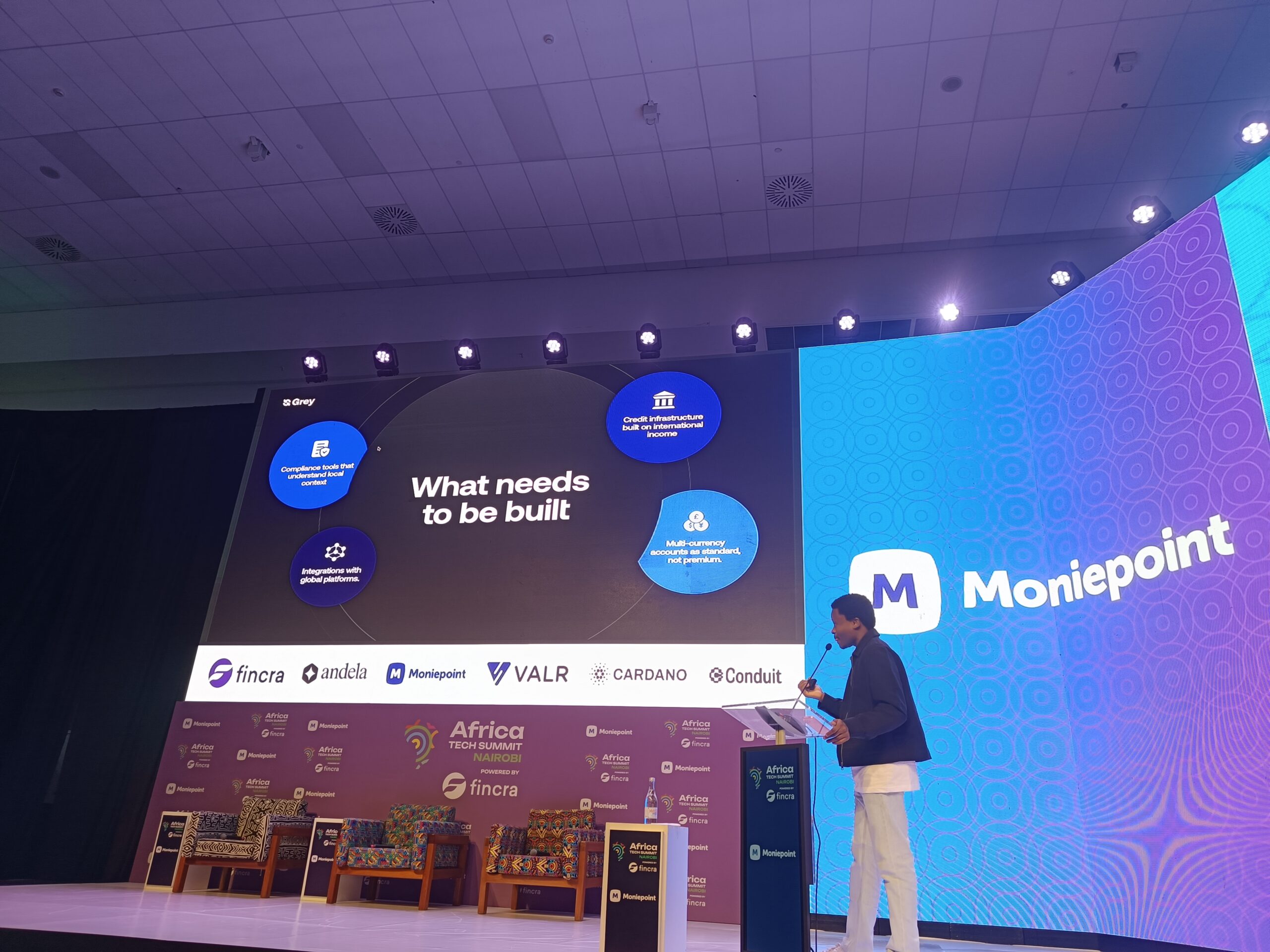
By mid-afternoon at the Moniepoint Stage in Nairobi, the room had settled into a familiar rhythm. Founders talking infrastructure, investors listening for scale, operators trying to translate lived problems into systems language. Then the conversation turned inward. Not toward funding or growth curves, but toward something more basic. How people actually get paid.

At the Money Summit keynote, Idorenyin Obong, CEO and Co-Founder of Grey, framed Africa’s $8B talent export less as a success story and more as an unfinished system. The premise sounded simple enough. African developers, designers, writers, and remote workers increasingly earn from abroad while living at home. The money arrives across borders, often frequently, often in smaller amounts, and rarely in ways traditional banking expected.
The friction is not new. What feels different is scale.
When remittance systems meet working income
For years, cross-border finance in Africa revolved around remittances. Someone abroad sends money home. The transaction is occasional, usually large, tied to family obligations or major expenses. Banks and payment companies built around that pattern.


What Obong described on stage sits outside that logic. The modern flow is continuous. A freelancer receives payment every week. A remote employee invoices monthly. A creator gets paid platform by platform. Income behaves more like commerce than assistance.
Legacy infrastructure struggles with this pattern. Compliance tools flag unfamiliar transaction flows. Payments stall. Accounts get reviewed because the system assumes a different customer profile. A 26-year-old developer in Nairobi earning from a company in San Francisco does not neatly fit existing risk models.
The result is not a dramatic failure. It is friction that accumulates. Delays, conversion losses, uncertainty about when money lands. Small inefficiencies repeated across millions of users begin to look like structural loss.
The anxiety behind speed
One of the more revealing observations from the keynote had little to do with technology itself. Users, according to Grey’s internal data from 2.5 million customers, often prioritize speed over price. The cheaper option loses appeal if funds arrive days later or without clarity.
That preference hints at something deeper than convenience. Income earned remotely often supports everyday expenses at home. Waiting 5 days instead of 1 changes how people plan rent, school fees, or payroll. In that environment, certainty becomes a financial product of its own.
It also helps explain the growing interest in faster settlement rails and alternative payment methods across parts of the continent. The attraction is not novelty. It is predictability.
The fragmentation problem nobody planned for
Another tension sits in how people manage money once it arrives. Receiving payments, converting currency, sending funds, paying bills, and saving often require separate applications. Users adapt because they have to. Over time they become accidental financial operators, stitching together tools that were never meant to function as one system.
This fragmentation says something about how infrastructure evolved. Different companies solved narrow problems. Few built around the reality of someone earning internationally while living locally.
What emerges is a paradox. Africa’s digital workforce operates globally, yet financial access remains segmented by geography, regulation, and institutional caution. The technology layer moves faster than the banking layer beneath it.
Credit without recognition
Perhaps the most revealing gap lies in credit. A worker earning $4,000 monthly from overseas clients may still struggle to access loans locally. Income exists. Proof of income exists. Recognition does not.
Traditional credit systems rely on domestic employment records or local salary structures. Cross-border income, especially from freelance or platform work, sits outside those frameworks. Banks see irregularity where users experience stability.
This disconnect limits upward mobility in quieter ways. Without credit recognition, global earnings do not translate into mortgages, business loans, or long-term financial planning. Income travels across borders. Financial identity often does not.
Compliance as infrastructure, not obstacle
Obong’s talk returned repeatedly to compliance, though not in the usual defensive tone. The argument positioned compliance as foundational infrastructure rather than regulation to be worked around. Tools designed for older payment patterns struggle to interpret modern transaction flows. Updating them becomes less about easing restrictions and more about aligning systems with economic reality.
That alignment requires institutional change beyond fintech startups. Banking partners, regulators, and international payment networks all operate within risk frameworks built for earlier models of cross-border movement. Updating those assumptions takes time, negotiation, and evidence.
The tension here is obvious. The workforce moves faster than institutions that govern money.
Africa’s export economy without shipping containers
The phrase “talent export” carries its own ambiguity. Unlike commodities or manufactured goods, digital labour leaves no physical trace. Earnings appear as data entries rather than cargo. Yet the economic implications are substantial. Income enters local economies without traditional export infrastructure.
This creates opportunity and strain at the same time. Countries benefit from foreign earnings entering domestic markets. Financial systems, however, must adjust to flows that look unfamiliar compared to trade or remittances.
There is also an unanswered question beneath the optimism. If global income becomes a central pillar for younger professionals, local financial institutions face pressure to modernize faster than regulatory cycles typically allow. Delay risks pushing users toward parallel systems operating outside conventional banking.
The unfinished layer beneath Africa’s digital growth
The keynote avoided grand conclusions. Instead, it left a practical question hanging over the room. Africa’s talent is increasingly integrated into global markets. The infrastructure supporting that participation remains incomplete.
Multi-currency accounts, credit systems tied to international income, and deeper integration with global platforms all sit within reach technically. Institutional alignment remains the harder problem. Financial systems move cautiously by design. Digital work does not.
The next few years will likely determine whether cross-border earnings become fully embedded within local economies or remain an improvised arrangement held together by workarounds. For now, the gap between talent and infrastructure remains visible. Not dramatic, not catastrophic. Just persistent enough to shape how people work, earn, and plan their futures.
Go to TECHTRENDSKE.co.ke for more tech and business news from the African continent and across the world.
Follow us on WhatsApp, Telegram, Twitter, and Facebook, or subscribe to our weekly newsletter to ensure you don’t miss out on any future updates. Send tips to editorial@techtrendsmedia.co.ke

