Safaricom Built Scale in Ethiopia yet the Cash Economy Keeps M-Pesa on the Margins
Millions of users are active on M-Pesa in Ethiopia but most transactions still circle around airtime while cash continues to dominate everyday payments


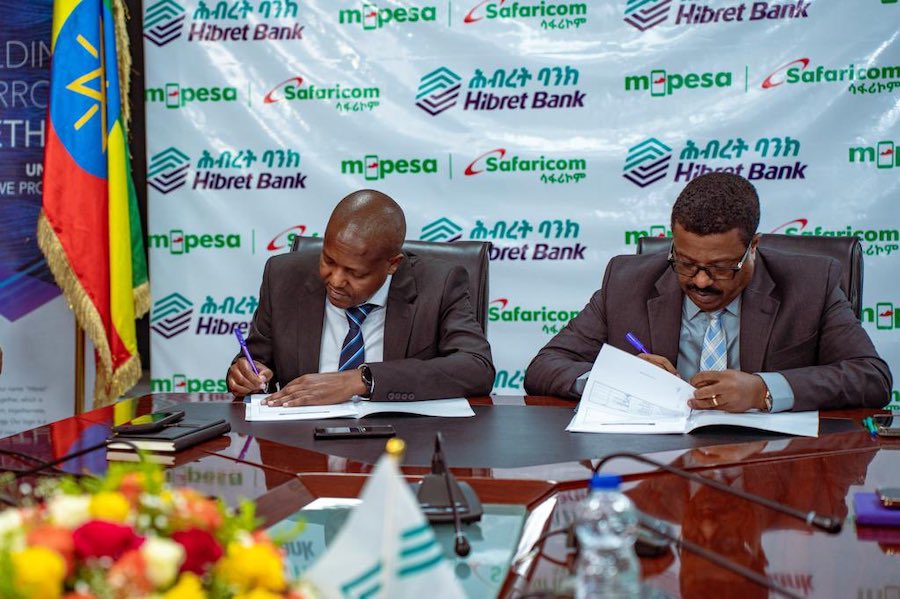
Safaricom entered Ethiopia with a familiar story in mind. A large population, low formal banking penetration, and a mobile network expanding at speed looked similar to the conditions that once allowed M-Pesa to take root in Kenya. The expectation was not immediate profit but eventual scale. Scale, in Kenya, had always converted into revenue.
The early numbers now complicate that assumption. Investor disclosures for the 9 months ended December 2025 show M-Pesa revenue in Ethiopia at Sh12.2 million. Spread across 2.36 million active users, that comes to roughly Sh0.50 per customer per month in transaction fees. The platform is being used, but not in ways that generate income.
This is not a failure of adoption. It is a question of behaviour. Ethiopians are signing up, transacting, and interacting with the system. The problem sits elsewhere, in how and why they use it.
Airtime First, Money Later
In Kenya, M-Pesa grew around movement of money between people. Urban workers sent cash home. Traders paid suppliers. Small merchants began accepting digital payments because customers already carried balances on their phones. Transaction fees followed naturally from daily economic life.

In Ethiopia, usage looks different. Subscribers are largely buying airtime and data bundles through self-top-ups. These transactions generate limited or no fees. Safaricom executives have acknowledged that about 20 percent of airtime and bundle sales flow through M-Pesa channels. From a network perspective this increases engagement. From a revenue perspective it barely registers.
Cash remains dominant in everyday transactions. Safaricom has previously stated that 99 percent of small-value payments in Ethiopia still happen in cash. The figure helps explain the gap between registration numbers and earnings. A wallet can exist without replacing physical money.
The contrast with Kenya is stark. During the year ended March 2025, Kenyan M-Pesa users generated an average monthly revenue of Sh374.83 each. The difference is not technological. It is cultural and institutional.
The Limits of Copying Kenya
Safaricom’s Kenyan success came from a specific moment. Banks were distant from ordinary users, remittance flows were strong, and regulators allowed experimentation at scale. M-Pesa filled a vacuum before competitors could react.
Ethiopia presents a different landscape. Banking penetration in cities is relatively high. Informal finance remains deeply embedded. Community savings groups and family networks still provide credit and liquidity where formal products do not reach. A digital wallet entering this environment does not automatically replace existing habits.
A 2021 World Bank report captured this imbalance clearly. Almost all adults in Ethiopia, about 99 percent, still pay utility bills in cash. Digital payments exist but have not yet become routine behaviour. Without routine usage, fee generation remains thin.
Safaricom’s own historical comparison offers perspective. In 2010, when M-Pesa in Kenya was 3 years old, monthly revenue per user averaged Sh79. Ethiopia today sits far below that level despite faster customer acquisition.
Scale Before Monetisation, and the Cost of Waiting
Safaricom launched M-Pesa in Ethiopia in August 2023 with a phased approach that prioritised customer growth ahead of charging for services. The logic was familiar. Build the network first, introduce pricing later.
That strategy carries risk when behaviour settles early. If users associate the platform primarily with airtime purchases rather than financial transfers, changing habits later becomes harder. Payment ecosystems tend to reinforce themselves. People use what others around them already accept.
Financial data reflects this imbalance. For the 9 months ended December 2025, M-Pesa contributed only 0.13 percent of Safaricom Ethiopia’s service revenue of Sh9.7 billion. Data services dominated at 66.97 percent, with voice contributing 21.99 percent and messaging 1.2 percent. The telecom business is growing faster than the financial one.
Safaricom’s Kenyan operation tells the opposite story. M-Pesa generated Sh161.1 billion during the year ended March 2025 and accounted for 44.2 percent of total service revenue. Mobile money became the core business rather than an add-on.
Ethiopia, for now, remains a telecom story.
Infrastructure Arrives Before Habit
There are signs of structural progress. Integration with EthSwitch has connected M-Pesa to more than 30 banks and wallets, enabling real-time transfers between accounts and mobile money. Interoperable QR payments have expanded acceptance to over 50,000 merchants nationwide under the National Digital Payment Strategy 2026–2030.
Technically, the ecosystem is becoming less fragmented. Interoperability removes one of the early constraints that limited usefulness beyond closed loops. A user can move money across institutions without friction.
Yet infrastructure alone does not guarantee usage. Payment behaviour changes slowly. Merchants accept digital money when customers demand it. Customers demand it when they trust it will work everywhere. The cycle feeds on itself, but only after a tipping point.
Safaricom appears to be building toward that moment rather than expecting it immediately.
Profit Today, Patience Tomorrow
Ethiopia still holds long-term appeal. It is Africa’s second most populous country, and financial sector reforms continue to open space for private operators. Safaricom’s losses in the market have already narrowed, contributing to a 52.1 percent rise in group half-year profit to Sh42.7 billion during the 6 months ended September 2025.
For investors, the question is less about whether M-Pesa will grow than about timing. Kenya demonstrated how profitable mobile money can become once it embeds itself into daily commerce. Ethiopia raises a different possibility. Growth in users does not automatically translate into growth in revenue.
Safaricom’s bet now rests on whether cash gradually gives way to digital payments, or whether mobile money settles into a supporting role for telecom services rather than becoming the main engine. The answer may depend less on technology and more on social habit, regulation, and the slow pace at which financial trust forms.
For the moment, M-Pesa in Ethiopia looks busy but underpaid. The platform moves activity, not yet income.
[Secure Your Seat at Africa Tech Summit Nairobi 2026 | February 11–12 here] Use code TTRENDS10 at checkout to save 10% on your pass and join the leaders building Africa’s $1 trillion cross-border payment future.
Go to TECHTRENDSKE.co.ke for more tech and business news from the African continent.
Follow us on WhatsApp, Telegram, Twitter, and Facebook, or subscribe to our weekly newsletter to ensure you don’t miss out on any future updates. Send tips to editorial@techtrendsmedia.co.ke

