
Beyond the Medals, Cannes Young Lions Exposes the Uneven Growth of Kenya’s Creative Economy
Global recognition arrives easily enough, sustaining creative careers at home remains the harder question

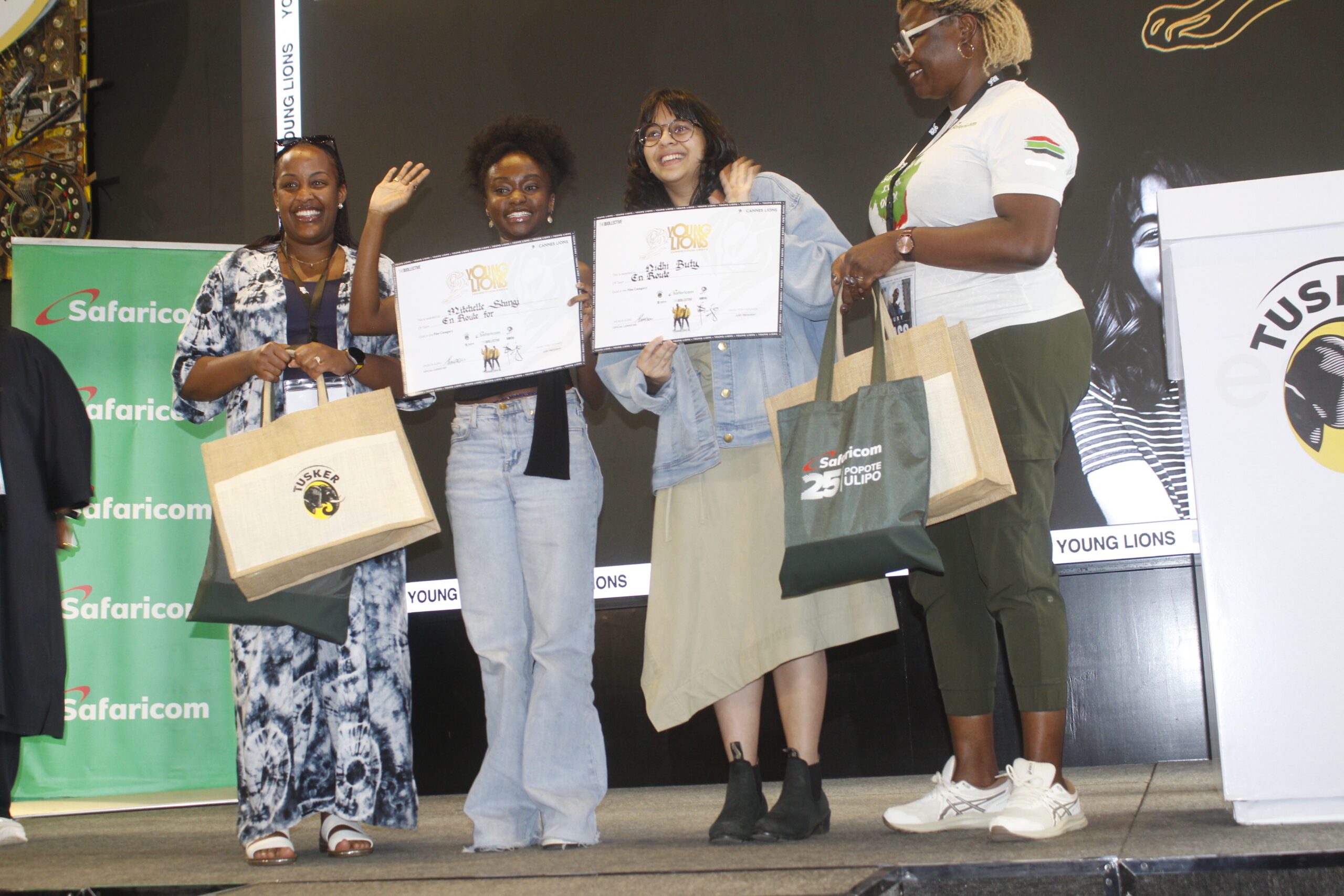
As the Cannes Young Lions Kenya competition that concluded this weekend, attention naturally turned to who would go on to represent the country in France later this year. Kenya’s presence at the global competition will be carried by three teams. In Design, Gichimu Ikua and Vic Muuri, competing as Team Full Capacity, took gold. The Digital category was won by Muskaan Shaikh and Kinjal Sheth, while Film honours went to Michelle Shingi and Nidhi Buty, completing the lineup heading to Cannes.

But beyond the immediate outcome, the competition offered a clearer view of where Kenya’s creative industry currently stands. Events like this tend to surface more than individual talent. They expose how creative work is being shaped, who is backing it, and how global recognition increasingly sits alongside local constraints that have yet to fully catch up.
The Global Stage and the Local Reality
Cannes Young Lions has always been less about trophies than access. The competition compresses time, pressure and collaboration into a format that mirrors agency life at its most intense. Winning teams from Kenya will now compete in June against peers shaped by larger markets, deeper budgets and longer institutional histories.
That exposure matters. Yet it also reveals an imbalance. Many young creatives sharpen their craft through briefs designed for multinational brands or international audiences. Meanwhile, local creative work often operates under tighter budgets and shorter timelines. The result is a generation fluent in global creative language while working within local commercial limits that rarely reward experimentation.


Kenya’s creative sector has expanded rapidly over the past decade, driven by digital platforms and brand marketing tied to telecoms, fintech and consumer goods. Safaricom’s continued involvement in initiatives like Young Lions reflects that reality. Large corporates remain the primary patrons of ambitious creative work. Independent creative funding remains thin.
The contradiction is not new. Talent develops quickly. Infrastructure lags behind.

Digital Creativity and the Changing Brief
The prominence of the Digital category this year says as much about industry evolution as it does about individual achievement. Print, once a defining category in creative competitions, has faded in relevance. Campaign thinking now begins with platforms rather than formats.
Kenyan creatives have adapted quickly to this environment. Social media fluency, short-form storytelling and audience responsiveness come naturally to a generation raised online. What remains less certain is whether digital-first creativity translates into long-term creative ownership. Much of the work remains campaign-based, tied to brand cycles rather than sustained creative ecosystems.
There is also a subtle tension between speed and depth. Digital work rewards immediacy. Cannes rewards conceptual clarity. Bridging the two requires time and mentorship, both unevenly distributed across agencies and independent studios.
Representation and the Question of Scale
There is understandable pride in sending Kenyan teams to compete globally. The idea that African creatives must occupy international spaces has gained traction in recent years. Yet representation alone does not resolve structural questions.
Kenya’s advertising and creative sectors still operate at a smaller scale than markets they compete against. Production budgets differ. Research investment differs. Access to specialised creative education differs. The result is that success abroad often depends on individual resilience rather than systemic strength.
Some creatives eventually relocate to larger markets. Others remain and attempt to build locally, often navigating inconsistent funding and fragmented industry support. The long-term effect is difficult to measure. Success stories inspire participation, but they do not automatically strengthen institutions.
The industry finds itself in a recurring cycle. Recognition produces momentum. Momentum fades without structural reinforcement. Then the cycle begins again with a new cohort.
Corporate Patronage and Creative Independence
Safaricom’s presence at the competition reflects a broader reality. Corporate sponsorship fills gaps left by limited public investment in creative industries. This arrangement has practical effects. It creates platforms, funding and visibility that might otherwise not exist, allowing young creatives access to briefs, mentorship and international exposure earlier in their careers.
In many emerging creative markets, large companies play a central role in shaping professional pathways. Competitions, training programmes and brand partnerships often become entry points into the industry itself. Kenya follows a similar pattern, where private sector investment has helped formalise parts of the creative ecosystem that previously operated informally.
The result is an industry developing through partnership rather than institutional design. As more companies invest in creative initiatives, opportunities expand, though growth remains closely tied to commercial cycles and marketing priorities. For now, corporate-backed platforms continue to function as the main bridge between emerging talent and global exposure.
What Success Abroad Might Change at Home
The most interesting outcome may not be what happens in France. It may be what happens after. International competition exposes creatives to new standards, new processes and new expectations around craft. Some return with altered perspectives on collaboration and execution. Others confront the limits of what can realistically be produced back home.
That friction can produce growth. It can also produce frustration.
If the Cannes Young Lions pipeline continues to expand, pressure will grow on agencies, brands and institutions to match the ambition of the talent they help promote. Young creatives increasingly expect creative autonomy, fair compensation and longer-term development paths. Whether the local industry adapts quickly enough remains an open question.
For now, the wins stand as evidence of capability rather than conclusion. Kenya’s young creatives at Cannes Young Lions have shown they can compete in rooms that once felt distant. The harder task lies ahead. Turning recognition into a durable creative economy requires more than medals. It requires structures that allow talent to stay, experiment and fail without leaving the industry altogether.
That work rarely attracts headlines. Yet it determines whether moments like this become milestones or simply another high point in a repeating story.
[Secure Your Seat at Africa Tech Summit Nairobi 2026 | February 11–12 here] Use code TTRENDS10 at checkout to save 10% on your pass and join the leaders building Africa’s $1 trillion cross-border payment future.
Go to TECHTRENDSKE.co.ke for more tech and business news from the African continent.
Follow us on WhatsApp, Telegram, Twitter, and Facebook, or subscribe to our weekly newsletter to ensure you don’t miss out on any future updates. Send tips to editorial@techtrendsmedia.co.ke


