
Eveready Moves Into Solar and EV Finance as the Old Business Fades
The move into solar and electric mobility places a familiar brand inside a crowded transition already shaped by finance, policy and uncertainty

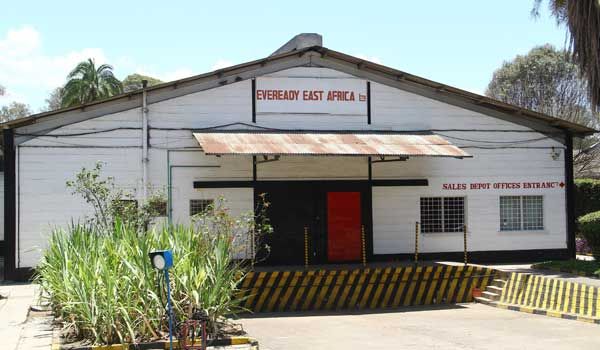
Eveready’s place in Kenyan life was uncomplicated for decades. The brand lived in drawers and kiosks, tied to torches, radios, and the familiar red-and-black packaging that outlasted many competitors. That memory still carries weight. Yet the company now finds itself operating in an energy market that looks nothing like the one that built its reputation.

The Eveready clean energy strategy marks an attempt to reposition a legacy manufacturer inside a sector defined less by single products and more by systems. Solar generation, storage, financing, installation, monitoring, and mobility now sit in the same conversation. That is not simply expansion. It is a recognition that margins in traditional dry-cell batteries have narrowed while energy demand has grown more complex, especially outside a stable grid supply.
Kenya’s energy economy has been moving in this direction for years. What is new is the entry of an old consumer brand into territory usually occupied by solar integrators, fintech-backed mobility firms, and infrastructure investors.
The logic behind building an energy platform
At the centre of Eveready’s current direction sits the Integrated Clean Energy Platform, an approach that bundles technology with financing and after-sales service. The idea is familiar in global energy markets, though still unevenly executed locally. Solar hardware alone rarely solves anything. Financing determines adoption. Maintenance determines longevity. Monitoring determines whether savings actually materialise.

In Kenya, where electricity reliability varies by location and business size, bundled energy solutions have found traction among schools, hospitals, and mid-sized enterprises trying to stabilise operating costs. Energy becomes less about generation and more about predictability. Companies are not necessarily chasing sustainability narratives; they are looking for fewer interruptions and manageable bills.
The question is whether Eveready can move from selling units to managing relationships that stretch across years. Platform models reward scale and patience. They also demand technical depth and operational discipline that differs from manufacturing and distribution.

Partnerships that fill capability gaps
The alliances with Huawei Technologies and Jinko Solar reveal an underlying reality. Eveready is not attempting to build technology internally. Instead, it is acting as an aggregator, relying on global suppliers for hardware while focusing on financing access and market reach.
That approach carries advantages. The company already has national distribution channels and brand familiarity that newer entrants spend years trying to build. At the same time, dependence on external technology partners introduces exposure to pricing cycles, supply chain volatility, and geopolitical sensitivities that have increasingly shaped the solar sector.
There is also a subtle repositioning taking place. Eveready moves closer to being an energy services intermediary rather than a manufacturer. The long-term profitability of that role depends on execution rather than brand memory.
Electric mobility enters the equation
The move into electric vehicle financing through EV Jumla touches one of the most stubborn barriers in Kenya’s mobility transition. Upfront cost remains the main obstacle, particularly for riders and drivers whose income fluctuates daily. Asset-backed financing offers a workaround, though repayment risk shifts toward the financier.
Electric motorcycles and fleet vehicles already make economic sense in certain urban corridors where fuel costs erode margins. What remains unresolved is infrastructure consistency and resale value. Linking charging solutions to renewable energy addresses part of the equation, but adoption tends to follow reliability rather than optimism.
For Eveready, financing introduces exposure to credit risk that sits far from its historical business. Success depends less on vehicle uptake and more on repayment behaviour over time.
Carbon markets and the search for new revenue logic
The company’s involvement with the Regional Voluntary Carbon Market Company points toward another emerging layer in energy economics. Carbon projects promise additional income streams tied to emissions reductions, yet global confidence in voluntary carbon markets has fluctuated amid scrutiny over verification standards and pricing integrity.
Kenya has positioned itself as a hub for carbon-related activity, helped by renewable energy capacity and international climate finance interest. For firms entering this space, credibility matters as much as project volume. A poorly structured carbon initiative can erode trust faster than it generates revenue.
Eveready’s participation suggests an attempt to diversify income beyond hardware sales and financing margins. Whether that proves sustainable depends on regulatory clarity and the evolution of carbon credit demand beyond corporate pledges.
Legacy brands in unfamiliar territory
There is an underlying tension in this transformation. Eveready’s strength lies in familiarity. Clean energy markets reward technical competence, financial structuring, and long-term service performance. Those are different forms of trust.
Kenya’s renewable energy landscape is becoming crowded, with telecom-linked solar providers, pay-as-you-go companies, banks entering asset financing, and international developers targeting commercial installations. In that environment, brand recognition opens doors but does not guarantee retention.
Still, timing may work in Eveready’s favour. Electricity demand continues to rise, small businesses seek alternatives to unstable supply, and transport electrification is slowly gaining economic rationale. The company is attempting to insert itself where energy consumption, financing access, and climate policy intersect.
Whether this becomes a durable reinvention or an overextension will depend on execution over several years rather than announcements. Legacy companies often struggle when moving from product cycles to service ecosystems. Some adapt. Others discover that history alone cannot carry them forward.
For now, Eveready’s evolution reflects something broader in Kenya’s energy economy. Energy is no longer a single commodity delivered through one channel. It is becoming layered, financed, and negotiated at the level of households and enterprises. Companies that once sold components now find themselves trying to manage entire energy relationships. The outcome remains open, but the direction of travel is unmistakable.
[Secure Your Seat at Africa Tech Summit Nairobi 2026 | February 11–12 here] Use code TTRENDS10 at checkout to save 10% on your pass and join the leaders building Africa’s $1 trillion cross-border payment future.
Go to TECHTRENDSKE.co.ke for more tech and business news from the African continent.
Follow us on WhatsApp, Telegram, Twitter, and Facebook, or subscribe to our weekly newsletter to ensure you don’t miss out on any future updates. Send tips to editorial@techtrendsmedia.co.ke


