
Perplexity Never Expected to Own Chrome. It Needed the Rules on the Table
The $34.5 billion offer was never about owning Chrome and everyone involved seemed to know it

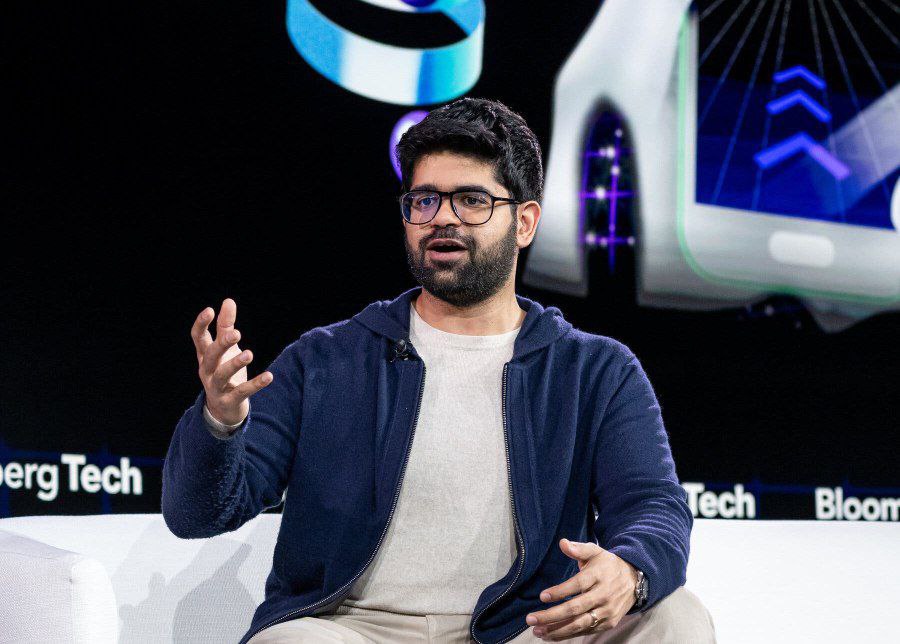
When Perplexity submitted a $34.5 billion unsolicited offer for Google Chrome in August 2025, the timing mattered more than the price.

Google had just lost a major US antitrust case, and a federal judge was weighing remedies that could have included forcing the company to divest assets tied to its market power. Chrome, used by roughly 3.45 billion people each month, sat at the center of that discussion.
The bid never advanced. No sale followed. Google retained Chrome, and the Chromium project that underpins it remained under existing governance.
From the start, Perplexity’s leadership did not expect a deal to close unless a court compelled one. That conditional status shapes how the episode should be read. This was not an acquisition attempt in the ordinary sense. It was an effort to intervene in how regulators, judges, and the broader market thought about what Chrome actually is.


Status Before Substance
Chrome was not sold, and no transfer of ownership occurred. Any consequences described here refer to dynamics that would have emerged only if a divestiture had been ordered or if similar legal pressure returns in the future. The analysis rests on design intent, institutional incentives, and structural dependency, not on any deployed or adopted system.
Chrome as Infrastructure, Not Interface
Chrome’s power has always been easy to underestimate because it rarely calls attention to itself. With global browser share near 65 percent, it functions less like an app and more like a layer of infrastructure. For most users, it is the internet, even if it looks like a neutral window rather than a gate.
That distinction becomes sharper once Chrome is separated from Chromium, the open-source codebase that also supports browsers such as Microsoft Edge and Brave. Chromium is not a product in the consumer sense. It is a shared foundation. Decisions made there ripple outward across extensions, automation tools, accessibility layers, and emerging AI systems.
Perplexity’s planned browser, Comet, is designed to sit on top of Chromium. That design choice ties the company’s future to the governance of a project it does not control. A forced sale of Chrome to an owner willing to alter Chromium’s openness or development priorities would introduce risk far beyond branding or default settings. It would touch the mechanics of how software interacts with the web.
Why the Price Was the Point
At the time of the offer, Perplexity’s valuation stood near $18 billion. A $34.5 billion bid, nearly 2 times that figure, made little sense under conventional acquisition logic. That imbalance is precisely why the bid deserves attention.
Perplexity attached conditions. Under its proposed terms, Chromium would remain open source. Existing default search engine settings would not be altered. Users would not be forced into new services. Those commitments were not legally binding on other hypothetical buyers, and antitrust law does not require a winning bidder to honor them. Still, attaching them to a concrete number reframed the conversation.
The bid turned abstract concerns about internet norms into a market argument. It suggested that preserving the existing architecture of the web carried a quantifiable value, and that value exceeded what many observers casually assumed Chrome might fetch if sold.
A Disruptor That Needs the Old Rules
Perplexity positions itself as an alternative to traditional search. Instead of ranking links, it aggregates and summarizes information across sources. That approach assumes a web where information remains broadly accessible, where automated systems can retrieve and process content without negotiating permission at every boundary.
Here lies the tension. Perplexity benefits from changes in how people consume information, yet it relies on the stability of rules established over roughly 20 years of open web practice. Browsers fetch pages. Crawlers index content. Scripts automate tasks. None of this evolved through comprehensive legislation. It emerged through use.
The Chrome bid reflected that dependence. Perplexity does not need to own Chrome to compete with Google. It needs Chromium to remain predictable, open, and resistant to enclosure.
The Legal Pressure That Makes This Urgent
That reliance becomes clearer when viewed alongside Perplexity’s legal exposure. Amazon has sued the company over AI agents designed to act on behalf of users when interacting with Amazon’s platform. The case centers on whether an AI agent should be treated as a direct extension of a human user or as a separate actor requiring explicit authorization.
If courts were to require agents to obtain permission before interacting with websites, the consequences would extend well beyond a single lawsuit. Automated interaction would become gated. Smaller AI firms would face negotiation costs at scale. Established platforms, already controlling identity, payment, and access, would gain leverage.
The stakes are not abstract. Anti-circumvention statutes in the US can carry statutory damages of up to $2,500 per violation. Applied across millions of automated requests, that framework would reshape the economics of AI-driven services.
Google’s Complicated Interest
Google occupies an awkward position in this landscape. In antitrust proceedings, it has argued that AI competitors are already eroding its dominance in search. That argument implicitly relies on open access to the web. If AI challengers lose the ability to index and synthesize information freely, Google’s claim of competitive pressure weakens.
At the same time, Google has been embedding its own AI systems more deeply into Chrome’s design. The company wants to redefine what a browser does while retaining control over the most widely used access point to the web. Those goals are not contradictory, but they are tightly bound to how regulators define acceptable conduct.
The failed Chrome bid exposed that alignment of interests without resolving it.
What a Forced Sale Would Have Tested
Had a court ordered Google to sell Chrome, the outcome would not have hinged solely on price. Buyers would have been judged on governance promises, regulatory comfort, and their approach to Chromium’s stewardship. Open-source commitments, once treated as background noise, would have become central to valuation debates.
Perplexity’s offer attempted to set expectations early. Even without legal force, it framed what a responsible bid could look like and highlighted the reputational cost of ignoring long-standing internet norms.
The Narrow Path Ahead
The Chrome episode illustrates a broader pattern. AI companies that aim to replace older modes of interaction often depend on the very structures they claim to transcend. They can change interfaces faster than they can rebuild legal and technical foundations.
Perplexity’s $34.5 billion bid did not change ownership. It clarified dependency. It showed how fragile the current settlement around browsers, automation, and access has become, and how much of the AI economy still rests on assumptions that remain largely unwritten.
Whether those assumptions hold will determine more than who controls a browser. They will shape how open the web remains to machines, and by extension, to the humans who increasingly rely on them to navigate it.
[Secure Your Seat at Africa Tech Summit Nairobi 2026 | February 11–12 here] Use code TTRENDS10 at checkout to save 10% on your pass and join the leaders building Africa’s $1 trillion cross-border payment future.
Go to TECHTRENDSKE.co.ke for more tech and business news from the African continent.
Follow us on WhatsApp, Telegram, Twitter, and Facebook, or subscribe to our weekly newsletter to ensure you don’t miss out on any future updates. Send tips to editorial@techtrendsmedia.co.ke

