Ruto Throws Political Weight Behind Safaricom and Ethio Telecom as Regional Power Play Takes Shape
Ethiopia’s guarded telecom sector meets Kenya’s most powerful corporate export


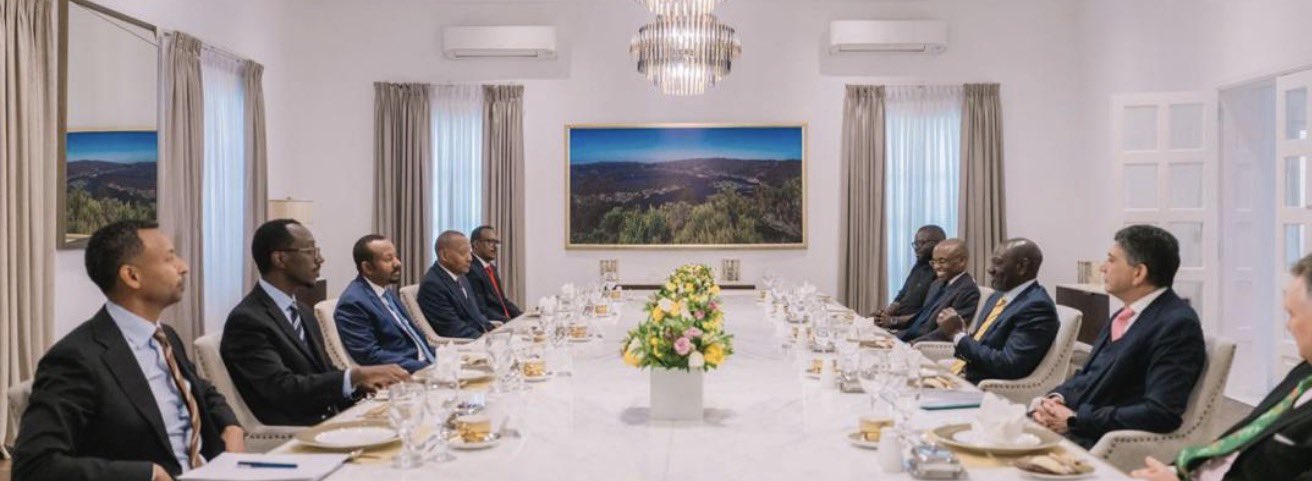
When William Ruto and Abiy Ahmed stood together in Addis Ababa, the moment carried more weight than the polite language of joint statements suggested. This was not simply a courtesy call or another nod to regional cooperation. It was a public endorsement of Safaricom Ethio Telecom joint investments as a political project, one that places telecom infrastructure alongside diplomacy, security coordination, and economic strategy.

Telecoms rarely get framed this way. They usually arrive wrapped in rollout maps and subscriber numbers. Here, they arrived with heads of government, security briefings, and talk of regional alignment. That context changes how the announcement should be read.
Ethiopia’s unfinished opening and the limits of control
Ethiopia’s telecom opening has never been a clean story. Safaricom’s entry into the market was meant to mark a turning point after decades of monopoly control. Instead, it exposed the tension between reform ambition and state caution. Ethio Telecom remains a core revenue engine and a politically sensitive institution. Any proposal that places it in joint investment discussions carries domestic implications first, regional ones second.
Backing Safaricom Ethio Telecom joint investments suggests Addis Ababa is looking for partners without surrendering authority. That balance is fragile. Too much openness risks political backlash. Too much restraint slows capital, technology transfer, and regional integration. The fact that this endorsement came from the prime minister’s office, with a foreign head of state present, hints at how tightly managed the process still is.

Safaricom as foreign policy, not just a company
For Kenya, Safaricom is no ordinary corporate actor. The state remains a shareholder, and the company’s reach into payments, identity, and everyday commerce makes it a national asset in all but name. Ruto’s public support effectively places Safaricom’s regional expansion inside Kenya’s diplomatic toolkit.
This is consistent with how Nairobi has treated ports, airlines, and transport corridors. What is newer is the elevation of digital networks to the same tier. Telecoms now shape how money moves, how data is governed, and how states maintain oversight. In that sense, endorsing Safaricom Ethio Telecom joint investments is less about market growth and more about anchoring Kenyan influence inside Ethiopia’s domestic systems.
The Horn of Africa logic beneath the rhetoric
The repeated references to the Horn of Africa are doing more than setting geography. Ethiopia’s size gives it leverage, but its landlocked reality creates dependency. Kenya offers access, experience, and regional commercial links. A deeper telecom partnership binds those interests together in a way that trade agreements often fail to do.
There is also a competitive undertone. External capital from the Gulf and Asia has become deeply embedded across the region’s infrastructure. An African-led telecom alignment is a way of keeping strategic assets from being shaped entirely elsewhere. That goal does not need to be spelled out to be understood.
Security talk that is not decorative
The security language surrounding the talks should not be dismissed as filler. Ethiopia is still navigating the aftermath of internal conflict. Kenya remains exposed to regional instability, particularly through Somalia. Modern security coordination depends on resilient communications, data sharing, and financial visibility.
Joint telecom investments create shared dependencies. They also create shared vulnerabilities, which is why governments care. This is where commercial logic and state interest overlap. Digital infrastructure supports surveillance, coordination, and administrative reach, even when framed publicly as connectivity and innovation.
Where this path could lead
If these joint investments move beyond statements, the outcomes will not be neat. Expect incremental cooperation rather than sweeping integration. Expect political oversight to remain heavy, especially on the Ethiopian side. Also expect pressure from other regional players who do not want to be sidelined.
The more interesting question is whether telecom cooperation becomes a template for other sectors. Payments, logistics platforms, and cross-border digital identity systems sit nearby. Each would deepen interdependence, and each would raise new political questions.
For now, the Addis Ababa meeting marked a decision to treat telecoms as statecraft. That alone makes the announcement worth closer attention, not for what it promises on paper, but for how it reframes power, control, and cooperation across the region.
Go to TECHTRENDSKE.co.ke for more tech and business news from the African continent.
Follow us on WhatsApp, Telegram, Twitter, and Facebook, or subscribe to our weekly newsletter to ensure you don’t miss out on any future updates. Send tips to editorial@techtrendsmedia.co.ke
TechTrends Media Podcasts

