Putting Instagram on the TV Forces a Conversation the Company Has Avoided for Years
Instagram built its power in passing moments and television does not trade in those

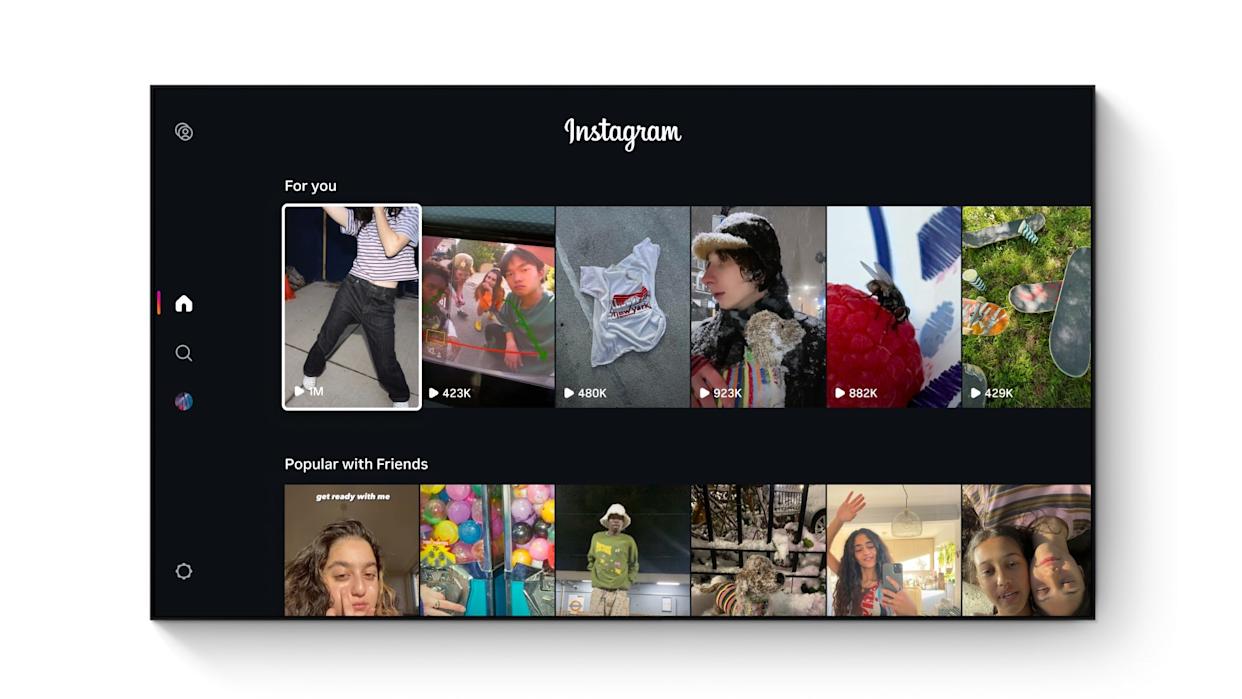
Instagram’s move onto television screens did not arrive with grand certainty. It arrived with doubt. That uncertainty is telling. Platforms usually enter new terrain with rehearsed confidence, even when the strategy is thin. Here, the hesitation sits closer to the surface.

The living room has become the most contested space in digital media. Phones still dominate daily use, but televisions control longer stretches of attention. YouTube figured that out early. TikTok is circling it. Netflix has been bending itself toward shorter, more social formats. Instagram stepping into this space reads less like ambition and more like defensive realism.
What happens when a platform designed for quick glances and restless scrolling meets a device built for passive viewing? That question has no clean answer, and Instagram does not pretend otherwise.
Television is not just a bigger phone
The problem with television is not technical. It is behavioral. People do not hold remotes the way they hold phones. They do not swipe with the same impatience. They watch together, half-watch, talk over content, leave the room and come back.
Instagram’s core strength has always been its ability to fill small moments. Waiting in line. Killing time. Filling gaps. Television does not offer gaps. It offers stretches.
That difference matters. Short-form video can survive on a large screen, but only if it accepts a different role. On TV, endless clips can blur into noise faster than they do on phones. The absence of friction becomes a weakness. Variety stops feeling refreshing and starts feeling unanchored.
This is where YouTube holds an advantage. It trained audiences to sit still again, even if only for twenty minutes. Instagram has spent years training them to move on.
Competing everywhere risks meaning nowhere
Instagram’s growth over the past decade has been rooted in adaptability. Photos gave way to stories. Stories made space for reels. Messaging crept back into the center. The platform learned to borrow aggressively without apology.
That approach kept it relevant. It also hollowed out clarity.
Ask users what Instagram is now, and the answers sprawl. It is a messaging app, a video feed, a shopping window, a place to watch strangers, a place to keep tabs on friends you barely talk to anymore. None of this is fatal on its own. Together, it raises a structural question.
At what point does flexibility start to erode identity?
Television intensifies that risk. When every screen carries the same formats, differences blur. Platforms begin to resemble distribution pipes rather than distinct environments. Instagram entering the living room does not automatically make it weaker, but it does compress the space in which it once felt specific.
The TikTok comparison misses a quieter tension
Much of the conversation around Instagram still orbits TikTok. That framing is understandable but incomplete. TikTok’s pressure has shaped algorithmic decisions and content discovery norms. It has also distracted from a subtler issue.
TikTok thrives on novelty and acceleration. Instagram thrives on familiarity and reach. Those qualities behave differently on television.
A TV audience tolerates repetition less. Familiar faces fatigue faster. Content that relies on constant novelty struggles to hold attention when watched from ten feet away. Instagram’s strength in monetization and creator distribution does not automatically translate to this context.
The living room does not reward the same instincts as the feed.
Long video looms as an unresolved fork
Instagram has historically resisted long-form video. That resistance has been ideological as much as practical. Length changes power dynamics. It favors studios, production budgets, and repeat viewing over spontaneity.
Television, however, pulls length into the conversation whether a platform wants it or not. If viewers expect to sit with content, something has to justify the time. Endless short clips may not.
If Instagram eventually embraces longer video, it will not simply be adding a format. It will be reopening decisions it once closed. Creator economics would tilt. Discovery patterns would change. The app’s restless rhythm would slow, whether intentionally or not.
If it does not, the TV experience risks feeling like a novelty rather than a destination.
Control, personalization, and the urge to steer the feed
Another tension sits beneath the surface. Users increasingly want agency. Not more content, but better alignment with their interests. Platforms know this. They also fear it.
Greater user control over feeds challenges the opacity that keeps algorithms powerful. It introduces friction. It invites disagreement with machine judgment.
On television, that tension sharpens. Passive viewing clashes with proactive customization. A remote is not a keyboard. Voice control promises ease but often delivers frustration. The dream of sculpted feeds runs into the reality of how people actually behave on couches.
Instagram’s interest in deeper personalization suggests a recognition that algorithmic surprise alone may no longer be enough. Whether that recognition survives the constraints of TV remains uncertain.
Smart glasses, audio, and the long arc beyond screens
Looking further out, Instagram’s future is not only about televisions. It is about environments where screens fade into peripherals. Wearables, audio-first interactions, and ambient computing complicate everything the platform has optimized for.
A visual service in a world that increasingly defaults to sound faces an identity puzzle. Images and video demand attention. Audio sneaks around it. Television amplifies visuals. Wearables diminish them.
Trying to be fluent in all these contexts stretches any product philosophy. Consistency becomes harder. Purpose becomes easier to lose.
The risk is not failure but dilution
Instagram will likely succeed at putting something functional on televisions. That is not the real question. The deeper issue is whether being present everywhere weakens the reasons people care in the first place.
Media history is full of platforms that expanded smoothly and faded slowly. Not because they collapsed, but because they became generic. Interchangeable. Easy to replace.
Instagram’s TV expansion sits inside that long pattern. It reflects a platform strong enough to experiment and uncertain enough to admit it does not know how people will respond.
That admission may be its most honest signal yet, even if it does not guarantee the outcome will favor clarity over sprawl.
Go to TECHTRENDSKE.co.ke for more tech and business news from the African continent.
Follow us on WhatsApp, Telegram, Twitter, and Facebook, or subscribe to our weekly newsletter to ensure you don’t miss out on any future updates. Send tips to editorial@techtrendsmedia.co.ke
TechTrends Media Podcasts

