Why Dongfeng’s entry into Kenya’s electric car market feels cautious, deliberate, and very calculated
Dongfeng’s Kenya entry sits at the edge of price, policy, and patience


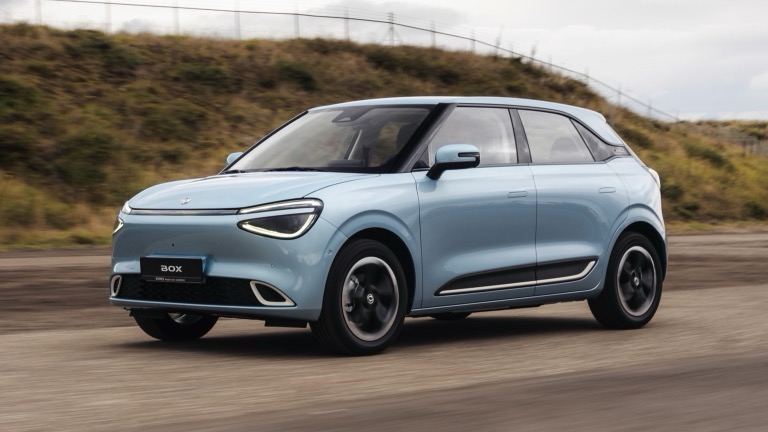
Dongfeng electric cars arrive in Kenya at an awkward but revealing moment. The country’s EV conversation has grown louder, yet the road beneath it remains uneven. Charging points exist, though often clustered. Policy incentives look generous on paper, though slow to translate into showroom prices. Against that backdrop, the Chinese automaker’s move into passenger electric cars is not dramatic. It is deliberate. That restraint may end up being the point.

Rather than charging into the mass market, Dongfeng has come in through ePureMotion with a narrow offering and a longer view. Two compact hatchbacks. Urban range. Fleet logic. And, crucially, a plan to assemble locally once volumes justify the effort. It is a cautious posture that mirrors how EV adoption has actually unfolded in Kenya, not how it is often discussed.
Small cars, short routes, realistic assumptions
The first Dongfeng electric cars in Kenya are not pitched as status symbols or long-haul machines. The ePureCitie Classic and Lux are built around city use. One offers about 330 kilometres on a charge, the other stretches to roughly 430. Prices sit at Sh4 million and Sh4.5 million, numbers that narrow the audience by default.
This positioning says more than the spec sheet. These cars are aimed at predictable routes, controlled charging, and buyers who run spreadsheets before they sign cheques. Corporate fleets. Ride-hailing operators. Urban professionals who already understand where they drive and how often. It is an admission, implicit but clear, that Kenya’s EV adoption still runs on planning rather than impulse.

There is also a quieter truth here. Passenger EVs have not been the main story locally. Two-wheelers and buses have carried most of the momentum, largely because their economics are easier to defend. Dongfeng’s hatchbacks step into a thinner slice of the market, one that exists but has not yet thickened.
Assembly is the real bet, not the launch
The more consequential part of Dongfeng electric cars in Kenya is not what is arriving now, but what is being prepared. ePureMotion has confirmed plans to assemble selected Dongfeng EVs locally in partnership with Associated Vehicle Assemblers. The timing points to next year, though the logic stretches much further.
Kenya’s tax framework strongly favors local assembly. Fully built electric vehicles attract a 35 percent import duty, while locally assembled units avoid that charge and face lower excise duty. Those numbers matter. They are often the difference between a car that stays in a press release and one that starts appearing in parking lots.
Local assembly also changes how risk is shared. Inventory can be managed closer to demand. Spare parts do not travel as far. Service delays shrink. None of this is glamorous, but it is how markets mature. Dongfeng’s willingness to wait for that stage suggests an understanding that Kenyan EV adoption is incremental, not explosive.
China’s Africa play meets Kenya’s specific limits
Dongfeng is not alone. Chinese automakers have been widening their African footprint as competition tightens elsewhere. Kenya, with its policy incentives and regional influence, makes sense as a foothold. Still, the country is not a blank canvas.
Electricity reliability varies. Charging infrastructure grows unevenly. Consumer trust builds slowly, especially for new technologies tied to long-term ownership costs. Dongfeng’s existing presence in Kenya through commercial trucks helps, but passenger cars live in a different emotional and financial category.
This is where the contradiction sits. Kenya wants industrialisation, cleaner transport, and lower fuel imports. At the same time, the average car buyer remains price-sensitive and cautious. Dongfeng electric cars in Kenya sit right in that tension. Affordable enough to tempt institutions. Still distant for most households.
Charging grows, though geography keeps choosing winners
EV adoption follows chargers, not the other way around. That pattern is already visible. Nairobi hosts most of the country’s public charging points, many tucked into shopping malls and commercial hubs. ePureMotion has leaned into that reality, building stations where dwell time already exists.
The risk is obvious. A city-first charging network reinforces a city-first EV market. Rural uptake lags. Intercity travel remains a calculation. Dongfeng’s current models, with their urban bias, fit neatly into this structure. Whether future models push beyond it will say a lot about how confident the company becomes.
What happens if volumes actually arrive
If local assembly takes hold and volumes grow, several things could follow. Prices may ease, not dramatically, but enough to widen the buyer pool. Fleet adoption could accelerate, pulling used EVs into the secondary market over time. Service networks would thicken, lowering perceived risk for hesitant buyers.
There is also a less discussed outcome. Local assembly ties manufacturers more tightly to Kenyan policy stability. Incentives matter, but so does consistency. Any reversal would ripple quickly through pricing and supply. Dongfeng’s decision to assemble locally is therefore a wager not just on demand, but on governance holding steady.
For now, Dongfeng electric cars in Kenya represent a careful entry rather than a loud arrival. They sit at the intersection of ambition and restraint, shaped by what the market can realistically absorb. That may frustrate headline seekers. For a country still feeling its way into passenger EVs, it might be the only approach that lasts.
Go to TECHTRENDSKE.co.ke for more tech and business news from the African continent.
Follow us on WhatsApp, Telegram, Twitter, and Facebook, or subscribe to our weekly newsletter to ensure you don’t miss out on any future updates. Send tips to editorial@techtrendsmedia.co.ke
TechTrends Media Podcasts


Thank you for the insightful coverage. Our approach is deliberate built around real urban mobility needs and long-term ecosystem growth through local assembly.
We welcome interested readers to visit the ePureXperience Center at Purple Tower, Ground Floor, along Mombasa Road, to view the vehicles and book a test drive.
https://book.epuremotion.com/