Netflix’s Pursuit of Warner Bros and the New Map of Studio Power
A studio sale that pulls Hollywood into a bigger fight over influence, ownership and the stories that shape how people see their world


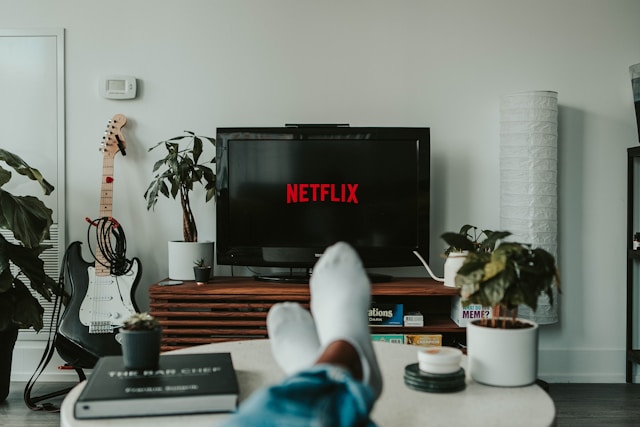
The Netflix Warner Bros acquisition entered public view after a sequence of internal calculations, private approaches, and political reading. Studios with heavy debt searched for steady owners. Streamers searched for rights libraries that could anchor global platforms. Lawmakers treated major entertainment holdings as strategic territory. By the time Warner Bros Discovery opened itself to bidders, conditions had aligned in a way that made a formal approach almost unavoidable.

Warner Bros Discovery had been working through internal restructuring with uneven progress. Costs had been cut, but frustration inside the company grew. Once the board agreed to entertain offers, momentum built. Paramount explored a plan that extended far beyond entertainment. Comcast looked for an opening that would let it reclaim scale. Netflix watched the field and saw a chance to secure the one studio whose creative history would immediately strengthen its global platform.
The price approached eighty two point seven billion for the studio and HBO’s streaming arm. Linear networks would separate into a different entity to keep the core transaction focused and to remove some of the regulatory complications. For many observers, the dollar figure mattered less than the architecture of the approach. Netflix pursued only the parts it could integrate without carrying the weight of traditional cable.
A large political shadow around the Paramount alternative
The Paramount proposal drew attention for reasons that reached into politics and civic influence. Decision makers in Washington tried to understand how much control the Ellison circle sought over news divisions. Their network inside Silicon Valley offered capital and analytics unavailable to most media owners. Their political alliances raised concern inside agencies that oversee mergers involving news organizations. If the structure had taken form, CBS News, Warner Bros film and television units, Discovery’s networks, CNN, and TikTok’s American operation would have sat inside one structure. Regulators saw a possibility of political pressure reaching newsrooms through subtle forms of internal expectation rather than explicit directives.

People who follow media consolidation kept returning to the same question: would a Paramount win concentrate too much influence under owners close to national political figures. That question gained momentum as commentary circulated about the broader context. Some lawmakers quietly viewed the Paramount outcome as the version with greater civic risk even before they saw Netflix’s final numbers.
Netflix presented a more contained plan
Netflix chose a narrower structure. It wanted Warner Bros. It wanted HBO’s slate and the creative systems that guide it. That part of the story answered one of the most common public questions: why does Netflix want Warner Bros. The reason sits in the gap between global reach and prestige continuity. Netflix can distribute content across almost every market on earth. Warner Bros and HBO still command a degree of narrative authority that Netflix has struggled to match on a sustained basis. Bringing those pieces together would give Netflix a studio identity that it never fully possessed.
Netflix also made a calculation that answers another widespread question: what happens to the linear networks. The answer is simple. They exit the transaction. Netflix gains the parts that strengthen its platform and avoids the parts weighed down by declining cable audiences.
Regulators now face a complicated review
The acquisition enters a regulatory system that has spent the past few years under pressure to demonstrate that it can handle large platform transactions. The agencies will examine whether Netflix gains excessive leverage over distribution, although the company has no interest in owning news outlets and will not acquire the cable networks. They will also examine whether the deal pressures theaters. Netflix has told exhibitors it intends to maintain windows for large releases. Yet regulators know that subscription-based incentives differ from the incentives of a traditional studio.
Some industry figures have asked whether the Netflix route creates more or less concentration than the Paramount alternative. That question will quietly inform the review. The answer will not appear in any official document. It will sit in the background as regulators weigh how each outcome affects civic space, creative labor, and the long-term resilience of the industry.
Global counterweights sharpen the stakes
The transaction cannot be separated from global competition. European regulators have tightened their stance on cultural industries. Asian platforms keep expanding content budgets. India and Korea continue rising as exporters of high-volume and high-impact storytelling. These global dynamics reinforce why Netflix sought a studio identity rooted in a legacy brand. If the acquisition closes, Netflix becomes a global producer with a library that carries cultural weight across regions with distinctive media rules. That advantage may matter more than any short-term financial metric.
A contrasting global picture helps explain why some analysts view the Paramount model as more aggressive. Their reach into technology and private capital could have supported a model built on tight data loops and cross-platform leverage. Netflix’s model is steadier. It depends on retention, identifiable creative brands, and a simpler organizational frame. Both carry risk. They represent different blueprints for global influence.
Fragmented audiences and the shrinking margin for error
The public also wants to know what happens to HBO if Netflix takes control. The answer lies in institutional culture. HBO built a reputation on long arcs, careful selection, and a willingness to back unconventional projects without panic. These habits will not transfer automatically into a platform known for high-volume strategy. Netflix will need to protect the parts of HBO’s culture that give its shows their durability. That is harder than acquiring rights. It is as much about internal restraint as budget allocation.
Audience behavior complicates everything further. Viewers move across apps at speed. News consumers assemble their understanding of events through dispersed channels. This fragmentation reduces the authority of any one owner. It also limits the margin for error. A misread trend or a weak slate can drain a streaming platform fast.
Civic consequences and newsroom vulnerability
Some readers have asked whether the Netflix outcome protects newsrooms compared to the Paramount alternative. The answer is measured. Netflix will not own news assets, so its presence removes one layer of worry about editorial control through ownership. At the same time, the concentration of creative and cultural production under one distributor still matters for civic life. Stories frame public discussion. Ownership affects which stories receive visibility and how long they remain in circulation.
Regulators will examine this dynamic even though it sits outside the financial core of the deal. Courts have grown more receptive to arguments about cultural influence as part of antitrust analysis. Independent producers and guilds will participate. The review will not proceed cleanly.
Forward paths that depend on regulatory timing
The final outcome opens two very different futures. If the deal clears, Netflix evolves into a platform-studio hybrid with both distribution and legacy creative authority. Theaters will negotiate with a company whose priorities revolve around subscription retention, not box office momentum. Rival studios may respond with mergers that once seemed improbable. Smaller companies may feel pressure to sell or consolidate.
If the deal fails, Warner Bros Discovery enters a new period of uncertainty. The market may view the company as a weakened seller. Paramount could explore revised terms. Comcast may revisit earlier proposals. The future would remain unsettled, and the underlying questions about scale and influence would return to the surface.
A decade-defining contest over who shapes the cultural reference points
The Netflix Warner Bros acquisition centers on control of a library, a studio identity, and a global distribution channel. It shows how ownership, politics, technology, and creative systems intersect in an industry that continues to reorganize itself in real time. Nothing about this process is tidy. The consequences will stretch across production, labor, distribution, and public conversation.
The industry is moving through a period when no decision stays contained. Each transaction rearranges the hierarchy. This acquisition matters because it touches the foundations of how stories travel, how they are financed, and who has the authority to decide what reaches the audience.
Go to TECHTRENDSKE.co.ke for more tech and business news from the African continent.
Follow us on WhatsApp, Telegram, Twitter, and Facebook, or subscribe to our weekly newsletter to ensure you don’t miss out on any future updates. Send tips to editorial@techtrendsmedia.co.ke

